Library of Congress Storage Architecture

Library of Congress Storage Architecture

  • February 21, 2020
Table of Contents

Library of Congress Storage Architecture

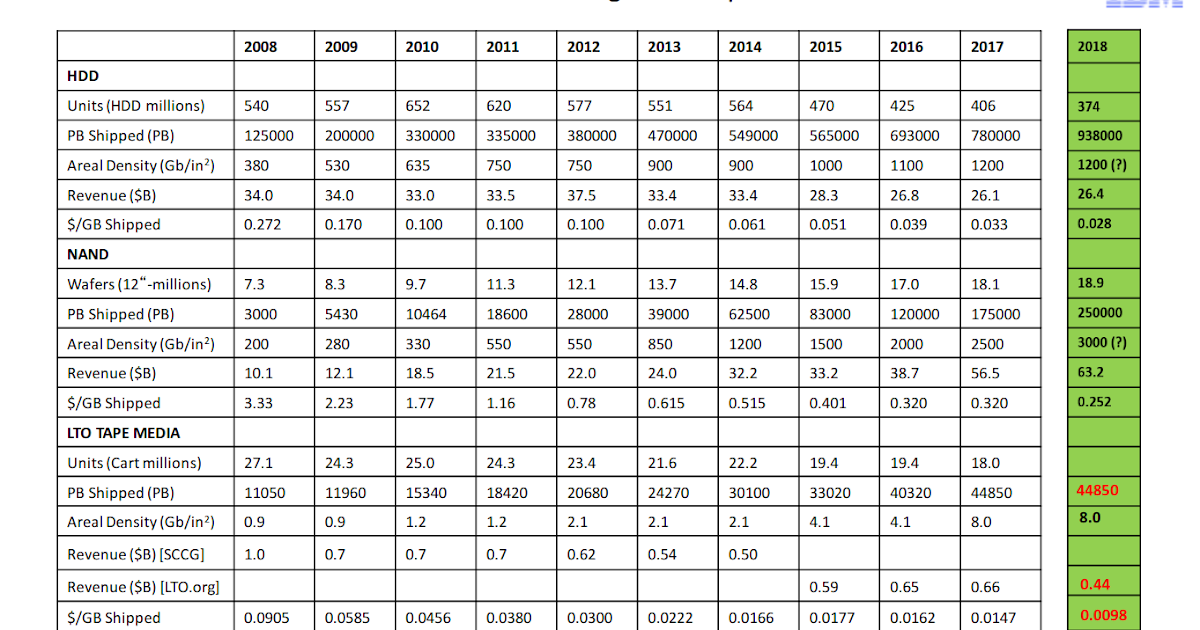
In 2026 is there demand for 7X more manufactured storage annually and is there sufficient value for this storage to spend $122B more annually (2.4X) for this storage? Unlike HDD, tape magnetic physics is not the limiting issues since tape bit cells are 60X larger than HDD bit cells … The projected tape areal density in 2025 (90 Gbit/in2) is 13x smaller than today’s HDD areal density and has already been demonstrated in laboratory environments.

IBM is the last of the hardware manufacturers: IBM is the only builder of LTO8 IBM is the only vendor left with enterprise class tape drives If you only have one manufacturer how do you mitigate risk? These cloud archival solutions all use tape: Amazon AWS Glacier and Glacier Deep ($1/TB/month) Azure General Purpose v2 storage Archive ($2/TB/month)

Google GCP Coldline($7/TB/month) If it’s all the same tape, how do we mitigate risk?

Source: dshr.org
Share :
comments powered by Disqus

Related Posts

Making the LinkedIn experimentation engine 20x faster

Making the LinkedIn experimentation engine 20x faster

At LinkedIn, we like to say that experimentation is in our blood because no production release at the company happens without experimentation; by “experimentation,” we typically mean “A/B testing.” The company relies on employees to make decisions by analyzing data. Experimentation is a data-driven foundation of the decision-making process, which helps with measuring the precise impact of every change and release, and evaluating whether expectations meet reality.

Read More
How we 30x’d our Node parallelism

How we 30x’d our Node parallelism

What’s the best way to safely increase parallelism in a production Node service? That’s a question my team needed to answer a couple of months ago. We were running 4,000 Node containers (or ‘workers’) for our bank integration service.

Read More