Introducing PodTopologySpread

Introducing PodTopologySpread

  • May 6, 2020
Table of Contents

Introducing PodTopologySpread

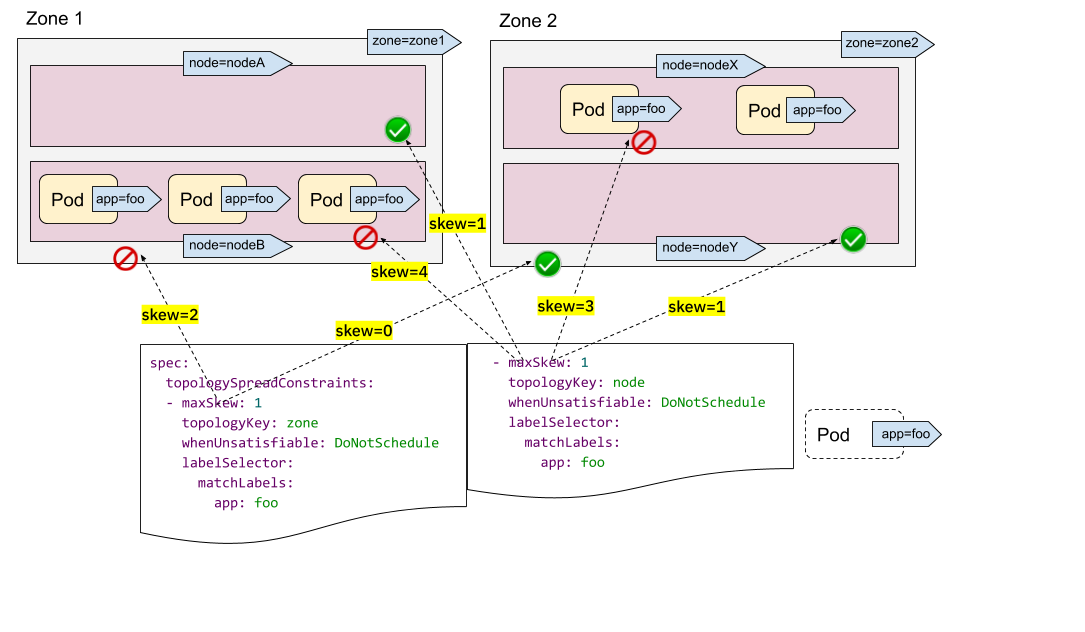
Managing Pods distribution across a cluster is hard. The well-known Kubernetes features for Pod affinity and anti-affinity, allow some control of Pod placement in different topologies. However, these features only resolve part of Pods distribution use cases: either place unlimited Pods to a single topology, or disallow two Pods to co-locate in the same topology.

In between these two extreme cases, there is a common need to distribute the Pods evenly across the topologies, so as to achieve better cluster utilization and high availability of applications. The PodTopologySpread scheduling plugin (originally proposed as EvenPodsSpread) was designed to fill that gap. We promoted it to beta in 1.18.

Source: kubernetes.io
Share :
comments powered by Disqus

Related Posts

Building a Kubernetes platform at Pinterest

Building a Kubernetes platform at Pinterest

Over the years, 300 million Pinners have saved more than 200 billion Pins on Pinterest across more than 4 billion boards. To serve this vast user base and content pool, we’ve developed thousands of services, ranging from microservices of a handful CPUs to huge monolithic services that occupy a whole VM fleet. There are also various kinds of batch jobs from all kinds of different frameworks, which can be CPU, memory or I/O intensive.

Read More
Announcing etcd 3.4

Announcing etcd 3.4

In particular, etcd experienced performance issues with a large number of concurrent read transactions even when there is no write (e.g. “read-only range request … took too long to execute”). Previously, the storage backend commit operation on pending writes blocks incoming read transactions, even when there was no pending write. Now, the commit does not block reads which improve long-running read transaction performance.

Read More