Why a physicist wants to build a particle collider on the moon

Why a physicist wants to build a particle collider on the moon

  • June 9, 2020
Table of Contents

Why a physicist wants to build a particle collider on the moon

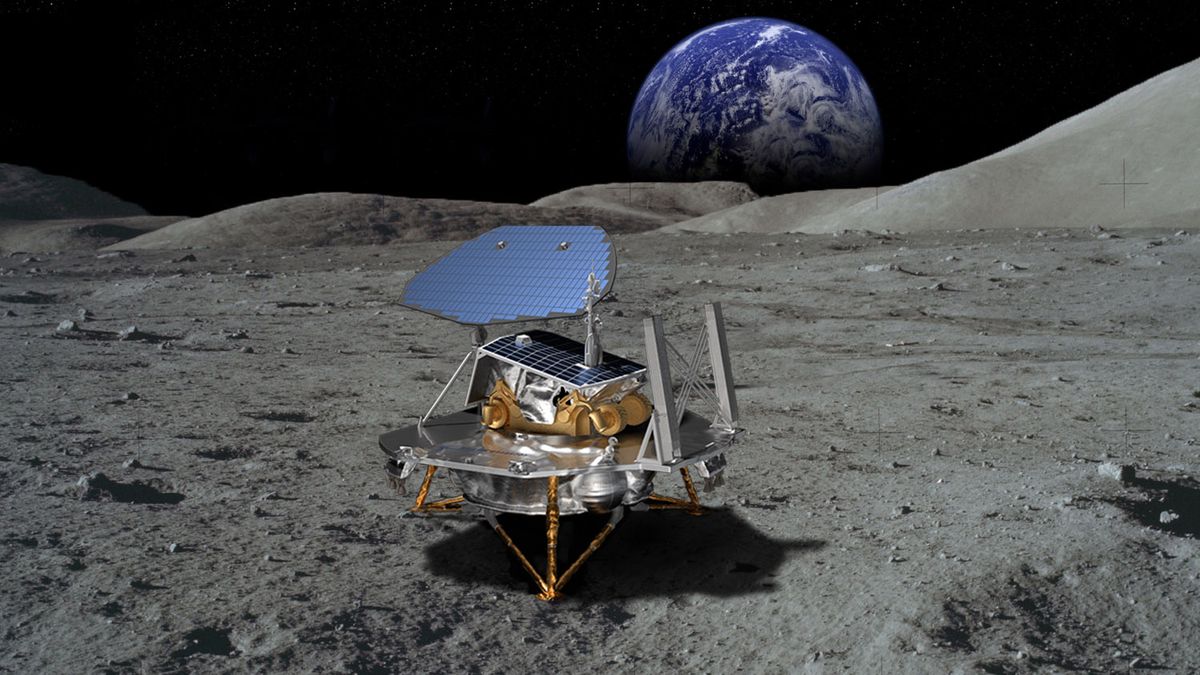
NASA recently launched the Commercial Lunar Payload Services (CLPS) initiative whose aim is to find the best future payloads to deliver to the surface of the moon. These payloads would include instruments for basic science investigations. Shown here, a Lockheed Martin space concept for a commercial lunar lander.

As we probe deeper into the innermost workings of the universe, our particle physics experiments have become ever more complex. In order to reveal the secrets of the tiniest subatomic particles, physicists must make colliders and detectors as cold as possible, remove as much air as possible, and keep them as still as possible to get reliable results. So at least one physicist is asking: What if we just skipped all that and set up our particle physics experiments on the moon?

A proposal published to the preprint database arXiv earlier this year argues that the moon is actually a pretty decent place to do high-energy physics.

Source: livescience.com

Tags :
Share :
comments powered by Disqus

Related Posts

Universal Quantum Phenomenon Found in Superconductors

Universal Quantum Phenomenon Found in Superconductors

A ubiquitous quantum phenomenon has been detected in a large class of superconducting materials, fueling a growing belief among physicists that an unknown organizing principle governs the collective behavior of particles and determines how they spread energy and information. Understanding this organizing principle could be a key into “quantum strangeness at its deepest level,” said Subir Sachdev, a theorist at Harvard University who was not involved with the new experiments. The findings, reported today inNature Physicsby a team working at the University of Sherbrooke in Canada and the National Laboratory for Intense Magnetic Fields (LNCMI) in France, indicate that electrons inside a variety of ceramic crystals called “cuprates” seem to dissipate energy as quickly as possible, apparently bumping up against a fundamental quantum speed limit.

Read More