Why We Chose a Distributed SQL Database to Complement MySQL

Why We Chose a Distributed SQL Database to Complement MySQL

  • September 25, 2020
Table of Contents

Why We Chose a Distributed SQL Database to Complement MySQL

VIPKid chose TiDB to manage its high data volume, highly concurrent write application. Learn how TiDB excels in that scenario, along with multidimensional queries, data life cycle management, and real-time analytics. We use MySQL as our backend database.

But as our application data grew rapidly, standalone MySQL’s storage capacity became a bottleneck, and it could no longer meet our application requirements. We tried MySQL sharding on our core applications, but it was difficult to run multi-dimensional queries on sharded data. Therefore, we adopted TiDB, an open-source, distributed SQL database that supports Hybrid Transactional/Analytical Processing (HTAP) workloads.

TiDB supports creating secondary indexes on large tables. We can use it to perform multi-dimensional SQL queries. We don’t need to worry about cross-shard, multi-dimensional queries for sharding any more.

Source: pingcap.com
Share :
comments powered by Disqus

Related Posts

Engineering For Failure

Engineering For Failure

A set of practical patterns to recover from failures in external services Not so long ago, our systems were simple: we had one machine, with one process, probably no more than one external datastore, and the entire request lifecycle was processed and handled within this simple world. Our users were also accustomed to a certain SLA standard — a 2-second page load time could have been acceptable a few years ago, but waiting more than a second for an Instagram post is unthinkable nowadays. When systems get more complex, with strict latency requirements and a distributed infrastructure, an uninvited guest crawls up our systems — request failure.

Read More
Production testing with dark canaries

Production testing with dark canaries

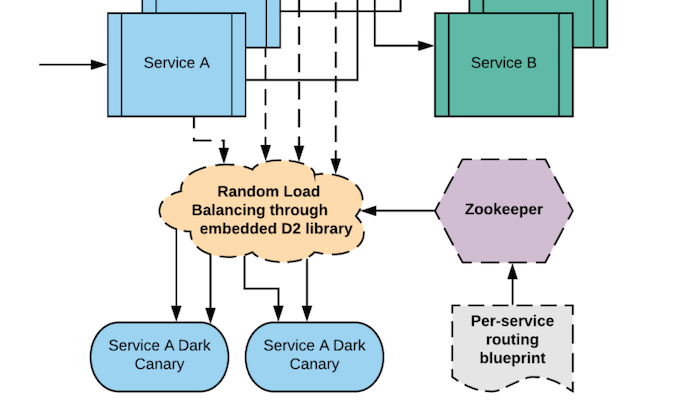
Back in 2013, one of our large backend services wanted support in Rest.li for dark canaries. The service, at the time, involved duplicating requests from one host machine and sending it to another host machine. This was added via a Python tool to populate the host-to-host mapping in Apache ZooKeeper along with a filter to read this mapping and multiply traffic.

Read More
Scaling services with Shard Manager

Scaling services with Shard Manager

We look at how Shard Manager is fully integrated in Facebook’s infrastructure ecosystem and provides a holistic, end-to-end solution supporting basic shard failover as well as sophisticated load balancing, shard scaling, and operational safety. Over the years, as we’ve expanded in scale and functionalities, Facebook has evolved from a basic web server architecture into a complex one with thousands of services working behind the scenes. It’s no trivial task to scale the wide range of back-end services needed for Facebook’s products.

Read More