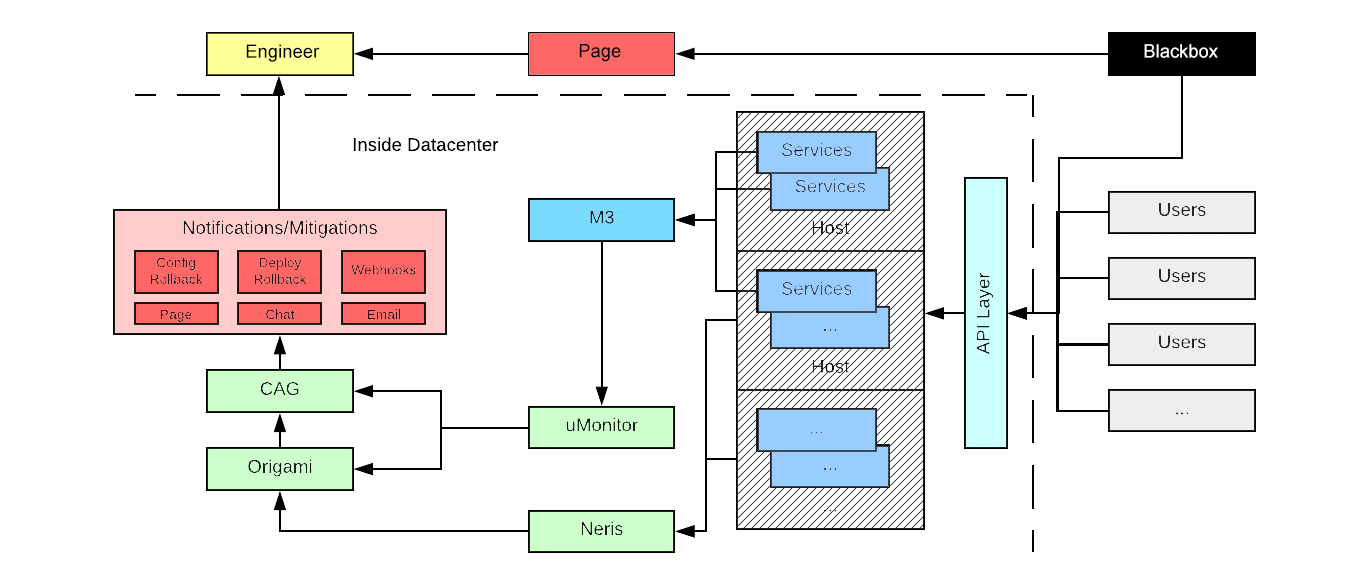
Observability at Scale: Building Uber’s Alerting Ecosystem
Uber’s software architectures consists of thousands of microservices that empower teams to iterate quickly and support our company’s global growth. These microservices support a variety of solutions, such as mobile applications, internal and infrastructure services, and products along with complex configurations that affect these products at city and sub-city levels. To maintain our growth and architecture, Uber’s Observability team built a robust, scalable metrics and alerting pipeline responsible for detecting, mitigating, and notifying engineers of issues with their services as soon as they occur.
Read More
Optimal Shard Placement in a Petabyte Scale Elasticsearch Cluster
The number of shards on each node, and tries to balance the number of shards per node evenly across the clusterThe high and low disk watermarks. Elasticsearch considers the available disk space on a node before deciding whether to allocate new shards to that node or to actively relocate shards away from that node. A nodes that has reached the low watermark (i.e 80% disk used) is not allowed receive any more shards.
Read More
GraphQL: A success story for PayPal Checkout
At PayPal, we recently introduced GraphQL to our technology stack. At PayPal, GraphQL has been a complete game changer to the way we think about data, fetch data and build applications. This blog post takes a close look at PayPal Checkout and explains our journey from REST to Batch REST to GraphQL and lessons learned along the way.
Read More
Cross shard transactions at 10 million requests per second
Dropbox stores petabytes of metadata to support user-facing features and to power our production infrastructure. The primary system we use to store this metadata is named Edgestore and is described in a previous blog post, (Re)Introducing Edgestore. In simple terms, Edgestore is a service and abstraction over thousands of MySQL nodes that provides users with strongly consistent, transactional reads and writes at low latency.
Read More