Building a Next Word Predictor in Tensorflow

Building a Next Word Predictor in Tensorflow

  • March 5, 2018
Table of Contents

Building a Next Word Predictor in Tensorflow

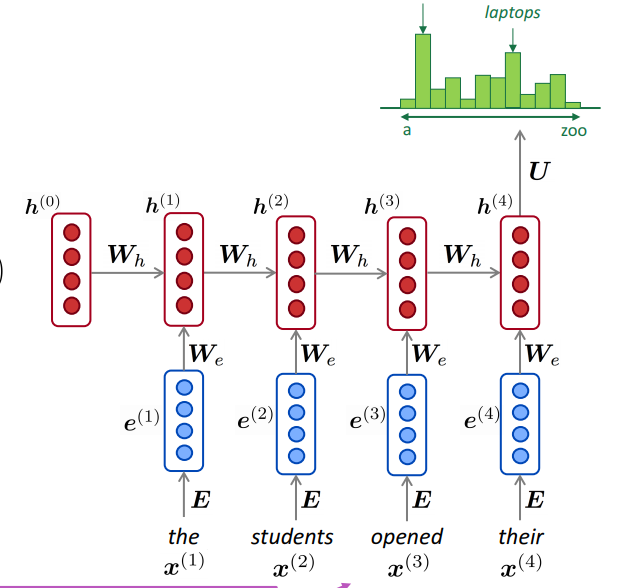
Next Word Prediction or what is also called Language Modeling is the task of predicting what word comes next. It is one of the fundamental tasks of NLP and has many applications. You might be using it daily when you write texts or emails without realizing it.

Source: towardsdatascience.com

Share :
comments powered by Disqus

Related Posts

Learning by playing

Learning by playing

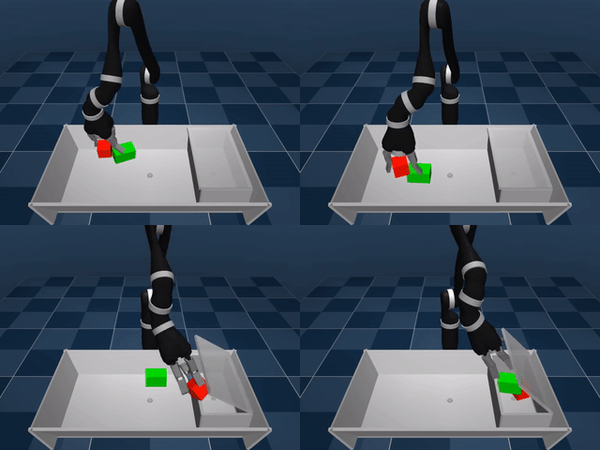
Our new paper proposes a new learning paradigm called ‘Scheduled Auxiliary Control (SAC-X)’ which seeks to overcome the issue of exploration in control tasks. SAC-X is based on the idea that to learn complex tasks from scratch, an agent has to learn to explore and master a set of basic skills first. Just as a baby must develop coordination and balance before she crawls or walks—providing an agent with internal (auxiliary) goals corresponding to simple skills increases the chance it can understand and perform more complicated tasks.

Read More
Bonsai AI: Using Simulink for Deep Reinforcement Learning

Bonsai AI: Using Simulink for Deep Reinforcement Learning

Simulink provides a great training environment for DRL as it allows 3rd parties like Bonsai to integrate and control simulation models from the outside. This ability is one of the basic requirements for simulation platforms to be feasible for Deep Reinforcement Learning using Bonsai AI. More requirements can be found here.

Read More
So what’s new in AI?

So what’s new in AI?

I graduated with a degree in AI when the cost of the equivalent computational power to an iPhone was $50 million. A lot has changed but surprisingly much is still the same.

Read More