Open Avalanche Project – Using ML to Improve Avalanche Forecasting

Open Avalanche Project – Using ML to Improve Avalanche Forecasting

  • March 7, 2018
Table of Contents

Open Avalanche Project – Using ML to Improve Avalanche Forecasting

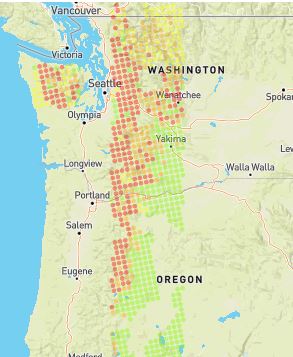
The Goal of the Open Avalanche Project is to reduce avalanche-related deaths and impacts across the world. By using machine learning and experimentation to improve the accuracy and efficacy of avalanche forecasts, we are setting out to cover the world with the best Avalanche and Snow data possible.

Source: openavalancheproject.org
Share :
comments powered by Disqus

Related Posts

Google-Landmarks: A New Dataset and Challenge for Landmark Recognition

Google-Landmarks: A New Dataset and Challenge for Landmark Recognition

A few examples of images from the Google-Landmarks dataset, including landmarks such as Big Ben, Sacre Coeur Basilica, the rock sculpture of Decebalus and the Megyeri Bridge, among others.

Read More
Machine Learning Crash Course

Machine Learning Crash Course

How does machine learning differ from traditional programming?What is loss, and how do I measure it?How does gradient descent work?How do I determine whether my model is effective?How do I represent my data so that a program can learn from it?How do I build a deep neural network?

Read More
“Cracking” Morse code with RNNs

“Cracking” Morse code with RNNs

Spoiler alert: Morse code doesn’t really need cracking. Its useful because messages can be sent using this code with minimal equipment, and I say it doesn’t need cracking because the code is well known and what the combinations of dots and dashes stand for is no secret. But, in theory, it is a substitution cipher — where each letter of the alphabet (and each digit) has some representation using dots and dashes, as illustrated below.

Read More