Talent vs. Luck: the role of randomness in success and failure

Talent vs. Luck: the role of randomness in success and failure

  • March 7, 2018
Table of Contents

Talent vs. Luck: the role of randomness in success and failure

The largely dominant meritocratic paradigm of highly competitive Western cultures is rooted on the belief that success is due mainly, if not exclusively, to personal qualities such as talent, intelligence, skills, efforts or risk taking. Sometimes, we are willing to admit that a certain degree of luck could also play a role in achieving significant material success. But, as a matter of fact, it is rather common to underestimate the importance of external forces in individual successful stories.

It is very well known that intelligence or talent exhibit a Gaussian distribution among the population, whereas the distribution of wealth – considered a proxy of success – follows typically a power law (Pareto law)

Source: arxiv.org

Share :
comments powered by Disqus

Related Posts

Seeing the brain’s electrical activity

Seeing the brain’s electrical activity

MIT researchers have come up with a new way to measure electrical activity in the brain. Their new light-sensitive protein can be embedded into neuron membranes, where it emits a fluorescent signal that indicates how much voltage a particular cell is experiencing. This could allow scientists to study how neurons behave, millisecond by millisecond, as the brain performs a particular function.

Read More
Building a Next Word Predictor in Tensorflow

Building a Next Word Predictor in Tensorflow

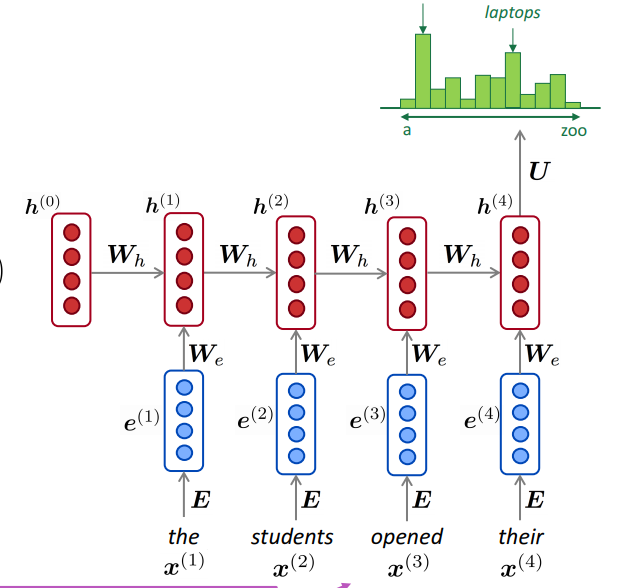
Next Word Prediction or what is also called Language Modeling is the task of predicting what word comes next. It is one of the fundamental tasks of NLP and has many applications. You might be using it daily when you write texts or emails without realizing it.

Read More
Surprise graphene discovery could unlock secrets of superconductivity

Surprise graphene discovery could unlock secrets of superconductivity

A sandwich of two graphene layers can conduct electrons without resistance if they are twisted at a ‘magic angle’’, physicists have discovered. The finding could prove to be a significant step in the decades-long search for room-temperature superconductors.

Read More