Kaggle Tensorflow Speech Recognition Challenge

Kaggle Tensorflow Speech Recognition Challenge

  • March 15, 2018
Table of Contents

Kaggle Tensorflow Speech Recognition Challenge

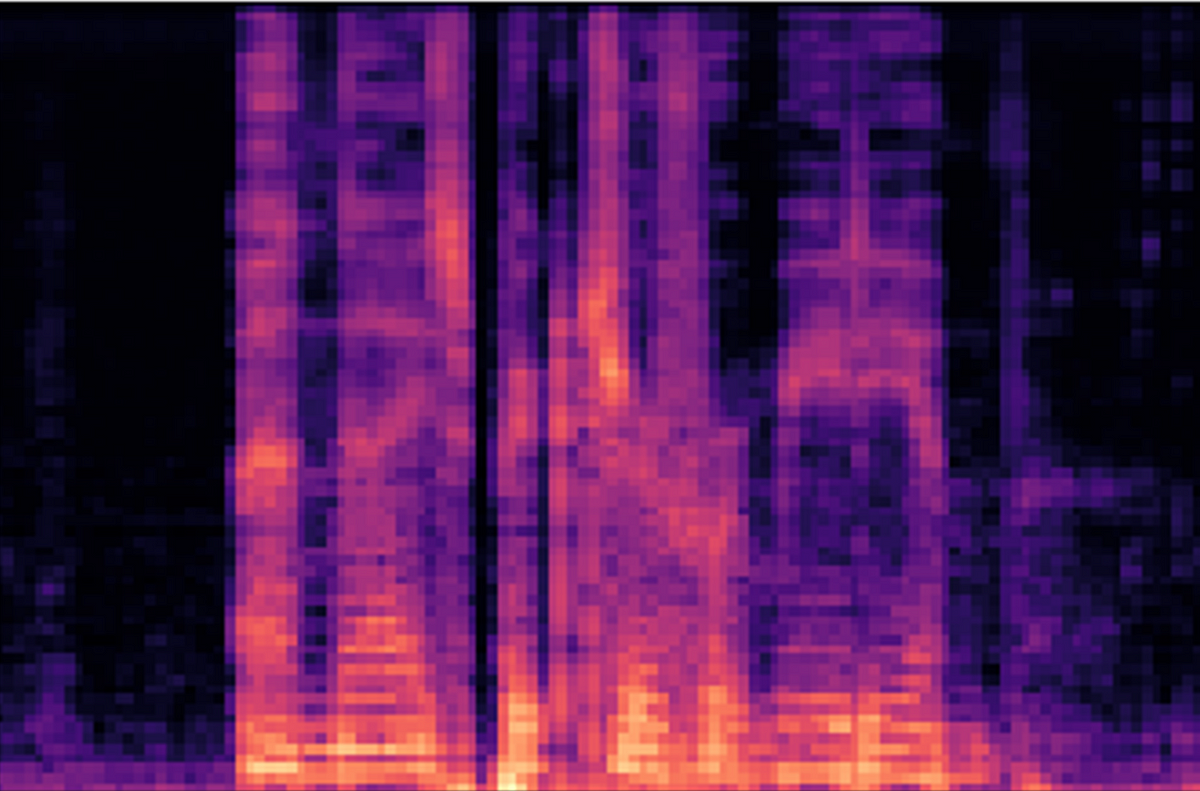
From November 2017 to January 2018 the Google Brain team hosted a speech recognition challenge on Kaggle. The goal of this challenge was to write a program that can correctly identify one of 10 words being spoken in a one-second long audio file. Having just made up my mind to start seriously studying data science with the goal of turning a new corner in my career, I decided to tackle this as my first serious kaggle challenge.

In this post I will talk about ResNets, RNNs, 1D and 2D convolution, Connectionist Temporal Classification and more. Let’s go!

Source: towardsdatascience.com

Share :
comments powered by Disqus

Related Posts

Deep Neural Network implemented in pure SQL over BigQuery

Deep Neural Network implemented in pure SQL over BigQuery

In this post, we’ll implement a deep neural network with one hidden layer (and ReLu and softmax activation functions) purely in SQL. The end-to-end steps for neural network training including the forward pass and back-propagation will be implemented as a single SQL query on BigQuery. As it runs on Bigquery, in effect we are performing distributed neural network training on 100s to 1000s of servers.

Read More
Semantic Image Segmentation with DeepLab in Tensorflow

Semantic Image Segmentation with DeepLab in Tensorflow

Today, we are excited to announce the open source release of our latest and best performing semantic image segmentation model, DeepLab-v3+ [1], implemented in Tensorflow. This release includes DeepLab-v3+ models built on top of a powerful convolutional neural network (CNN) backbone architecture [2, 3] for the most accurate results, intended for server-side deployment. As part of this release, we are additionally sharing our Tensorflow model training and evaluation code, as well as models already pre-trained on the Pascal VOC 2012 and Cityscapes benchmark semantic segmentation tasks.

Read More