VINE: An Open Source Interactive Data Visualization Tool for Neuroevolution

VINE: An Open Source Interactive Data Visualization Tool for Neuroevolution

  • March 16, 2018
Table of Contents

VINE: An Open Source Interactive Data Visualization Tool for Neuroevolution

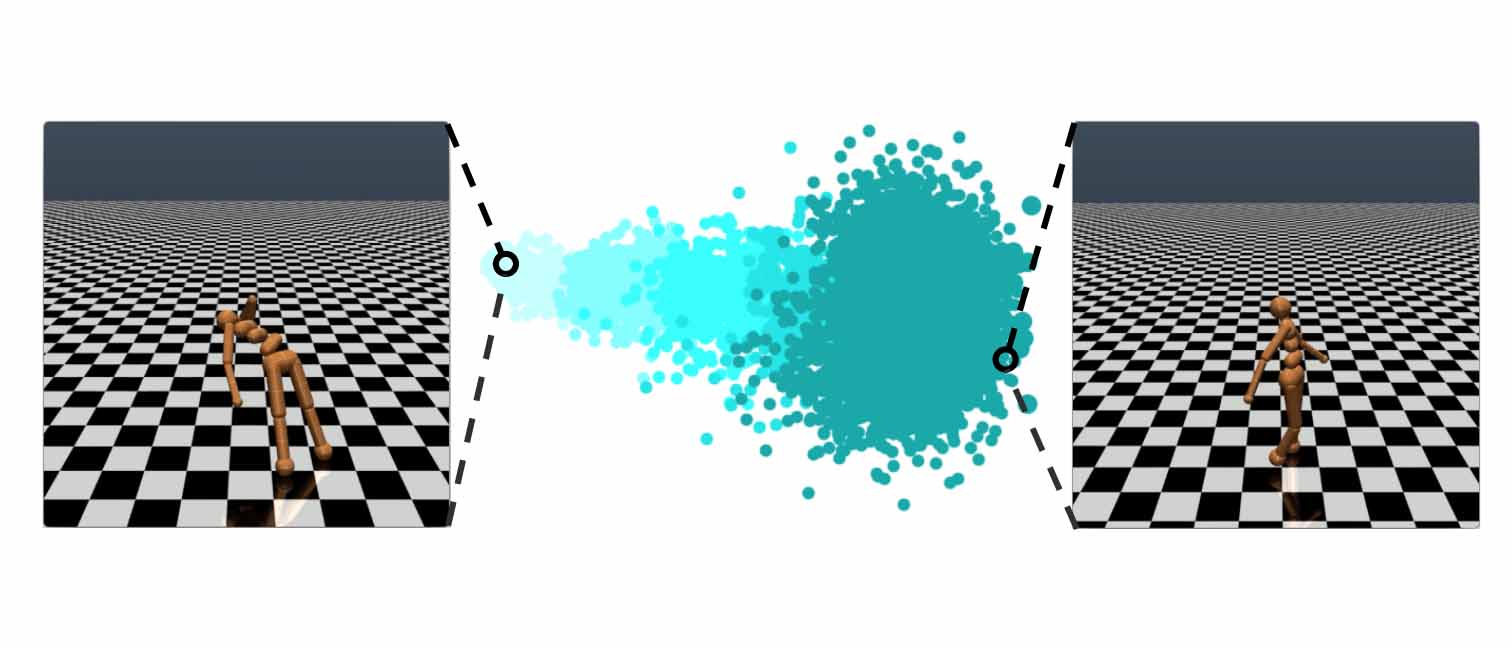
Uber AI Labs introduces Visual Inspector for Neuroevolution (VINE), an open source interactive data visualization tool to help neuroevolution researchers better understand this family of algorithms.

Source: uber.com
Tags :
Share :
comments powered by Disqus

Related Posts

Using Google Cloud AutoML to Classify Poisonous Australian Spiders

Using Google Cloud AutoML to Classify Poisonous Australian Spiders

Google’s new Cloud AutoML Vision is a new machine learning service from Google Cloud that aims to make state of the art machine learning techniques accessible to non-machine learning experts. In this post I will show you how I was able, in just a few hours, to create a custom image classifier that is able to distinguish between different types of poisonous Australian spiders. I didn’t have any data when I started and it only required a very basic understanding of machine learning related concepts.

Read More
Kaggle Tensorflow Speech Recognition Challenge

Kaggle Tensorflow Speech Recognition Challenge

From November 2017 to January 2018 the Google Brain team hosted a speech recognition challenge on Kaggle. The goal of this challenge was to write a program that can correctly identify one of 10 words being spoken in a one-second long audio file. Having just made up my mind to start seriously studying data science with the goal of turning a new corner in my career, I decided to tackle this as my first serious kaggle challenge.

Read More
Deep Neural Network implemented in pure SQL over BigQuery

Deep Neural Network implemented in pure SQL over BigQuery

In this post, we’ll implement a deep neural network with one hidden layer (and ReLu and softmax activation functions) purely in SQL. The end-to-end steps for neural network training including the forward pass and back-propagation will be implemented as a single SQL query on BigQuery. As it runs on Bigquery, in effect we are performing distributed neural network training on 100s to 1000s of servers.

Read More