NGraph: A New Open Source Compiler for Deep Learning Systems

NGraph: A New Open Source Compiler for Deep Learning Systems

  • March 20, 2018
Table of Contents

NGraph: A New Open Source Compiler for Deep Learning Systems

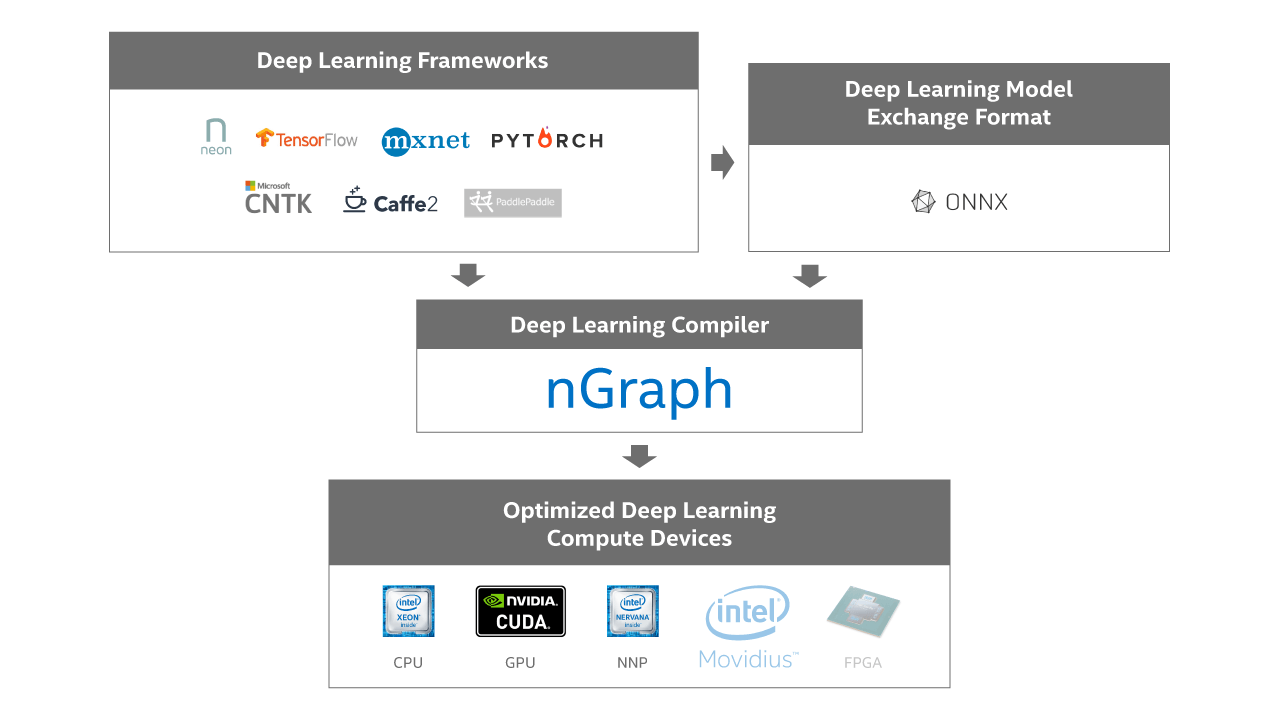
We are pleased to announce the open sourcing of nGraph, a framework-neutral Deep Neural Network (DNN) model compiler that can target a variety of devices. With nGraph, data scientists can focus on data science rather than worrying about how to adapt their DNN models to train and run efficiently on different devices. Continue reading below for highlights of our engineering challenges and design decisions, and see GitHub, our documentation, and our SysML paper for additional details.

Source: intel.com

Tags :
Share :
comments powered by Disqus

Related Posts

Deciphering China’s AI Dream

Deciphering China’s AI Dream

This report examines the intersection of two subjects, China and artificial intelligence, both of which are already difficult enough to comprehend on their own. It provides context for China’s AI strategy with respect to past science and technology plans, and it also connects the consistent and new features of China’s AI approach to the drivers of AI development (e.g. hardware, data, and talented scientists). In addition, it benchmarks China’s current AI capabilities by developing a novel index to measure any country’s AI potential and highlights the potential implications of China’s AI dream for issues of AI safety, national security, economic development, and social governance.

Read More
Using Evolutionary AutoML to Discover Neural Network Architectures

Using Evolutionary AutoML to Discover Neural Network Architectures

The brain has evolved over a long time, from very simple worm brains 500 million years ago to a diversity of modern structures today. The human brain, for example, can accomplish a wide variety of activities, many of them effortlessly — telling whether a visual scene contains animals or buildings feels trivial to us, for example. To perform activities like these, artificial neural networks require careful design by experts over years of difficult research, and typically address one specific task, such as to find what’s in a photograph, to call a genetic variant, or to help diagnose a disease.

Read More