Universal Sentence Encoder by Ray Kurzweil’s Team at Google

Universal Sentence Encoder by Ray Kurzweil’s Team at Google

  • March 31, 2018
Table of Contents

Universal Sentence Encoder by Ray Kurzweil’s Team at Google

We present models for encoding sentences into embedding vectors that specifically target transfer learning to other NLP tasks. The models are efficient and result in accurate performance on diverse transfer tasks. Two variants of the encoding models allow for trade-offs between accuracy and compute resources.

For both variants, we investigate and report the relationship between model complexity, resource consumption, the availability of transfer task training data, and task performance. Comparisons are made with baselines that use word level transfer learning via pretrained word embeddings as well as baselines do not use any transfer learning. We find that transfer learning using sentence embeddings tends to outperform word level transfer.

With transfer learning via sentence embeddings, we observe surprisingly good performance with minimal amounts of supervised training data for a transfer task. We obtain encouraging results on Word Embedding Association Tests (WEAT) targeted at detecting model bias. Our pre-trained sentence encoding models are made freely available for download and on TF Hub.

Source: arxiv.org
Tags :
Share :
comments powered by Disqus

Related Posts

Does my algorithm have a mental-health problem?

Does my algorithm have a mental-health problem?

Is my car hallucinating? Is the algorithm that runs the police surveillance system in my city paranoid? Marvin the android in Douglas Adams’s Hitchhikers Guide to the Galaxy had a pain in all the diodes down his left-hand side.

Read More
Expressive Speech Synthesis with Tacotron

Expressive Speech Synthesis with Tacotron

At Google, we’re excited about the recent rapid progress of neural network-based text-to-speech (TTS) research. In particular, end-to-end architectures, such as the Tacotron systems we announced last year, can both simplify voice building pipelines and produce natural-sounding speech. This will help us build better human-computer interfaces, like conversational assistants, audiobook narration, news readers, or voice design software.

Read More
AI Cardiologist Aces Its First Medical Exam

AI Cardiologist Aces Its First Medical Exam

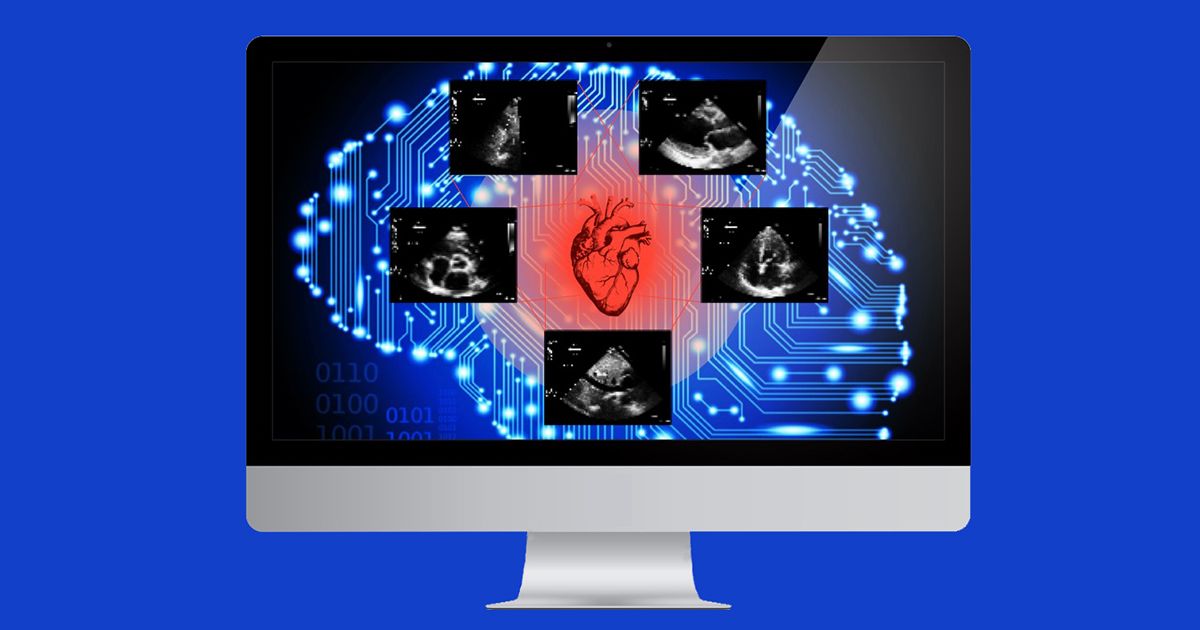
When both the AI and expert cardiologists were asked to classify the images, the AI achieved an accuracy of 92 percent. The humans got only 79 percent correct.

Read More