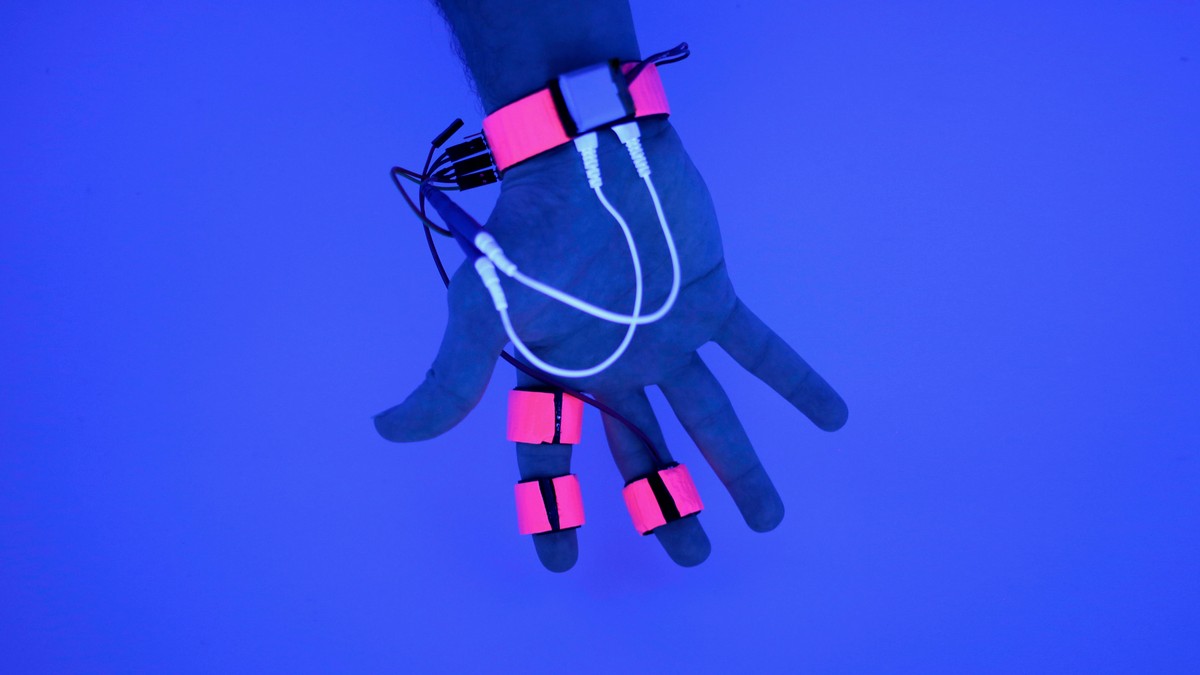
MIT Researchers Have Developed a ‘System for Dream Control’

MIT Researchers Have Developed a ‘System for Dream Control’

  • April 23, 2018
Table of Contents

MIT Researchers Have Developed a ‘System for Dream Control’

There is a borderland between waking life and the uncharted wilderness of sleep that we all traverse each night, but we rarely stop to marvel at the strangeness of this liminal world. If we do, we find that it is full of hallucinations both wonderful and terrifying, a mental goulash of reality and fantasy.

Source: vice.com
Share :
comments powered by Disqus

Related Posts

Seeing More with In Silico Labeling of Microscopy Images

Seeing More with In Silico Labeling of Microscopy Images

In the fields of biology and medicine, microscopy allows researchers to observe details of cells and molecules which are unavailable to the naked eye. Transmitted light microscopy, where a biological sample is illuminated on one side and imaged, is relatively simple and well-tolerated by living cultures but produces images which can be difficult to properly assess. Fluorescence microscopy, in which biological objects of interest (such as cell nuclei) are specifically targeted with fluorescent molecules, simplifies analysis but requires complex sample preparation.

Read More
Why Is the Human Brain So Efficient?

Why Is the Human Brain So Efficient?

The brain is complex; in humans it consists of about 100 billion neurons, making on the order of 100 trillion connections. It is often compared with another complex system that has enormous problem-solving power: the digital computer. Both the brain and the computer contain a large number of elementary units—neurons and transistors, respectively—that are wired into complex circuits to process information conveyed by electrical signals.

Read More