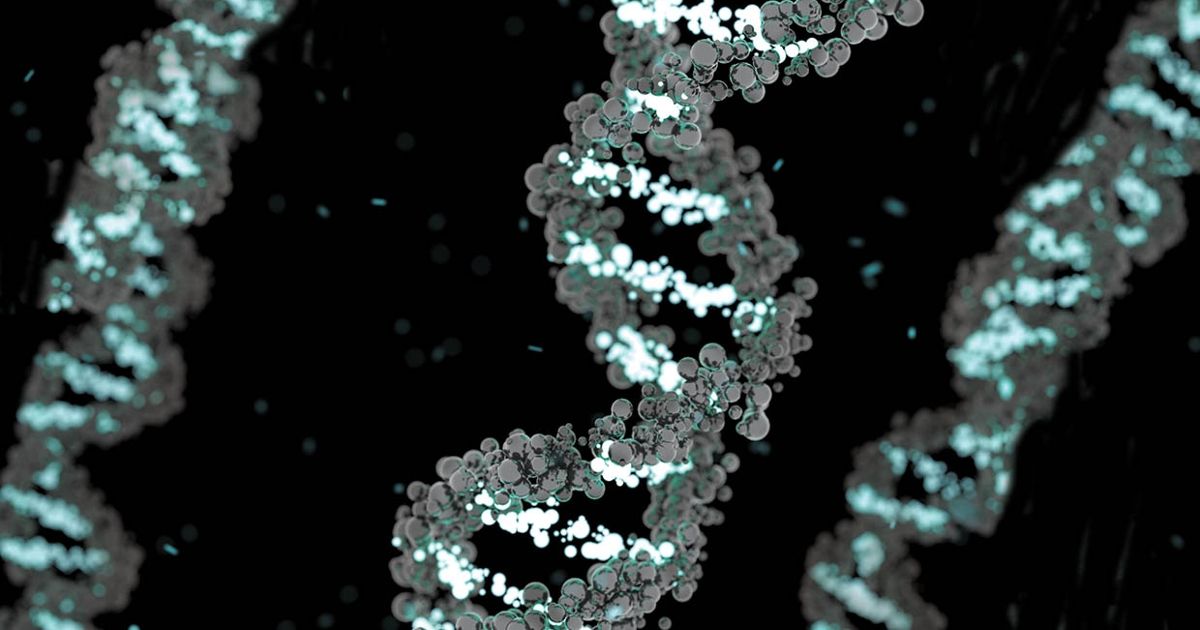
Exabytes in a Test Tube: The Case for DNA Data Storage

Exabytes in a Test Tube: The Case for DNA Data Storage

  • April 25, 2018
Table of Contents

Exabytes in a Test Tube: The Case for DNA Data Storage

Our ability to sequence, synthesize, and edit DNA has advanced at a previously inconceivable speed. Far from being expensive and impractical, these DNA technologies are the most disruptive in all of biotechnology. It’s now possible to write custom DNA strands for pennies per base pair, at least for short strands.

Two companies, GenScript Biotech Corp. and Integrated DNA Technologies, provide DNA synthesis for 11 and 37 cents per base pair, respectively, for strands no longer than several hundred base pairs. Biotech startup companies buy their services and use the synthesized DNA to repair organs or create yeasts that produce unusual flavors to use in brewing beer.

Source: ieee.org
Share :
comments powered by Disqus

Related Posts

Newly-discovered human organ may help explain how cancer spreads

Newly-discovered human organ may help explain how cancer spreads

This discovery was made by chance, from routine endoscopies – a procedure that involves inserting a thin camera into a person’s gastrointestinal tract. Newer approaches enable doctors to use this procedure to get a microscopic look at the tissue inside a person’s gut at the same time, with some surprising results.

Read More
15 Types of Regression you should know

15 Types of Regression you should know

Regression techniques are one of the most popular statistical techniques used for predictive modeling and data mining tasks. On average, analytics professionals know only 2-3 types of regression which are commonly used in real world. They are linear and logistic regression.

Read More