Learning to Speak Shrub

Learning to Speak Shrub

  • April 27, 2018
Table of Contents

Learning to Speak Shrub

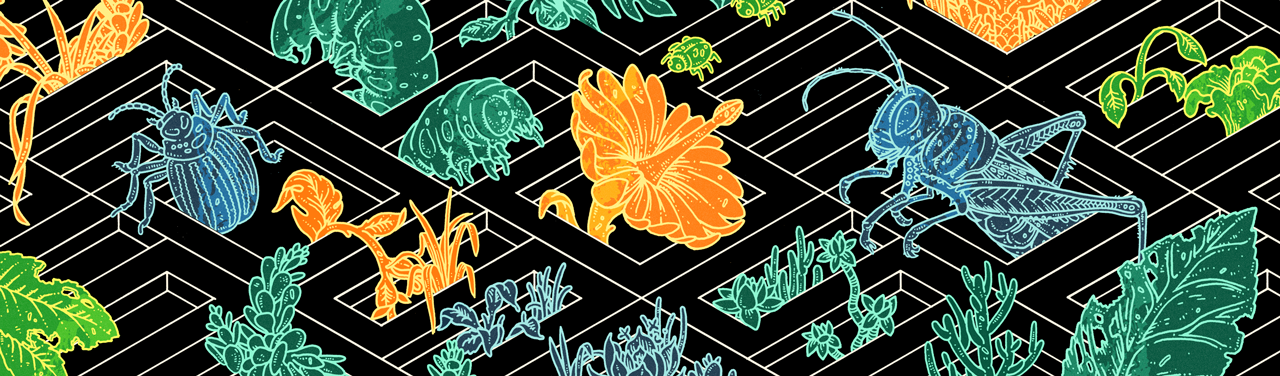
A few months later, Karban, a professor at the University of California, Davis who studies plant defense communication, returns to the sagebrush and examines its leaves, many of which now have damage from real grasshoppers or beetles. However, within about two feet of the branches he clipped, leaves have been spared the worst ravages of the hungry insects. That’s because Karban’s cuttings convinced those damaged leaves they were under insect attack, so they sent chemical alarms into the air.

Neighboring leaves intercepted and deciphered the code messages, and began prepping their own defenses against the bugs.

Source: nautil.us

Tags :
Share :
comments powered by Disqus

Related Posts

Why Water Is Weird

Why Water Is Weird

It’s striking that water can illustrate and elucidate a martial arts philosophy while also being, to this day, the “least understood material on Earth,” as researchers reported recently.

Read More
Seeing More with In Silico Labeling of Microscopy Images

Seeing More with In Silico Labeling of Microscopy Images

In the fields of biology and medicine, microscopy allows researchers to observe details of cells and molecules which are unavailable to the naked eye. Transmitted light microscopy, where a biological sample is illuminated on one side and imaged, is relatively simple and well-tolerated by living cultures but produces images which can be difficult to properly assess. Fluorescence microscopy, in which biological objects of interest (such as cell nuclei) are specifically targeted with fluorescent molecules, simplifies analysis but requires complex sample preparation.

Read More