The Army Is Working on Brain Hacks to Help Soldiers Deal With Information Overload

The Army Is Working on Brain Hacks to Help Soldiers Deal With Information Overload

  • May 4, 2018
Table of Contents

The Army Is Working on Brain Hacks to Help Soldiers Deal With Information Overload

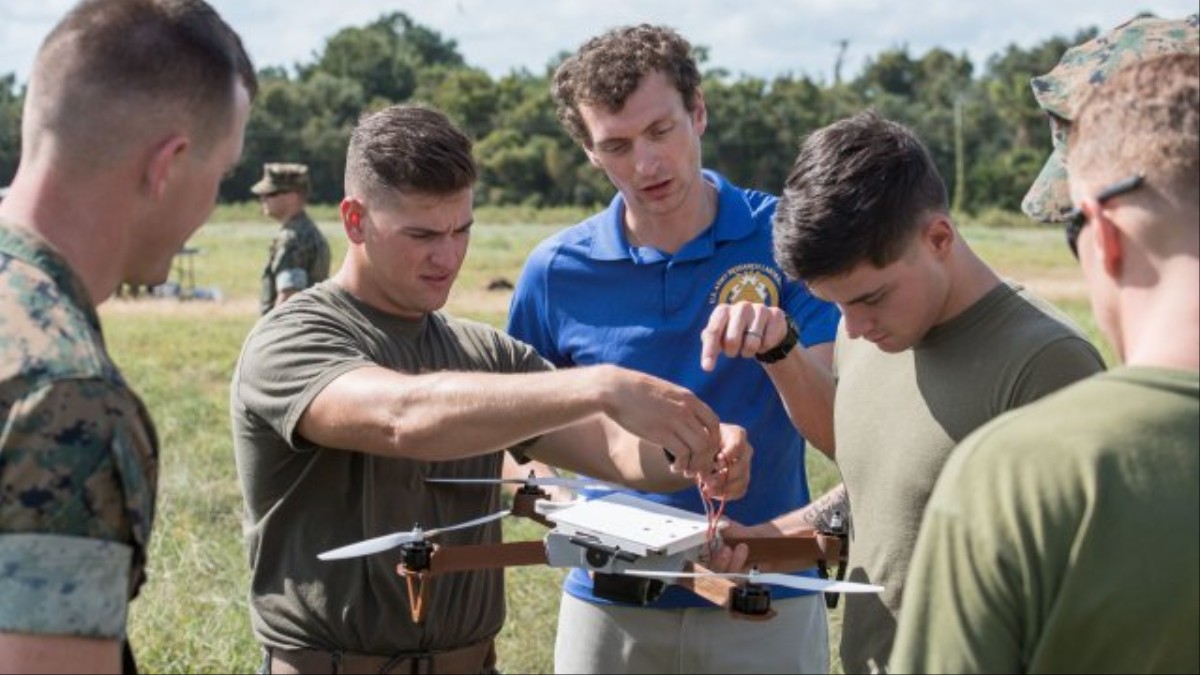
So the ground-combat branch wants to hack troops’ brains, and develop new technologies and methods for pairing human beings and artificial intelligence. The idea is for the AI—’intelligent agent’ is the term the Army uses—to process raw information, leaving the human soldier to do what they’re best at: make decisions, especially creative ones.

Source: vice.com

Share :
comments powered by Disqus

Related Posts

The Case Against an Autonomous Military

The Case Against an Autonomous Military

The potential harm of A.I.s deliberately designed to kill in warfare is much more pressing. The U.S. and other countries are working hard to develop military A.I., in the form of automated weapons, that enhance battlefield capabilities while exposing fewer soldiers to injury or death. For the U.S., this would be a natural extension of the existing imperfect drone warfare program—failures in military intelligence have led to the mistaken killing of non-combatants in Iraq.

Read More
Artificial Intelligence Opens the Vatican Secret Archives

Artificial Intelligence Opens the Vatican Secret Archives

Known as In Codice Ratio, it uses a combination of artificial intelligence and optical-character-recognition (OCR) software to scour these neglected texts and make their transcripts available for the very first time. If successful, the technology could also open up untold numbers of other documents at historical archives around the world.

Read More
Facebook Open Sources ELF OpenGo

Facebook Open Sources ELF OpenGo

Inspired by DeepMind’s work, we kicked off an effort earlier this year to reproduce their recent AlphaGoZero results using FAIR’s Extensible, Lightweight Framework (ELF) for reinforcement learning research. The goal was to create an open source implementation of a system that would teach itself how to play Go at the level of a professional human player or better. By releasing our code and models we hoped to inspire others to think about new applications and research directions for this technology.

Read More