For the first time, two CubeSats have gone interplanetary

For the first time, two CubeSats have gone interplanetary

  • May 8, 2018
Table of Contents

For the first time, two CubeSats have gone interplanetary

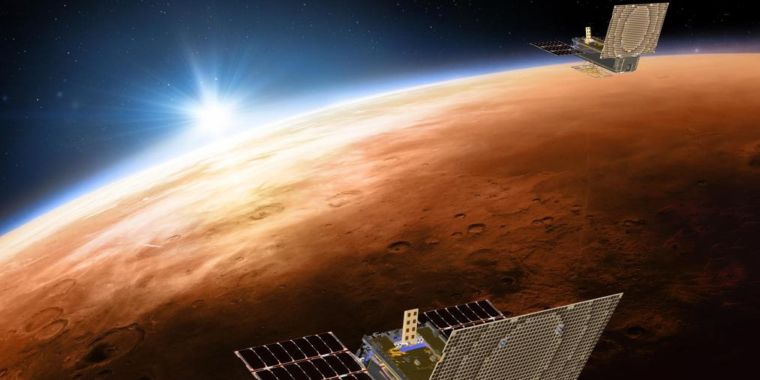
The first CubeSats launched in 2003, and in less than a decade, more than 100 had reached orbit around Earth. The aerospace industry has debated whether the 2kg to 15kg microsatellites are a fad, a toy, or a disruptive technology that will change the way we ultimately observe and study Earth and the rest of the Solar System. However, what is now beyond doubt is that the first CubeSats have gone interplanetary.

Source: arstechnica.com
Share :
comments powered by Disqus

Related Posts

A Radically Conservative Solution for Cosmology’s Biggest Mystery

A Radically Conservative Solution for Cosmology’s Biggest Mystery

The conflicting measurements have vexed astrophysicists and inspired rampant speculation as to whether unknown physical processes might be causing the discrepancy. Maybe dark matter particles are interacting strongly with the regular matter of planets, stars and galaxies? Or perhaps an exotic particle not yet detected, such as the so-called sterile neutrino, might be playing a role.

Read More
Mining in Space Could Lead to Conflicts on Earth

Mining in Space Could Lead to Conflicts on Earth

Space mining is no longer science fiction. By the 2020s, Planetary Resources and Deep Space Industries—for-profit space-mining companies cooperating with NASA—will be sending out swarms of tiny satellites to assess the composition of hurtling hunks of cosmic debris, identify the most lucrative ones, and harvest them. They’ve already developed prototype spacecraft to do the job.

Read More