MIT Invented a Tool That Allows Driverless Cars to Navigate Rural Roads Without a Map

MIT Invented a Tool That Allows Driverless Cars to Navigate Rural Roads Without a Map

  • May 8, 2018
Table of Contents

MIT Invented a Tool That Allows Driverless Cars to Navigate Rural Roads Without a Map

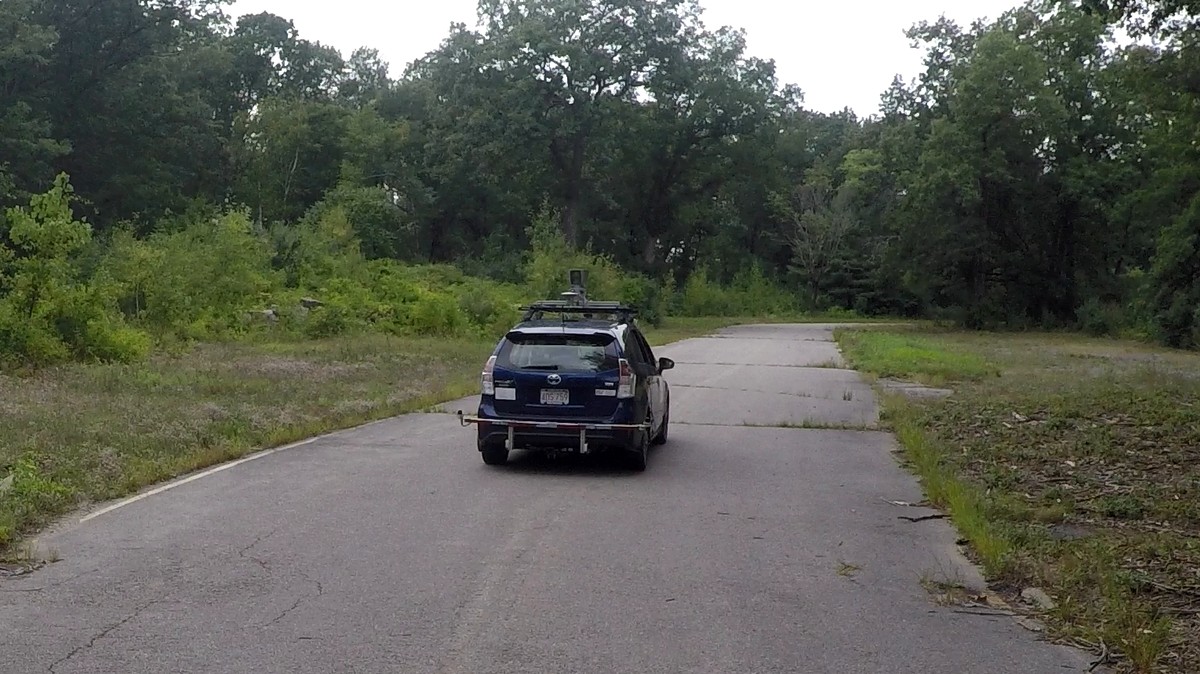
In a paper posted online on May 7 by CSAIL and project partner Toyota, 30-year-old PhD candidate Teddy Ort—along with co-authors Liam Paull and Daniela Rus—detail how using LIDAR (a radar-like sensor that uses lasers instead of radio waves to measure distances) and GPS together can enable self-driving cars to navigate on rural roads without having a detailed map to guide them. The team was able to drive down a number of unpaved roads in rural Massachusetts and reliably scan the road for curves and obstacles up to 100 feet ahead, according to the paper.

Source: vice.com

Share :
comments powered by Disqus

Related Posts

China’s tech giants are venturing into autonomous driving

China’s tech giants are venturing into autonomous driving

If there’s one thing China’s tech giants are known for, it’s their ability to venture into everything from social media, to online payments, to delivery services. The latest thing they’re all speeding towards? Autonomous driving.

Read More
16-year-old on finding primes with neural networks

16-year-old on finding primes with neural networks

Inspired by the triumphs of the “AlphaGo” project by DeepMind, I focused my research into the extensions and optimisation techniques that are so common in neural network design. There are many useful packages in machine learning, such as tensor flow, which can generate complex neural networks which work well, very quickly, but for this project I really wanted to develop an understanding of the inner workings of modern neural networks. So I went through the arduous calculus myself giving a much less efficient but more rewarding program.

Read More