Scientists Made a Working Invisibility Cloak (But There’s a Catch)

Scientists Made a Working Invisibility Cloak (But There’s a Catch)

  • May 10, 2018
Table of Contents

Scientists Made a Working Invisibility Cloak (But There’s a Catch)

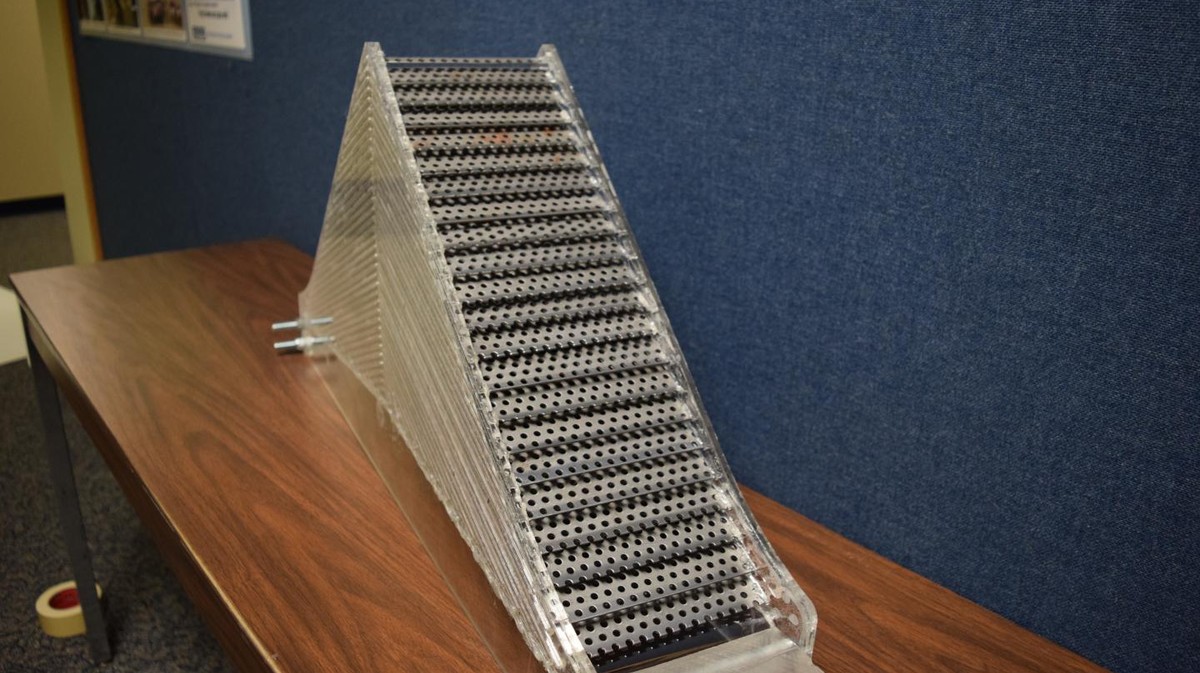
Whether the invisibility cloak in Harry Potter, the cloaking device in Star Trek, or the various government agencies investing in invisibility R&D, humans have long fantasized about technology capable of rendering one undetectable. Scientists have been working at actually making this fantasy a reality, and a group of researchers was recently successful. Amanda D. Hanford, a researcher at Pennsylvania State University, and her colleagues made a design for an underwater cloaking device that uses metamaterials—synthetic composites that have structural components not found in nature—to obscure objects.

But here’s the catch: this device makes objects invisible to sonar, but not the naked eye. Still, it’s a remarkable feat. Hanford and her team created a three-foot tall pyramid of perforated plates and, when they placed it underwater and tried to detect it using sound waves, they couldn’t.

It was as if the sound waves moved right through it without even realizing the object was there.

Source: vice.com
Tags :
Share :
comments powered by Disqus

Related Posts

Yale physicists find signs of a time crystal

Yale physicists find signs of a time crystal

Time crystals, first identified in 2016, are different. Their atoms spin periodically, first in one direction and then in another, as a pulsating force is used to flip them. That’s the “ticking.”

Read More
Watch These Trippy NASA Visualizations of Space Magnetism

Watch These Trippy NASA Visualizations of Space Magnetism

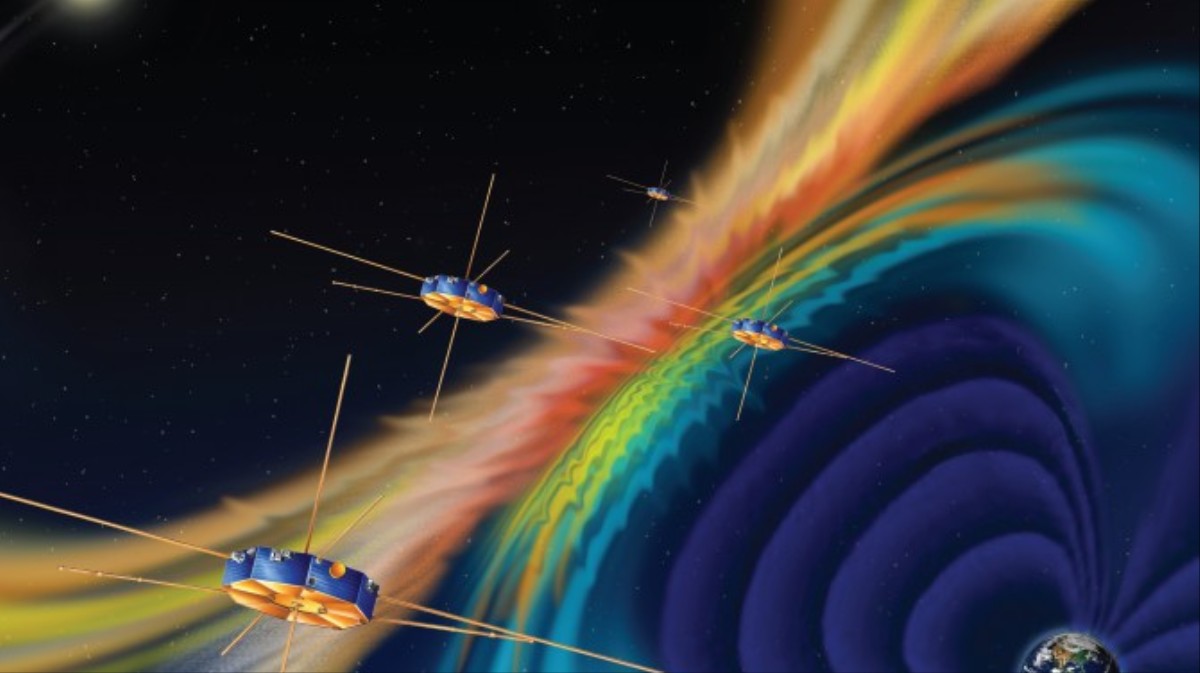
Earth is a giant magnet, and the field that surrounds it, called the magnetosphere, is one of the major reasons life on our planet has been able to flourish. But despite its crucial role in warding off cosmic radiation and atmospheric loss, there’s a lot we don’t know about the magnetosphere. That’s why in March 2015, NASA launched the Magnetospheric Multiscale Mission (MMS), a fleet of four spacecraft, to study its secrets.

Read More
Troubled Times for Alternatives to Einstein’s Theory of Gravity

Troubled Times for Alternatives to Einstein’s Theory of Gravity

Zumalacárregui, a theoretical physicist at the Berkeley Center for Cosmological Physics, had been studying how the discovery of a neutron-star collision would affect so-called “alternative” theories of gravity. These theories attempt to overcome what many researchers consider to be two enormous problems with our understanding of the universe. Observations going back decades have shown that the universe appears to be filled with unseen particles — dark matter — as well as an anti-gravitational force called dark energy.

Read More