Report: billionaire Sackler family, accused of encouraging the opioid epidemic

Report: billionaire Sackler family, accused of encouraging the opioid epidemic

  • September 11, 2018
Table of Contents

Report: billionaire Sackler family, accused of encouraging the opioid epidemic

The Sackler family owns Purdue Pharma, which created the infamous opioid painkiller OxyContin Richard Sackler and his billionaire family, who have been blamed for fosteringthe nation’s ongoing opioid epidemic, owna second pharmaceutical company. The Sacklers are the owners of Purdue Pharma, which created the addictive opioid painkiller OxyContin. But the family alsoowna second company based in Rhode Island, Rhodes Pharma, according to a Financial Times report released Sunday.

Rhodes Pharma is of one of the largest creators of off-patent generic opioids. The company produces several opioid-based painkillers that contain addictive drugs including oxycodone, hydrocodone and morphine. Rhodes Pharma was started in 2007, according to companyregistration documents obtained by the Financial Times.

Purdue Pharma and Rhodes Pharma combined were responsible for 14.4 million opioid prescriptions in theU.S. The Sacklers are worth a combined$13 billion, according to a 2016 Forbes report. Thevast majority of their wealth, shared among 20 family members, is derived fromdrug-making. Purdue Pharma has faced hundreds of lawsuits over the years for fueling the opioid epidemic.

More than 63,000 people in the U.S. died from drug overdoses in 2016, of which 66 percent were related to opioid use. The lawsuit also said Purdue Pharma’s marketing not only “exaggerated the benefits” of the medication but the company also told medical practitioners that they were in jeopardy of violating theHippocratic Oath if they didn’t treat patients suffering from certain conditions with opioids.

Source: newsweek.com
Share :
comments powered by Disqus

Related Posts

The inconvenient truth about cancer and mobile phones

The inconvenient truth about cancer and mobile phones

On 28 March this year, the scientific peer review of a landmark United States government study concluded that there is “clear evidence” that radiation from mobile phones causes cancer, specifically, a heart tissue cancer in rats that is too rare to be explained as random occurrence. Eleven independent scientists spent three days at Research Triangle Park, North Carolina, discussing the study, which was done by the National Toxicology Program of the US Department of Health and Human Services and ranks among the largest conducted of the health effects of mobile phone radiation. NTP scientists had exposed thousands of rats and mice (whose biological similarities to humans make them useful indicators of human health risks) to doses of radiation equivalent to an average mobile user’s lifetime exposure.

Read More
Our cancer preventing genes revealed

Our cancer preventing genes revealed

In our bodies, we all have genes working hard to prevent cancer. If they don’t do their job properly, rogue cells can mutate and develop into the life-threatening disease. The malfunction of one so-called “super tumour suppressor gene” known as p53 causes at least half of all cancers.

Read More
First ever color X-ray on a human

First ever color X-ray on a human

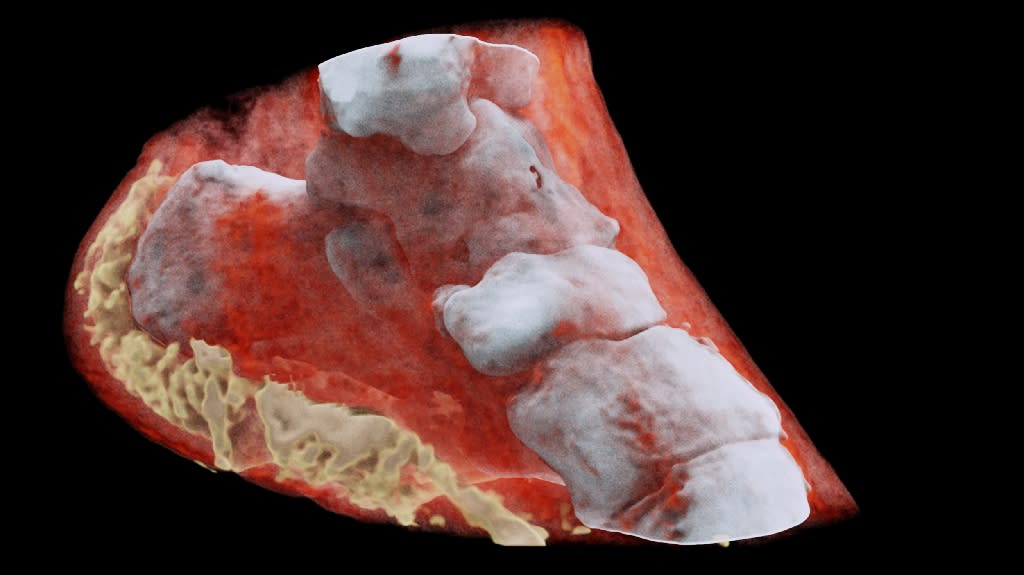
New Zealand scientists have performed the first-ever 3-D, colour X-ray on a human, using a technique that promises to improve the field of medical diagnostics, said Europe’s CERN physics lab which contributed imaging technology. The new device, based on the traditional black-and-white X-ray, incorporates The CERN technology, dubbed Medipix, works like a camera detecting and counting individual sub-atomic particles as they collide with pixels while its shutter is open.

Read More