Strange particles coming out of the Earth hint at new physics

Strange particles coming out of the Earth hint at new physics

  • September 30, 2018
Table of Contents

Strange particles coming out of the Earth hint at new physics

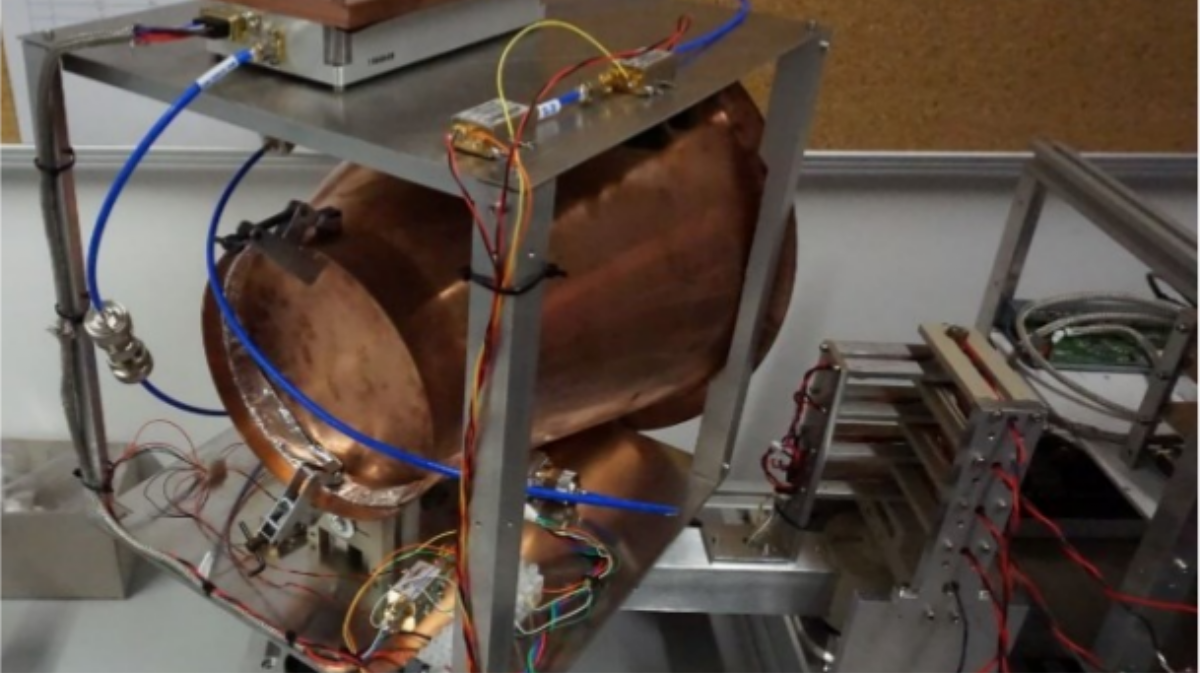
Something mysterious coming out of Antartica’sfrozen ground and it could potentially break physics as we know it. According to physicists, it is some sort ofcosmic ray, a high-energy particle that’s blasted its way through space, into the Earth, and back out again. But the particles physicists know about — the collection of particles that make up what scientists call the Standard Model (SM) of particle physics — shouldn’t be able to do that.

NASA’s Antarctic Impulse Transient Antenna experiment was built to find exotic particles like neutrinos falling from the sky. Such particles rarely make it past the upper atmosphere, so scientists loft the sensitive electronic equipment into the sky via high-altitude balloon. But when scientists spotted high-energy particles coming from below, that meant those particles must have traveled through the entire earth.

There are low-energy neutrinos that can pierce through miles upon miles of rock unaffected. But high-energy neutrinos, as well as other high-energy particles, have “large cross-sections.” That means that they’ll almost always crash into something soon after zipping into the Earth and never make it out the other side.

Source: techexplorist.com
Tags :
Share :
comments powered by Disqus

Related Posts

Muons: the little-known particles helping to probe the impenetrable

Muons: the little-known particles helping to probe the impenetrable

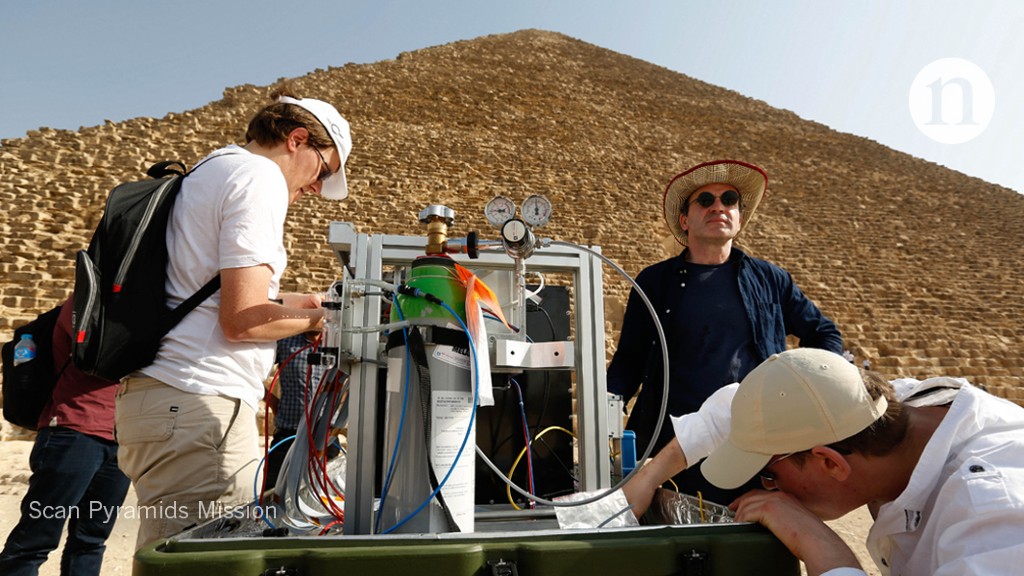
The muon is going mainstream. The particle, a heavy version of the electron that rains down on every square centimetre of Earth, is little known outside particle physics — and last year it helped archaeologists to make a stunning discovery of a previously unknown chamber in Egypt’s Great Pyramid1. Volcanologists and nuclear engineers are also finding new uses for the same technique, called muography, which harnesses muons to probe the innards of dense structures.

Read More
Physics Needs Philosophy. Philosophy Needs Physics

Physics Needs Philosophy. Philosophy Needs Physics

Contrary to claims about the irrelevance of philosophy for science, I argue that philosophy has had, and still has, far more influence on physics than is commonly assumed. I maintain that the current anti-philosophical ideology has had damaging effects on the fertility of science. I also suggest that recent important empirical results, such as the detection of the Higgs particle and gravitational waves, and the failure to detect supersymmetry where many expected to find it, question the validity of certain philosophical assumptions common among theoretical physicists, inviting us to engage in a clearer philosophical reflection on scientific method.

Read More