Cervical cancer set to be eliminated from Australia in global first

Cervical cancer set to be eliminated from Australia in global first

  • October 3, 2018
Table of Contents

Cervical cancer set to be eliminated from Australia in global first

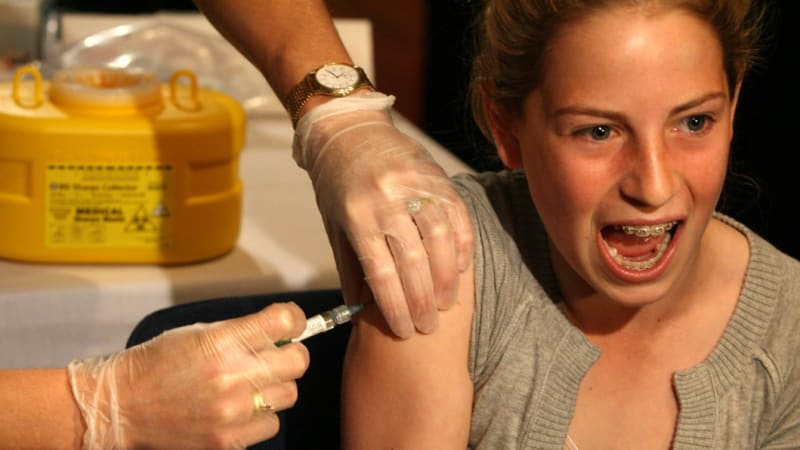
Cervical cancer is set to become a rare disease in Australia within just two years and rendered so uncommon by 2028 it will be deemed eliminated as a public health problem for the first time anywhere in the world. The new forecast has been detailed in research in the Lancet Public Health Journal, which found that although global deaths from the disease still exceed 310,000 each year, Australia is heading towards a scenario where cervical cancer would be almost unheard of. The positive prediction has been largely credited to the introduction a decade ago of the world-leading national human papillomavirus (HPV) vaccination program for schoolchildren, but key changes began in 1991 with the beginning of the country’s pap smear program.

The incidence of cervical cancer in Australia now stands at seven cases per 100,000, about half the global average. Now research from Cancer Council NSW argues the most dramatic improvements are still to come, as the first recipients of the early HPV vaccination program begin to reach their mid thirties. In just two years, cervical cancer could be officially considered a rare cancer in Australia, with six new cases per 100,000 women annually.

If current practices continue, the disease will be all but eradicated by 2066, when there will be about one case per 100,000. By 2100 there would be just three deaths per million women (compared to 21 deaths per million, or about 260 deaths each year today).Professor Ian Frazer, the co-inventor of the technology behind the HPV vaccine, said he expected that in time cervical cancer would be completely eliminated from Australia and the world.

Source: com.au

Share :
comments powered by Disqus

Related Posts

AI System Approved For Diabetic Retinopathy Diagnosis

AI System Approved For Diabetic Retinopathy Diagnosis

A system designed by a University of Iowa ophthalmologist that uses artificial intelligence (AI) to detect diabetic retinopathy without a person interpreting the results earned Food and Drug Administration (FDA) authorization in April, following a clinical trial in primary care offices. Results of that study were published Aug. 28 online in Nature Digital Medicine, offering the first look at data that led to FDA clearance for IDx-DR, the first medical device that uses AI for the autonomous detection of diabetic retinopathy. The clinical trial, which also was the first study to prospectively assess the safety of an autonomous AI system in patient care, compared the performance of IDx-DR to the gold standard diagnostic for diabetic retinopathy, which is the leading cause of vision loss in adults and one of the most severe complications for the 30.3 million Americans living with diabetes.

Read More
Researchers Identify Molecule With Anti-Aging Effects On Vascular System

Researchers Identify Molecule With Anti-Aging Effects On Vascular System

A molecule produced during fasting or calorie restriction has anti-aging effects on the vascular system, which could reduce the occurrence and severity of human diseases related to blood vessels, such as cardiovascular disease, according to a study led by Georgia State University. In this study, the research team explores the link between calorie restriction (eating less or fasting) and delaying aging, which is unknown and has been poorly studied. The findings are published in the journal Molecular Cell.

Read More
UBC breakthrough opens door to $100 ultrasound machine

UBC breakthrough opens door to $100 ultrasound machine

Engineers at the University of British Columbia have developed a new ultrasound transducer, or probe, that could dramatically lower the cost of ultrasound scanners to as little as $100. Their patent-pending innovation—no bigger than a Band-Aid—is portable, wearable and can be powered by a smartphone. Conventional ultrasound scanners use piezoelectric crystals to create images of the inside of the body and send them to a computer to create sonograms.

Read More