POET: Endlessly Generating Increasingly Complex and Diverse Learning Environments and their Solutions

POET: Endlessly Generating Increasingly Complex and Diverse Learning Environments and their Solutions

  • January 21, 2019
Table of Contents

POET: Endlessly Generating Increasingly Complex and Diverse Learning Environments and their Solutions

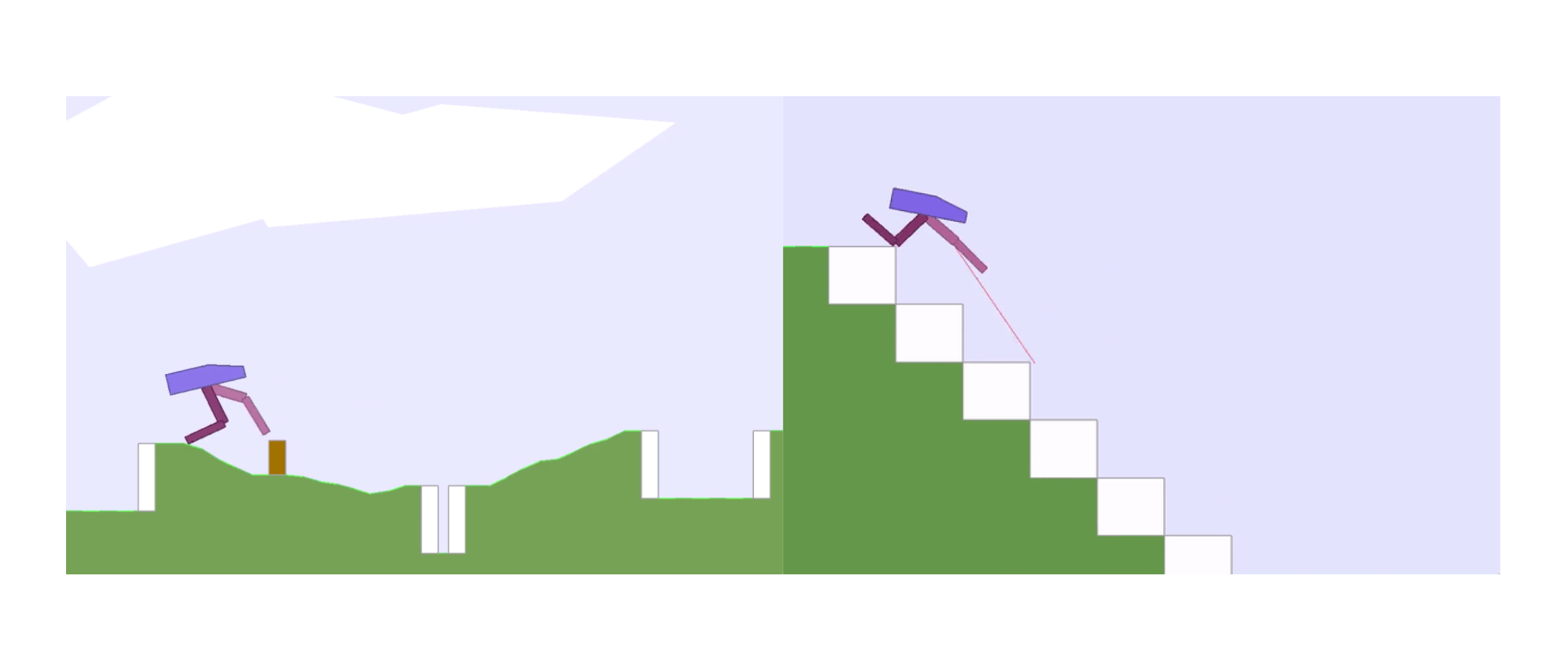
We are interested in open-endedness at Uber AI Labs because it offers the potential for generating a diverse and ever-expanding curriculum for machine learning entirely on its own. Having vast amounts of data often fuels success in machine learning, and we are thus working to create algorithms that generate their own training data in limitless quantities. In the normal practice of machine learning, the researcher identifies a particular problem (for example, a classification problem like ImageNet or a video game like Montezuma’s Revenge) and then focuses on finding or designing an algorithm to achieve top performance.

Sometimes, however, we do not just want to solve known problems, because unknown problems are also important. These might be edge cases (e.g., in safety applications) that are critical to expose (and solve), but they also might be essential stepping stones whose solutions can help make progress on even more challenging problems. Consequently, we are exploring algorithms that continually invent both problems and solutions of increasing complexity and diversity.

Source: uber.com
Share :
comments powered by Disqus

Related Posts

Radiology and Deep Learning

Radiology and Deep Learning

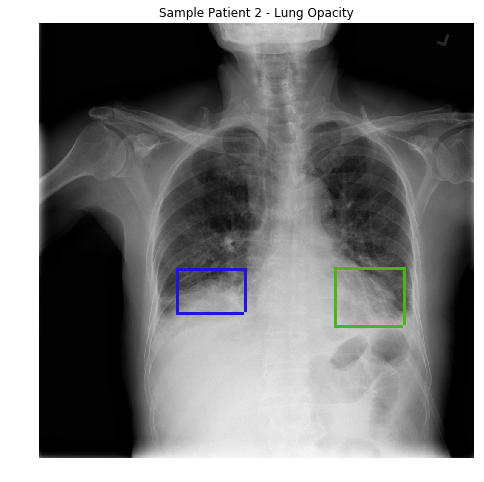
Radiology and DeepLearningDetecting pneumonia opacities from chest X-Ray images using deep learning. One day back in August, I was catching up with my best friend from high school who is now a radiology resident. One thing led to another, and we started talking about our interests in artificial intelligence and machine learning and its possible applications in radiology.

Read More
Google: Deep Learning for Electronic Health Records

Google: Deep Learning for Electronic Health Records

When patients get admitted to a hospital, they have many questions about what will happen next. When will I be able to go home? Will I get better?

Read More
Solving visual analogy puzzles with Deep Learning

Solving visual analogy puzzles with Deep Learning

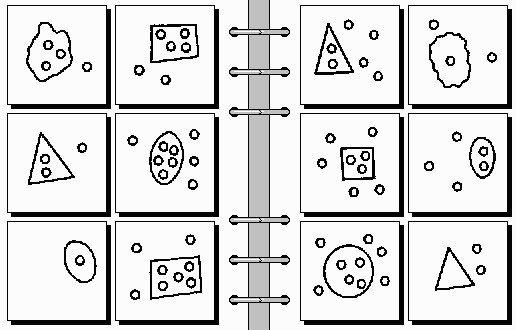
Bongard problmes are named after their inventor, Soviet computer scientist Mikhail Bongard, who was working on pattern recognition in the 1960s. He designed 100 of this puzzles, to be a good benchmark for pattern recognition abilities, and they seem to be challenging for both people and algorithms. Here is an example:

Read More