This 3D Printing Technique Is 100 Times Faster Than Standard 3D Printers

This 3D Printing Technique Is 100 Times Faster Than Standard 3D Printers

  • January 27, 2019
Table of Contents

This 3D Printing Technique Is 100 Times Faster Than Standard 3D Printers

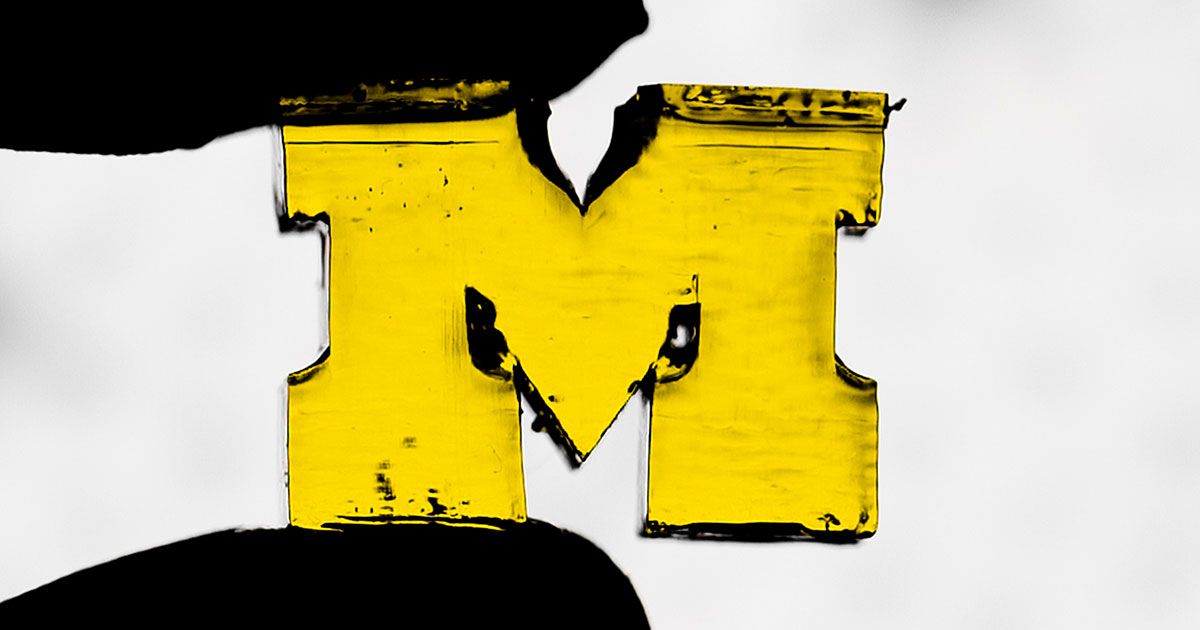
A new3D-printing technique could render a three-dimensional object in minutes instead of hours—at up to 100 timescurrent speeds. The experimental approach uses a vat of resin and some clever tricks with UV and blue LED lights (no lasers needed) to accelerate the printing process. The techniquelooks almost like a time-reverse film loop of an object dissolvingin a reservoir of acid.

But instead of acid, thisreservoir contains a specially-designed resin that hardens when exposed to a particular shade of blue light. Crucially, that hardening (the technical term ispolymerization) does not take place in the presence of a certain wavelength of UV light. The resin is also particularly absorbent at the wavelengths of both the blue and UV light.

So the intensity of UV or blue light going in translates directly to the depth to which light will penetrate into the resin bath. The brighter the light beam, the further it penetrates and the further its effects (whether inhibiting polymerization in the case of UV light, or causing it in the case of blue light) will be felt in the bath along that particular light path. Timothy Scott, associate professor of chemical engineering at the University of Michigan, says the way to get a 3D-printed object out of this process is to send UV light through a glass-bottomedbasin of resin.

Then, at the same time, through that same glass window, send patterns of bright and dim blue light.

Source: ieee.org
Share :
comments powered by Disqus

Related Posts

Berkeley Lab Scientists Print All-Liquid 3-D Structures

Berkeley Lab Scientists Print All-Liquid 3-D Structures

Scientists from the Department of Energy’s Lawrence Berkeley National Laboratory (Berkeley Lab) have developed a way to print 3-D structures composed entirely of liquids. Using a modified 3-D printer, they injected threads of water into silicone oil — sculpting tubes made of one liquid within another liquid.

Read More
The First 3D-Printed Steel Bridge

The First 3D-Printed Steel Bridge

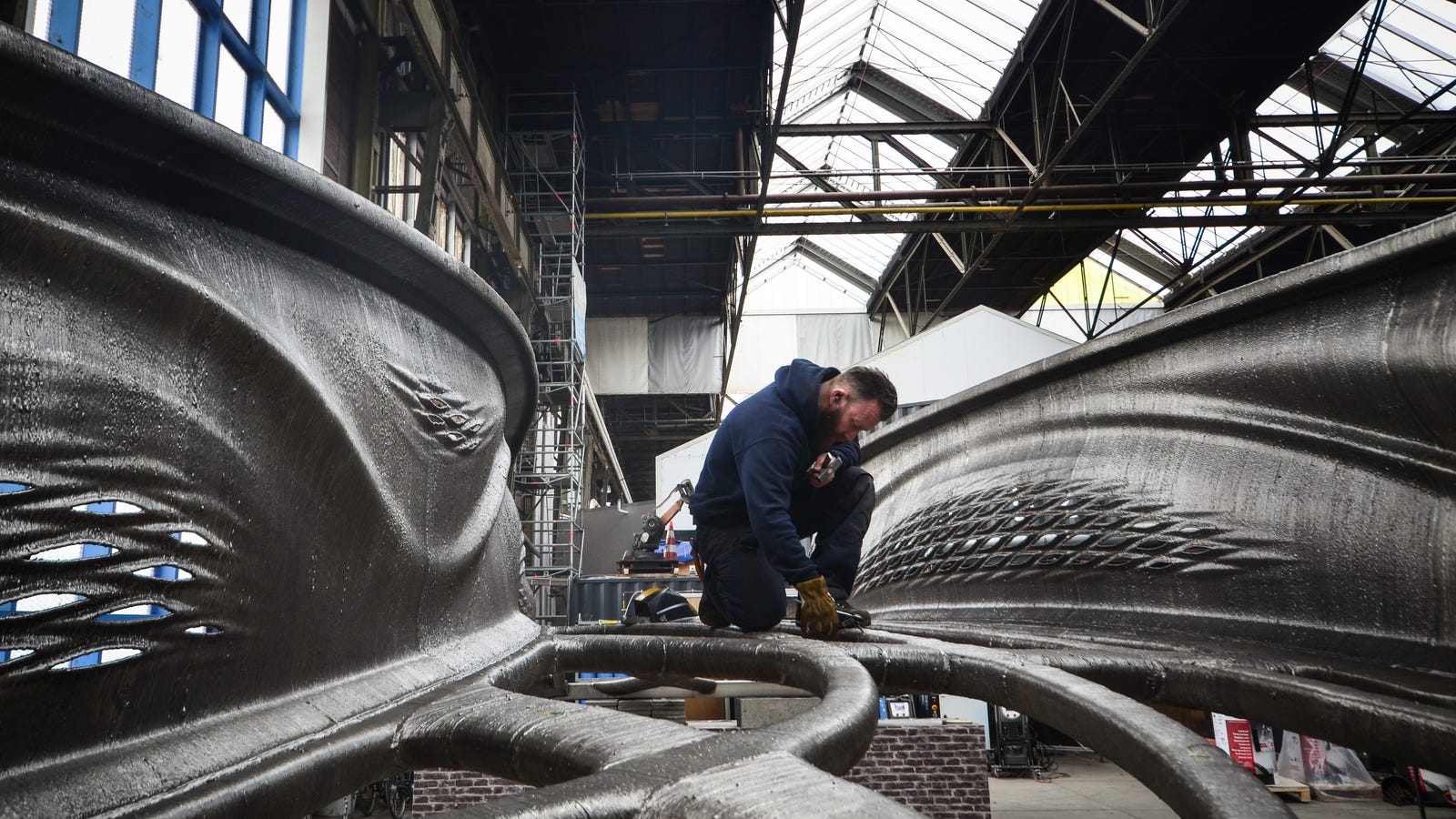
The plan to 3D-print a bridge in mid-air was always bonkers. How could a technology best known for creating flimsy prototypes and personalized action figures be used for permanent construction projects? Well, the team at MX3D in Amsterdam just answered all of the hard questions and revealed it: the world’s first 3D-printed bridge.

Read More
Mice with 3D-Printed Ovaries Successfully Give Birth

Mice with 3D-Printed Ovaries Successfully Give Birth

AsKatherine Kornei at Science reports,the researchers used a 3D printer to build the scaffolding of the organs, weaving layers of gelatin to createtiny (15 x 15 millimeter) ovaries on glass slides. They then tested the scaffolds by embedding a follicle—the tiny sacs composed of hormone-secreting cells that containthe maturing eggs. This test suggested that the tightest weave supported the highest survival rates, reports Kornei.

Read More