Ambassador 0.50 GA Release Notes: SNI, New AuthService and Envoy v2 Support
Table of Contents
We are pleased to announce the GA release of Ambassador 0.50, with the headline features of Server Name Indication (SNI) support, more powerful rate limiting semantics, and a new AuthService. This release includes a major re-architecture under the hood that adds support for the Envoy Proxy v2 API and also uses the Aggregate Discovery Service (ADS) functionality, which removes the need for hot restarts. We are extremely grateful for everyone who contributed to this release, and also those who offered feedback via GitHub and our Slack.
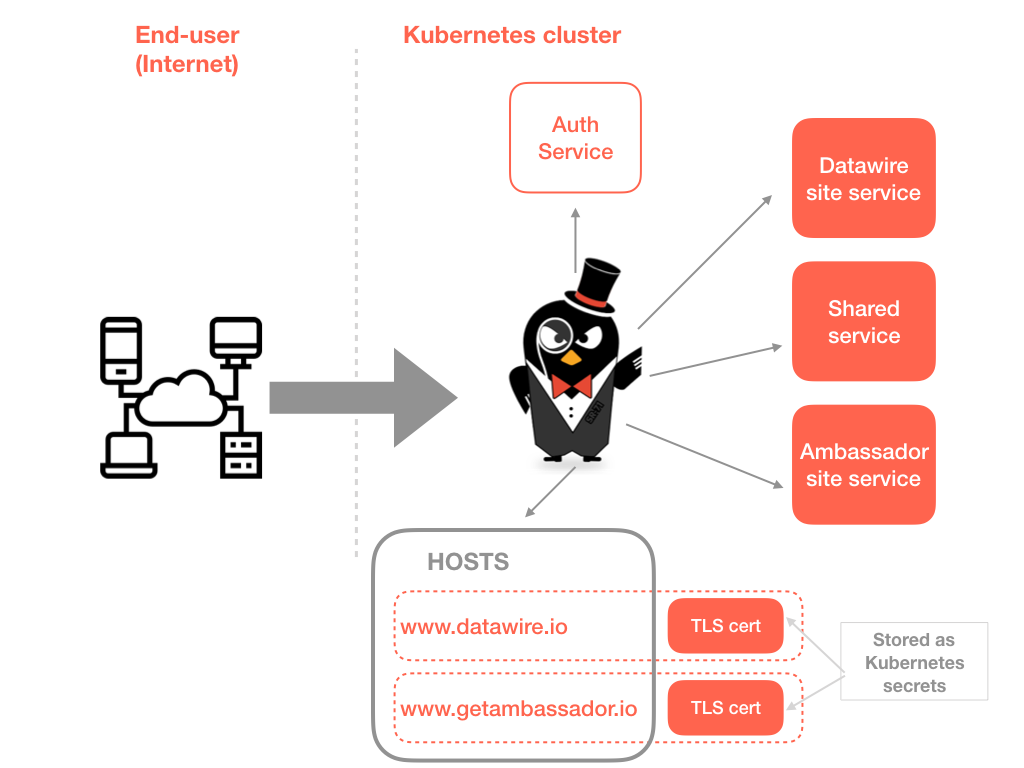
We are constantly impressed by the community emerging around Ambassador and Envoy, and we have enjoyed talking to you many of you at KubeCon and other community events. Support for Server Name Indication (SNI) (issue #153), which allows the configuration of multiple TLS certificates where different domain names are used within the same Ambassador instance. Similar to other Ambassador functionality, we are enabling SNI to be configured on a per-mapping basis, with a separate global configuration that loads the necessary TLS certificates.
Ambassador now supports “request labels” that adds metadata to requests that can be used for advanced rate limiting use case. This deprecates the existing rate_limits functionality. Request labels are currently being used as a highly flexible mechanism for annotating requests for a third party rate limiting service, but in the future they can also be used to allow grouping and selection of requests within other functionality.
The integrated Ambassador Pro rate limiting service takes advantage of request labels to provide flexible rate limiting.
Source: getambassador.io