The Future of Cloud Providers in Kubernetes
Table of Contents
Approximately 9 months ago, the Kubernetes community agreed to form the Cloud Provider Special Interest Group (SIG). The justification was to have a single governing SIG to own and shape the integration points between Kubernetes and the many cloud providers it supported. A lot has been in motion since then and we’re here to share with you what has been accomplished so far and what we hope to see in the future.
First and foremost, I want to share what the mission of the SIG is, because we use it to guide our present & future work. Taken straight from our charter, the mission of the SIG is to simplify, develop and maintain cloud provider integrations as extensions, or add-ons, to Kubernetes clusters. The motivation behind this is two-fold: to ensure Kubernetes remains extensible and cloud agnostic.
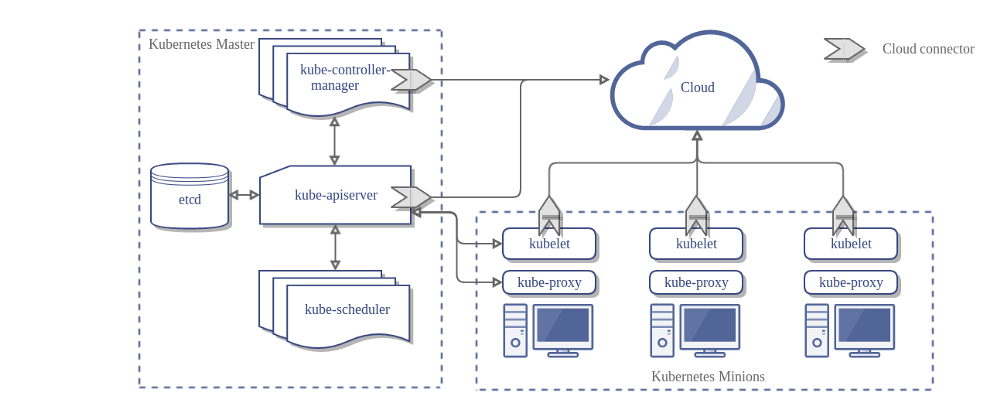
In order to gain a forward looking perspective to our work, I think it’s important to take a step back to look at the current state of cloud providers. Today, each core Kubernetes component (except the scheduler and kube-proxy) has a –cloud-provider flag you can configure to enable a set of functionalities that integrate with the underlying infrastructure provider, a.k.a the cloud provider. Enabling this integration unlocks a wide set of features for your clusters such as: node address & zone discovery, cloud load balancers for Services with Type=LoadBalancer, IP address management, and cluster networking via VPC routing tables.
Today, the cloud provider integrations can be done either in-tree or out-of-tree.
Source: kubernetes.io