No Coding Required: Training Models with Ludwig, Uber’s Open Source Deep Learning Toolbox

No Coding Required: Training Models with Ludwig, Uber’s Open Source Deep Learning Toolbox

  • June 28, 2019
Table of Contents

No Coding Required: Training Models with Ludwig, Uber’s Open Source Deep Learning Toolbox

Uber AI’s Piero Molino discusses Ludwig’s origin story, common use cases, and how others can get started with this powerful deep learning framework built on top of TensorFlow. Machine learning models perform a diversity of tasks at Uber, from improving our maps to streamlining chat communications and even preventing fraud. In addition to serving a variety of use cases, it is important that we make machine learning as accessible as possible for experts and non-experts alike so it can improve areas across our business.

In this spirit, we built Ludwig, an open source, deep learning toolbox built on top of TensorFlow that allows users to train and test machine learning models without writing code. To explain how this powerful framework works, Piero Molino, Ludwig creator and Uber AI senior research scientist, discusses Ludwig’s origin story, common use cases, and how others can get started with the software: Interested in learning more about Ludwig and AI at Uber? Check out the Ludwig repo and keep up-to-date with other projects Uber AI by subscribing to the Uber Engineering Newsletter!

Special thanks to Piero Molino, Wayne Cunningham, Stan Yee, Seamus Strahan-Malik, Deidre Locklear, Robert Brent Wilson, Blake Henderson, and Doug Rae for their contributions to this video.

Source: uber.com
Tags :
Share :
comments powered by Disqus

Related Posts

Creating Bitcoin trading bots that don’t lose money

Creating Bitcoin trading bots that don’t lose money

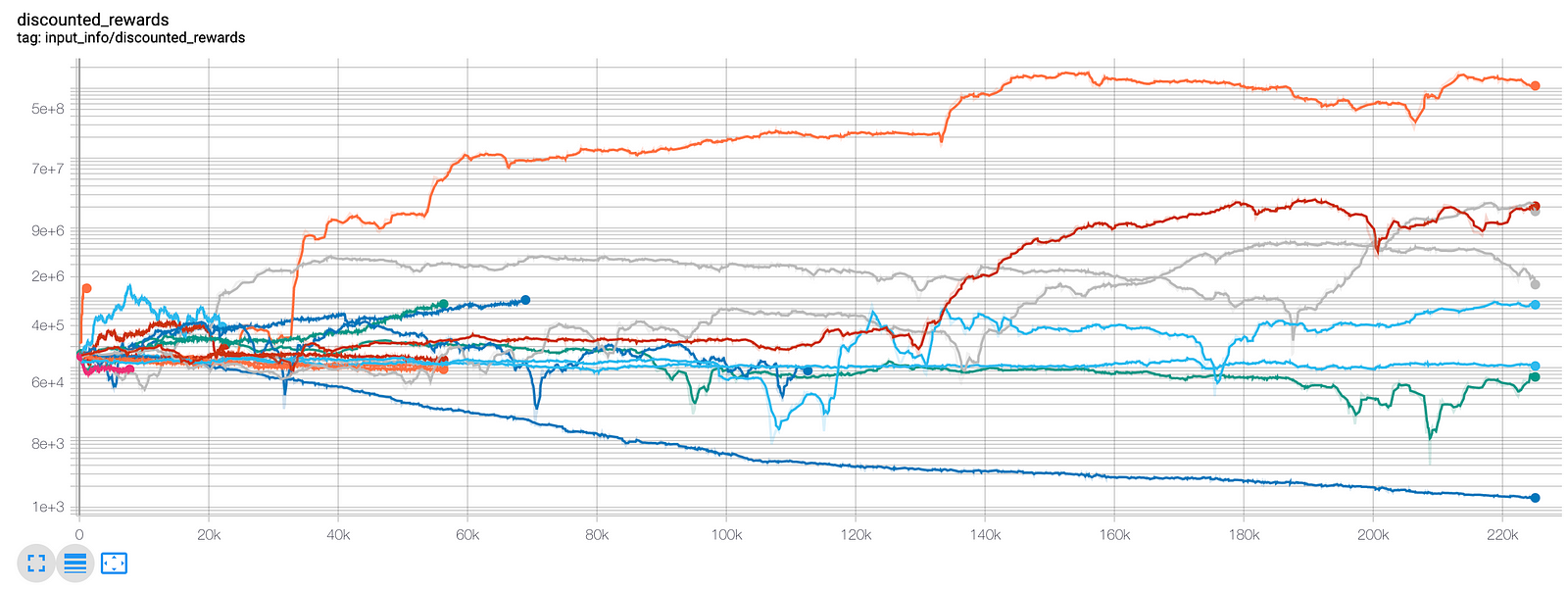
In this article we are going to create deep reinforcement learning agents that learn to make money trading Bitcoin. In this tutorial we will be using OpenAI’s gym and the PPO agent from the stable-baselines library, a fork of OpenAI’s baselines library. If you are not already familiar with how to create a gym environment from scratch, or how to render simple visualizations of those environments, I have just written articles on both of those topics.

Read More
Releasing Pythia for vision and language multimodal AI models

Releasing Pythia for vision and language multimodal AI models

Pythia is a deep learning framework that supports multitasking in the vision and language domain. Built on our open-source PyTorch framework, the modular, plug-and-play design enables researchers to quickly build, reproduce, and benchmark AI models. Pythia is designed for vision and language tasks, such as answering questions related to visual data and automatically generating image captions.

Read More
12 open source tools for natural language processing

12 open source tools for natural language processing

It would be easy to argue that Natural Language Toolkit (NLTK) is the most full-featured tool of the ones I surveyed. It implements pretty much any component of NLP you would need, like classification, tokenization, stemming, tagging, parsing, and semantic reasoning. And there’s often more than one implementation for each, so you can choose theexact algorithm or methodology you’d like to use.

Read More