New ways to make vertical farming stack up

New ways to make vertical farming stack up

  • September 8, 2019
Table of Contents

New ways to make vertical farming stack up

Mr Elder is product manager for Intelligent Growth Solutions (IGS), a “vertical farming” company based at Invergowrie, near Dundee, in Scotland. Each of the nine-metre-high towers in the demonstration unit that he runs occupies barely 40 square metres. But by stacking the trays one on top of another an individual tower provides up to 350 square metres of growing area.

Using his phone again, Mr Elder changes the colours and brightness of the 1,000 light-emitting diodes (LEDs) strung out above each tray. The app can also control the temperature, humidity and ventilation, and the hydroponic system that supplies the plants, growing on various non-soil substrates, with water and nutrients. Armed with his trusty phone, Mr Elder says he can run the farm almost single-handedly.

Vertical farming of this sort is not, of itself, a new idea. The term goes back to 1915, though it took a century for the first commercial vertical farms to be built. But the business is now taking off.

SoftBank, a Japanese firm, Google’s former boss Eric Schmidt and Amazon’s founder Jeff Bezos have between them ploughed more than $200m into Plenty, a vertical-farming company based in San Francisco. And in June Ocado, a British online grocery, splashed out £17m ($21.3m) on vertical-farming businesses to grow fresh produce within its automated distribution depots.

Source: economist.com

Tags :
Share :
comments powered by Disqus

Related Posts

The math’s not pretty on digital advertising’s future revenues?

The math’s not pretty on digital advertising’s future revenues?

How much is Google worth? Today, its market cap—the total value of the company—was just over $690 billion. It is the largest media corporation in the world, earning $79 billion on media revenue out of a total of $90 billion in overall revenue.

Read More
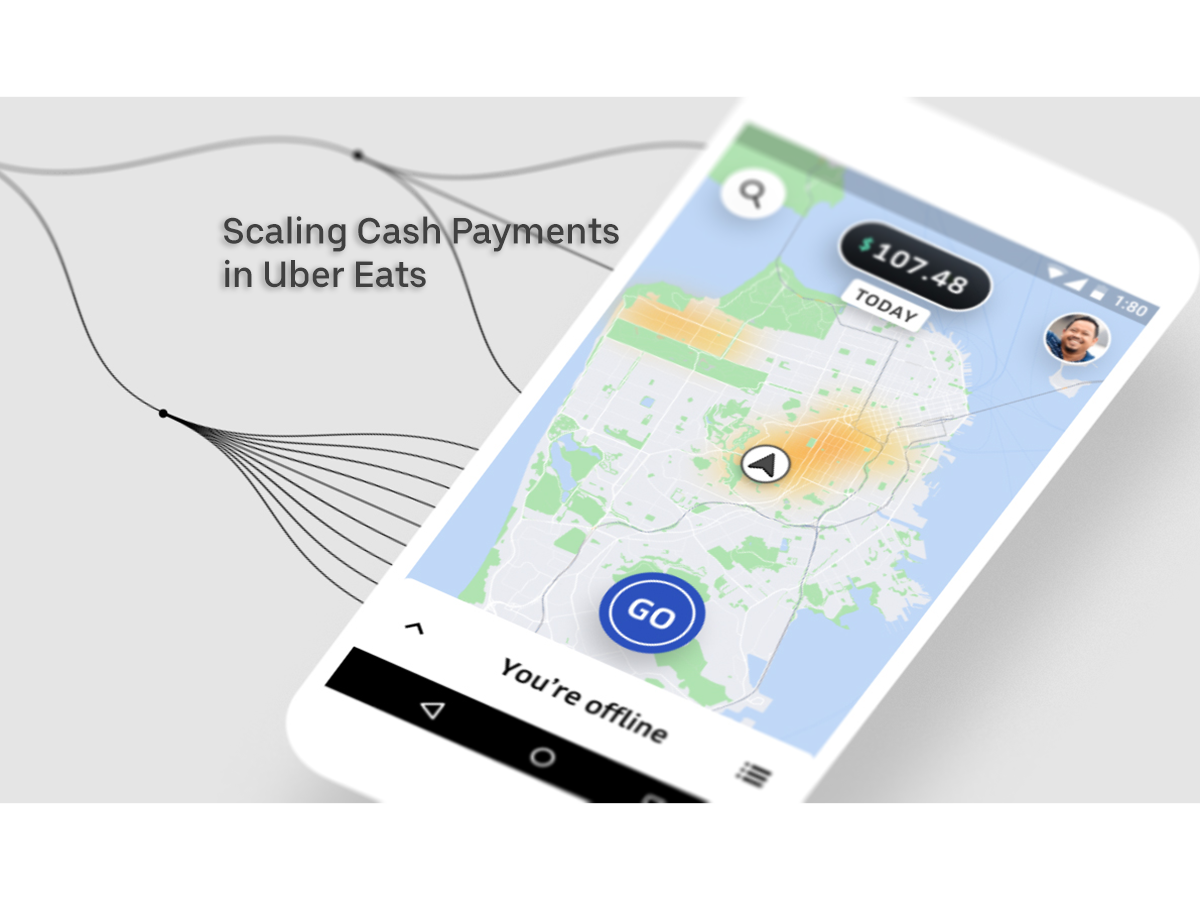
Scaling Cash Payments in Uber Eats

Scaling Cash Payments in Uber Eats

This article is the fourth in a series covering how Uber’s mobile engineering team developed the newest version of our driver app, codenamed Carbon, a core component of our ridesharing business. Among other new features, the app lets our population of over three million driver-partners find fares, get directions, and track their earnings. We began designing the new app in conjunction with feedback from our driver-partners in 2017 and began rolling it out for production in September 2018.

Read More
AQR’s Problem With Machine Learning: Cats Morph Into Dogs

AQR’s Problem With Machine Learning: Cats Morph Into Dogs

Machine learning has done magic, such as beating human chess champions. But in finance, expectations for the technology may need to come down a notch or two, according to quantitative firm AQR. Machine learning changes the way problems are solved.

Read More