A standard way of managing configurations for multiple environments (and clouds)

A standard way of managing configurations for multiple environments (and clouds)

  • September 14, 2019
Table of Contents

A standard way of managing configurations for multiple environments (and clouds)

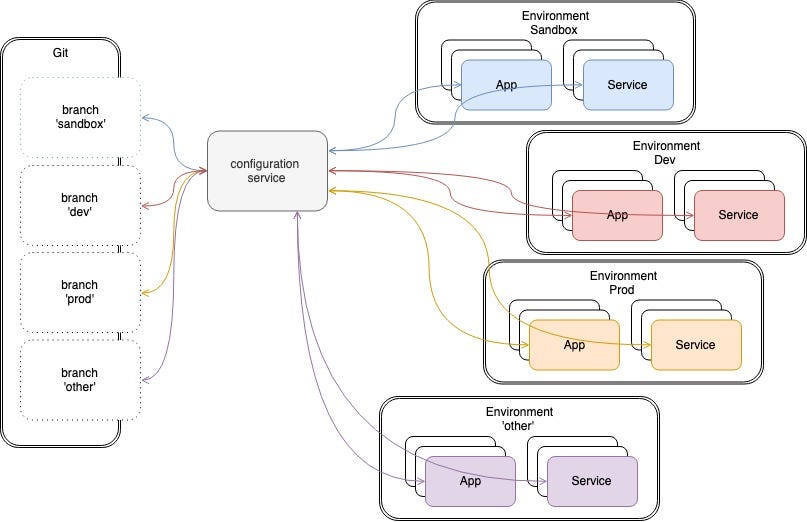
This article intended to share ideas and solutions to address some challenges related to Configuration Management, especially in the cloud environment. Hope you find this read helpful. The approach described in this article was conceptualized a few years back, then implemented and used across many, many projects to build configuration management components for production-grade systems and applications.

This problem is quite common and we have seen it over the years not only in cloud-based deployments and environments but also in the local type of deployments, similar to “3 blades in the rack next room”. This problem is applicable to any deployment with more than 1 environment in the picture, like DEV, QA, STG, PROD and so on. And the problem is, as you probably have guessed, the configuration data and its management.

Wiki talks about Configuration Management(CM) in great length – CM planning and management, controls, status, so on and so forth, but I’m as architect and DevOps engineer always about the details (well, that’s where you-know-who is..) and about how to get this done in fastest and most efficient way.

Source: itnext.io
Share :
comments powered by Disqus

Related Posts

Kubernetes pod autoscaler using custom metrics

Kubernetes pod autoscaler using custom metrics

In this post we are going to demonstrate how to deploy a Kubernetes autoscaler using a third party metrics provider. You will learn how to expose any custom metric directly through the Kubernetes API implementing an extension service. Dynamic scaling is not a new concept by any means, but implementing your own scaler is a rather complex and delicate task.

Read More
33(+) Kubernetes security tools

33(+) Kubernetes security tools

Kubernetes image scanning Kubernetes runtime security Kubernetes network security Image distribution and secrets management Kubernetes security audit End-to-end commercial security tools Join our live session to learn more! Kubernetes security tools … there are so freaking many of them; with different purposes, scopes and licenses. That’s why we decided to create this Kubernetes security tools list, including open source projects and commercial platforms from different vendors, to help you choose the ones that look more interesting to you and guide you in the right direction depending on your Kubernetes security needs.

Read More