From 15,000 database connections to under 100: DigitalOcean’s tale of tech debt

From 15,000 database connections to under 100: DigitalOcean’s tale of tech debt

  • January 23, 2020
Table of Contents

From 15,000 database connections to under 100: DigitalOcean’s tale of tech debt

A new hire recently asked me over lunch, “What does DigitalOcean’s tech debt look like?” I could not help but smile when I heard the question. Software engineers asking about a company’s tech debt is the equivalent of asking about a credit score.

It’s their way of As a cloud provider that manages our own servers and hardware, we have faced complications that many other startups have not encountered in this new era of cloud computing. These tough situations ultimately led to tradeoffs we had to make early in our existence. And as any quickly growing company knows, the technical decisions you make early on tend to catch up with you later.

The story I told our new recruit is the story of DigitalOcean’s largest technical rearchitecture to date. It was a companywide effort that extended over multiple years and taught us many lessons. I hope that telling it will be helpful for future DigitalOcean developers – or any developers who find themselves in a tricky tech-debt conundrum.

Source: digitalocean.com
Share :
comments powered by Disqus

Related Posts

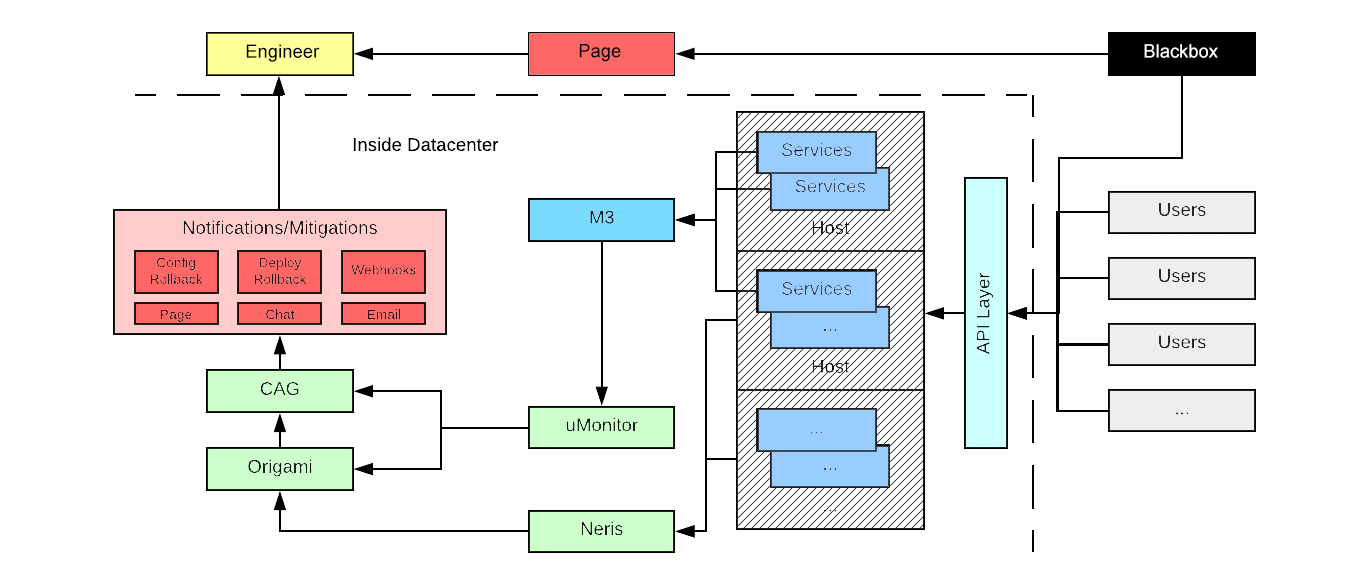
Observability at Scale: Building Uber’s Alerting Ecosystem

Observability at Scale: Building Uber’s Alerting Ecosystem

Uber’s software architectures consists of thousands of microservices that empower teams to iterate quickly and support our company’s global growth. These microservices support a variety of solutions, such as mobile applications, internal and infrastructure services, and products along with complex configurations that affect these products at city and sub-city levels. To maintain our growth and architecture, Uber’s Observability team built a robust, scalable metrics and alerting pipeline responsible for detecting, mitigating, and notifying engineers of issues with their services as soon as they occur.

Read More
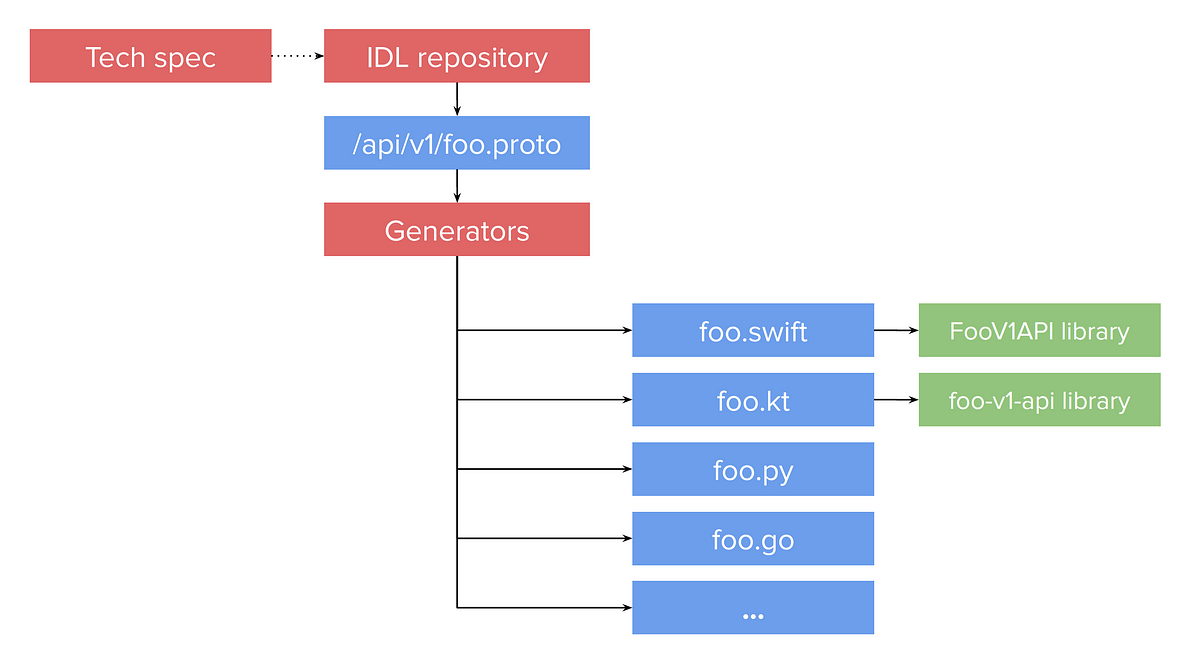
Lyft’s Journey through Mobile Networking

Lyft’s Journey through Mobile Networking

In 5 years, the number of endpoints consumed by Lyft’s mobile apps grew to over 500, and the size of our mobile engineering team increased by more than 15x. To scale with this growth, our infrastructure had to evolve dramatically to utilize new advances in modern networking in order to continue to provide benefits for our users. This post describes the journey through the evolution of Lyft’s mobile networking: how it’s changed, what we’ve learned, and why it’s important for us as a growing business.

Read More
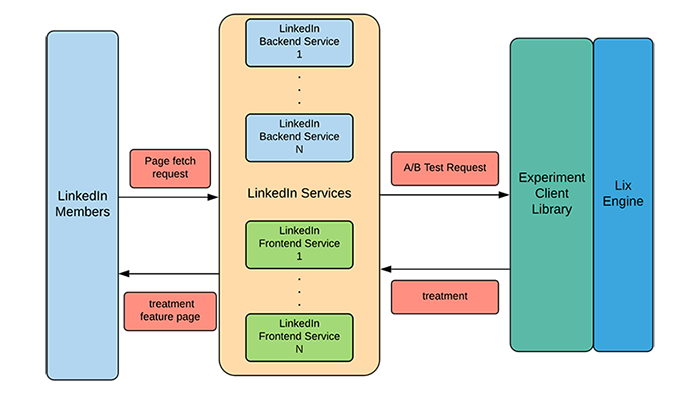
Making the LinkedIn experimentation engine 20x faster

Making the LinkedIn experimentation engine 20x faster

At LinkedIn, we like to say that experimentation is in our blood because no production release at the company happens without experimentation; by “experimentation,” we typically mean “A/B testing.” The company relies on employees to make decisions by analyzing data. Experimentation is a data-driven foundation of the decision-making process, which helps with measuring the precise impact of every change and release, and evaluating whether expectations meet reality.

Read More