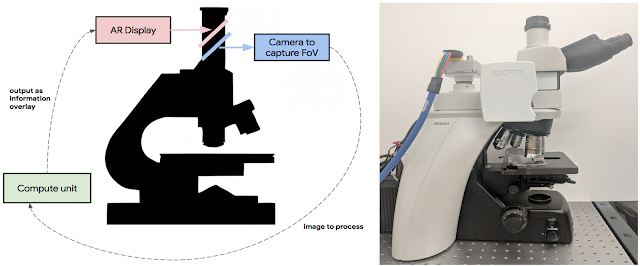
An Augmented Reality Microscope for Cancer Detection
Applications of deep learning to medical disciplines including ophthalmology, dermatology, radiology, and pathology have recently shown great promise to increase both the accuracy and availability of high-quality healthcare to patients around the world. At Google, we have also published results showing that a convolutional neural network is able to detect breast cancer metastases in lymph nodes at a level of accuracy comparable to a trained pathologist. However, because direct tissue visualization using a compound light microscope remains the predominant means by which a pathologist diagnoses illness, a critical barrier to the widespread adoption of deep learning in pathology is the dependence on having a digital representation of the microscopic tissue.
Read MoreThe Magic Leap One Experience
I have modeled the ML1 as closely as possible with respect to the view through it based on the available evidence. I’m providing the model I used so others can verify or challenge my results and cut through the debates about whether it will look different based on how the human visual system works, which is, of course, different than a camera.
Read More
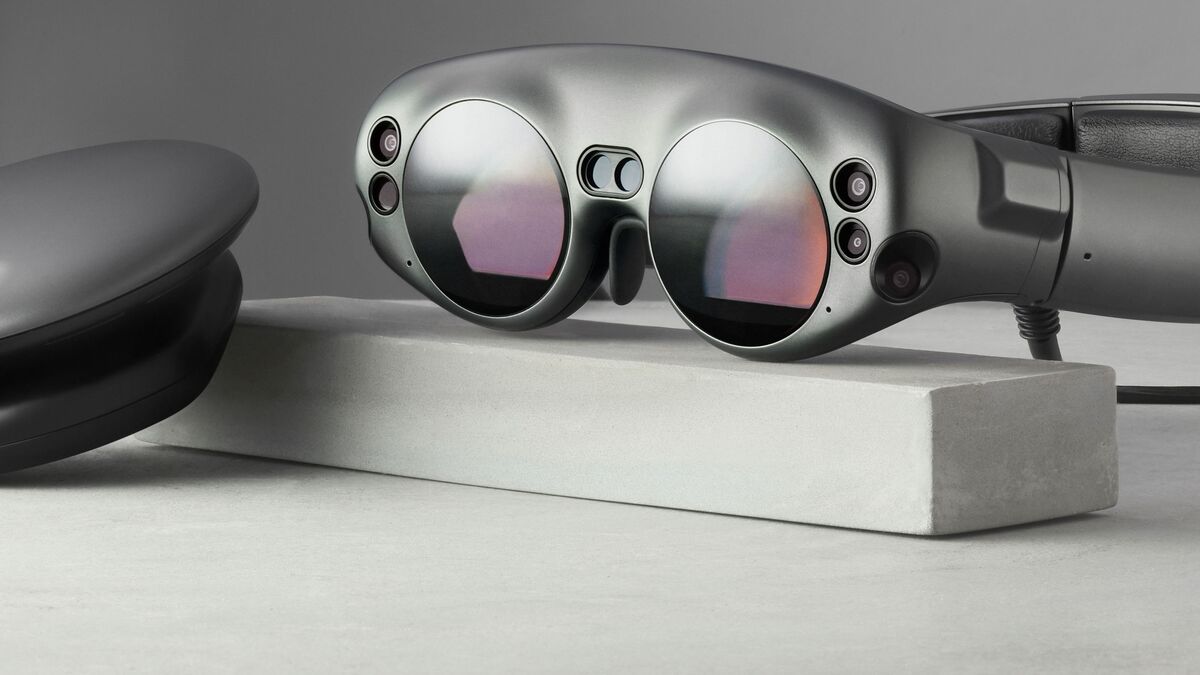

Facebook’s Bet on an Augmented Reality Future
Today, Facebook is fighting its fellow technology powerhouses, Apple AAPL +1.72% and Google — and still to some extent, Snap — in a high-stakes battle to rule as the platform of choice for AR developers. The technology itself, while still in its infancy, has exploded in popularity, confirming Zuckerberg’s more recent intuition that AR could sprint toward mass adoption even while VR remained an awkward technology whose appeal is largely limited to hardcore gamers. AR’s key advantage is that it doesn’t depend on a pricey, bulky headset that isolates its users.
Read More