How I implemented iPhone X’s FaceID using Deep Learning in Python
Table of Contents
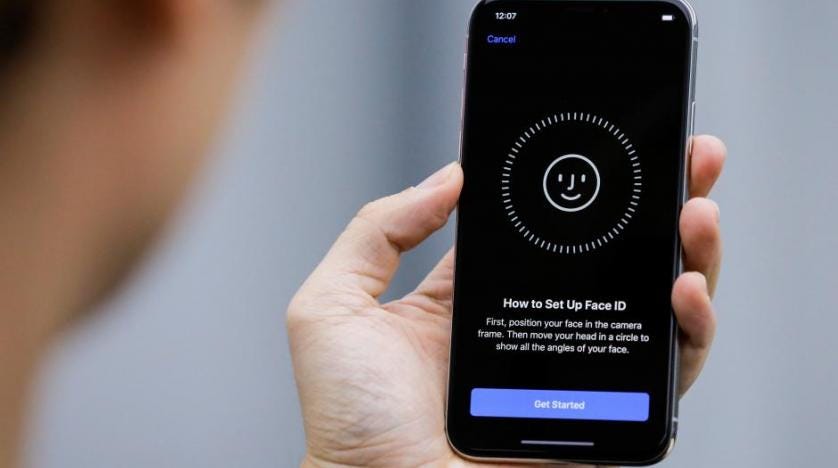
One of the most discussed features of the new iPhone X is the new unlocking method, the successor of TouchID: FaceID.Having created a bezel-less phone, Apple had to develop a new method to unlock the phone in a easy and fast way. While some competitors continued using a fingerprint sensor, placed in a different position, Apple decided to innovate and revolutionize the way we unlock a phone: by simply looking at it. Thanks to an advanced (and remarkably small) front facing depth-camera, iPhone X in able to create a 3D map of the face of the user.
In addition, a picture of the user’s face is captured using an infrared camera, that is more robust to changes in light and color of the environment. Using deep learning, the smartphone is able to learn the user face in great detail, thus recognizing him\her every time the phone is picked up by its owner. Surprisingly, Apple ha stated that this method is even safer than TouchID, with an outstanding error rate of 1:1,000,000.
Source: towardsdatascience.com