
Five new ancient genomes tell us about Neanderthal tribes

Five new ancient genomes tell us about Neanderthal tribes

  • March 23, 2018
Table of Contents

Five new ancient genomes tell us about Neanderthal tribes

The researchers, led by Mateja Hajdinjak at the Max Planck Institute for Evolutionary Anthropology, extracted tiny amounts of bone or tooth powder—sometimes as little as 9mg—and used a chemical process to remove modern genetic contamination. They also checked for the telltale signs of degradation found in ancient DNA.

Source: arstechnica.com
Tags :
Share :
comments powered by Disqus

Related Posts

How Leo and Gertrude Stein Revolutionized the Art World

How Leo and Gertrude Stein Revolutionized the Art World

If Picasso and Matisse were rivals from almost the first moment each knew of the other’s existence, the contest was driven as much by those cheering from the sidelines as by their own considerable egos. It was Montmartre versus the Latin Quarter, the bande à Picasso versusthe Fauves, the dark voodoo of the Spaniard versus the Apollonian grace of the Frenchman. For the most part the competition was respectful, but it could occasionally devolve into childish stunts.

Read More
New study tracks the evolution of stone tools

New study tracks the evolution of stone tools

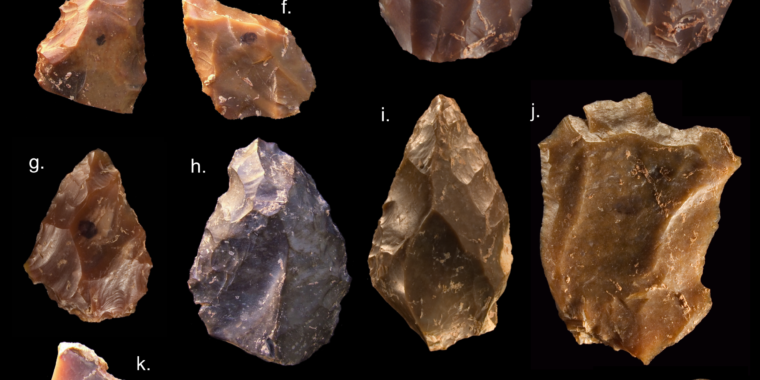
For at least 2.6 million years, humans and our ancestors have been making stone tools by chipping off flakes of material to produce sharp edges. We think of stone tools as very rudimentary technology, but producing a usable tool without wasting a lot of stone takes skill and knowledge. That’s why archaeologists tend to use the complexity of stone tools as a way to measure the cognitive skills of early humans and the complexity of their cultures and social interactions.

Read More
A Look Back at the 1960s PLATO Computing System

A Look Back at the 1960s PLATO Computing System

In the 1960s, researchers at the University of Illinois Urbana—Champaign developed a computer system that they hoped would expand access to education. They envisioned instructors usingthe system to build lessons, and students stationing themselves at machines—whose touchscreen plasma displays had a distinct orange glow—to complete coursework.

Read More