In to Asia

In to Asia

  • March 31, 2018
Table of Contents

In to Asia

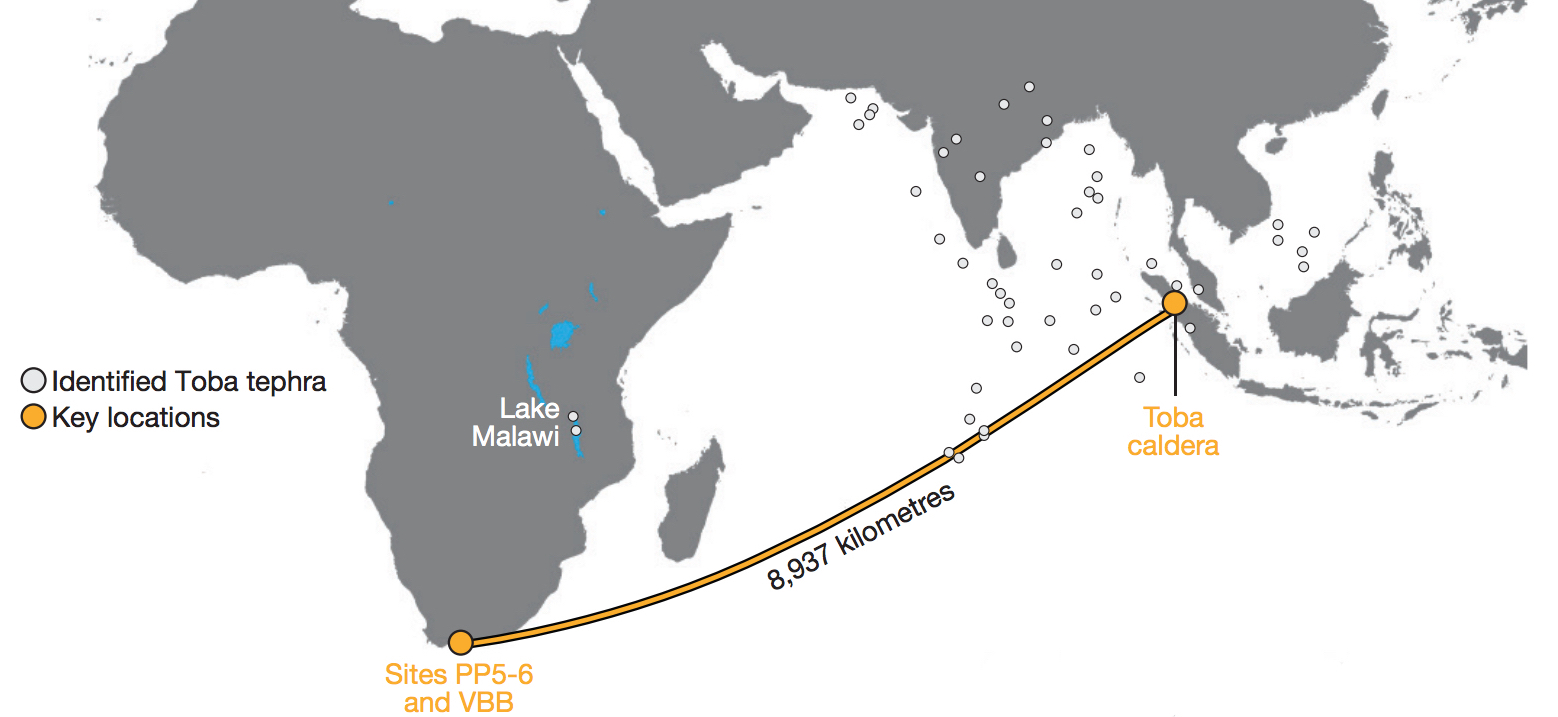
Modern humans arose only once, in Africa, about 200,000 years ago. They then spread across Eurasia some time after 60,000 years ago, replacing whatever indigenous populations they met with no interbreeding. This is the ‘Out of Africa’ model, as it’s commonly known.

In the 1990s, the hypothesis found widespread acceptance by palaeoanthropologists, especially when the first analyses of Neanderthal DNA seemed to indicate that Neanderthals and modern humans did not interbreed. But this popular idea is in need of revision, particularly given the number of important findings across Asia over the past few decades.

Source: aeon.co
Tags :
Share :
comments powered by Disqus

Related Posts

13,000-year-old human footprints discovered in British Columbia

13,000-year-old human footprints discovered in British Columbia

Thirteen thousand years ago, a small group of people walked on a beach on one of the thousands of low islands off the coast of British Columbia. These walkers were some of the first humans to settle here.

Read More
Anti-anti-communism

Anti-anti-communism

A 2009 poll in eight east European countries asked if the economic situation for ordinary people was ‘better, worse or about the same as it was under communism’. The results stunned observers: 72per cent of Hungarians, and 62per cent of both Ukrainians and Bulgarians believed that most people were worse off after 1989. In no country did more than 47per cent of those surveyed agree that their lives improved after the advent of free markets.

Read More
The shape of life

The shape of life

Last spring, the geobiologist Dominic Papineau and colleagues reported that fossilised microorganisms were identified in 3.77-4.28-billion-year-old iron-rich rock in Quebec: hematite tubes and filaments whose appearance is similar to microorganisms that today live in hydrothermal vents. Others dismissed their findings as ‘dubiofossils’, a term the geologist Hans Hofmann coined in 1972 to describe controversial fossils. ‘Fossils,’ Hofmann wrote, were proven biological; ‘pseudofossils’ resembled life but were inorganic; ‘dubiofossils’ (also known as Problematica or Miscellanea) were equivocal.

Read More