Lost in Math: Beauty != truth

Lost in Math: Beauty != truth

  • April 29, 2018
Table of Contents

Lost in Math: Beauty != truth

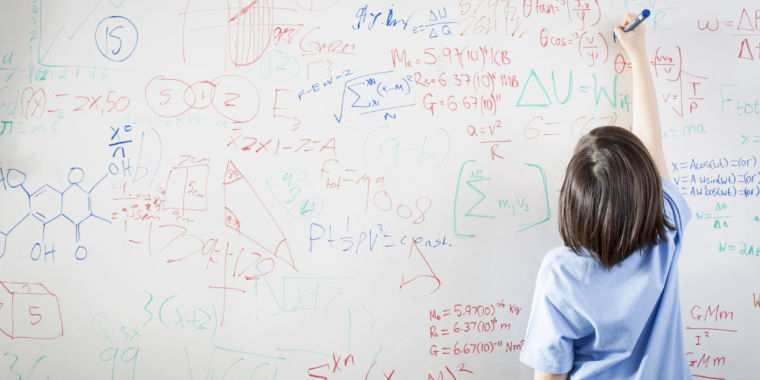
In Lost in Math, Hossenfelder delves briefly into the history of particle physics in order to explain the success of the Standard Model of particles and forces. She touches on why we’ve not had any unexplainable data from experimental particle physics for the last 50 years. She then takes us on a tour of the data that make us think we should be looking for physics that is not explained by the Standard Model—dark matter, dark energy, and cosmic inflation.

Source: arstechnica.com

Share :
comments powered by Disqus

Related Posts

How Poetry and Math Intersect

How Poetry and Math Intersect

April is both National Poetry Month and Mathematics and Statistics Awareness Month, so a few years ago science writer Stephen Ornes dubbed it Math Poetry Month. If the words “math” and “poetry” don’t intuitively make sense to you as a pair, poet and mathematician JoAnne Growney’s blog Intersections—Poetry with Mathematics is a perfect place to start expanding your math-poetic horizons. The blog includes a broad range of poems with mathematical themes or built using mathematical rules.

Read More
Can a Wandering Mind Make You Neurotic?

Can a Wandering Mind Make You Neurotic?

On the positive side, mind-wandering promotes planning for the future, allowing my daughter to lay the groundwork for financial security and a career with a long endgame. And it may be an essential ingredient in creativity. Several studies have shown that creativity blossoms under the same conditions that encourage mind-wandering—for example, an incubation period in which the mind is only lightly focused on an easy task is especially conducive to flashes of insight and imaginative solutions to problems.

Read More
Why symmetry gets really interesting when it is broken

Why symmetry gets really interesting when it is broken

A hypothetical alien visitor, sent to observe all of human culture – art and architecture, music and medicine, storytelling and science – would quickly conclude that we as a species are obsessed with patterns. The formal gardens of 18th-century England, the folk tales of medieval Germany and the traditional woven fabrics of Mayan civilisation have little in common, but they each owe their aesthetic appeal to being composed of smaller, identical parts arranged into a harmonious whole.

Read More