Prefrontal cortex as a meta-reinforcement learning system

Prefrontal cortex as a meta-reinforcement learning system

  • May 14, 2018
Table of Contents

Prefrontal cortex as a meta-reinforcement learning system

Recently, AI systems have mastered a range of video-games such as Atari classics Breakout and Pong. But as impressive as this performance is, AI still relies on the equivalent of thousands of hours of gameplay to reach and surpass the performance of human video game players. In contrast, we can usually grasp the basics of a video game we have never played before in a matter of minutes.

The question of why the brain is able to do so much more with so much less has given rise to the theory of meta-learning, or ‘learning to learn’. It is thought that we learn on two timescales — in the short term we focus on learning about specific examples while over longer timescales we learn the abstract skills or rules required to complete a task. It is this combination that is thought to help us learn efficiently and apply that knowledge rapidly and flexibly on new tasks.

Recreating this meta-learning structure in AI systems — called meta-reinforcement learning — has proven very fruitful in facilitating fast, one-shot, learning in our agents (see our paper and closely related work from OpenAI). However, the specific mechanisms that allow this process to take place in the brain are still largely unexplained in neuroscience.

Source: deepmind.com

Tags :
Share :
comments powered by Disqus

Related Posts

Germany adopts first ethics standards for autonomous driving systems

Germany adopts first ethics standards for autonomous driving systems

Federal transport minister, Alexander Dobrindt, presented a report to Germany’s cabinet seeking to establish guidelines for the future programming of ethical standards into automated driving software. The report, was prepared by an automated driving ethics commission comprised of scientists and legal experts and produced 20 guidelines to be used by the automotive industry when creating automated driving systems. Shortly after its introduction, Dobrindt announced that the cabinet ratified the guidelines, making Germany the first government in the world to put such measures in place.

Read More
Automatic Photography with Google Clips

Automatic Photography with Google Clips

How could we train an algorithm to recognize interesting moments? As with most machine learning problems, we started with a dataset. We created a dataset of thousands of videos in diverse scenarios where we imagined Clips being used.

Read More
Transfer Learning

Transfer Learning

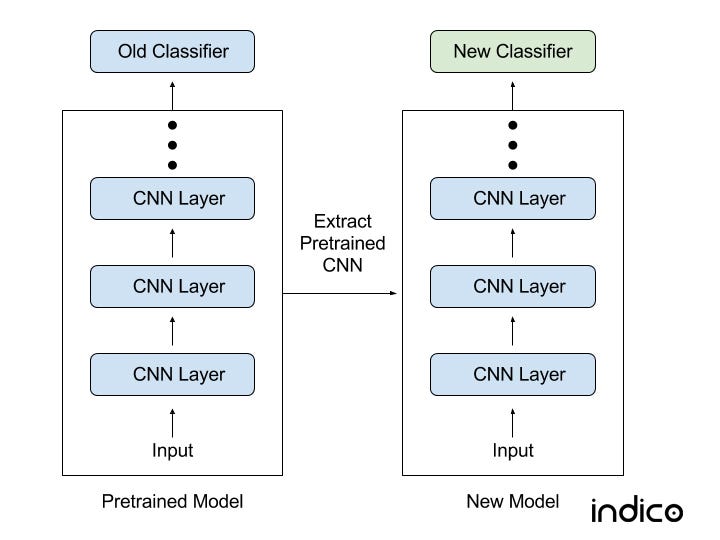
Transfer Learning is the reuse of a pre-trained model on a new problem. It is currently very popular in the field of Deep Learning because it enables you to train Deep Neural Networks with comparatively little data. This is very useful since most real-world problems typically do not have millions of labeled data points to train such complex models.

Read More