Human blood cells transformed into functional neurons

Human blood cells transformed into functional neurons

  • June 6, 2018
Table of Contents

Human blood cells transformed into functional neurons

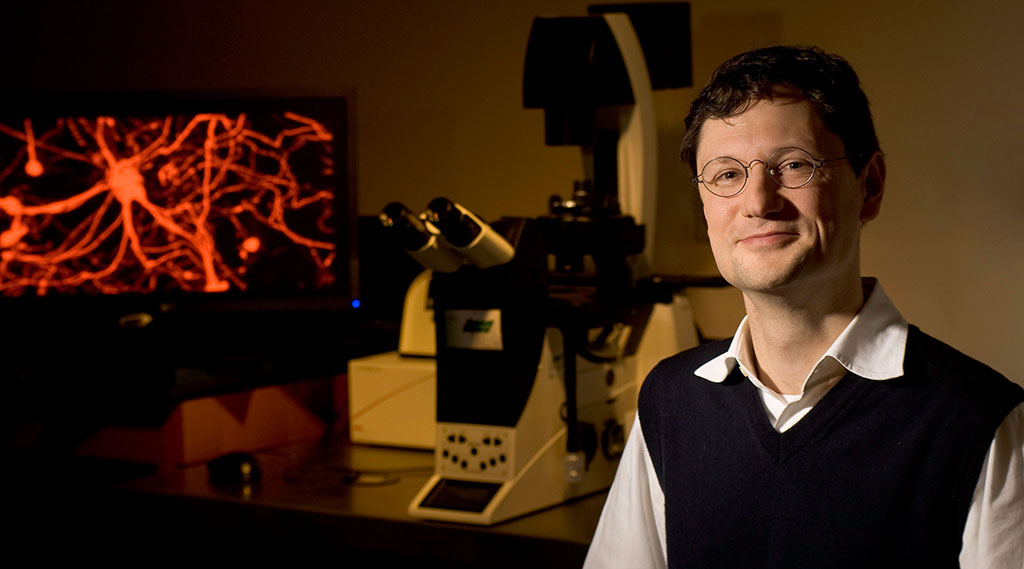
Human immune cells in blood can be converted directly into functional neurons in the laboratory in about three weeks with the addition of just four proteins, researchers at the Stanford University School of Medicine have found. The conversion occurs with relatively high efficiency — generating as many as 50,000 neurons from 1 milliliter of blood — and it can be achieved with fresh or previously frozen and stored blood samples, which vastly enhances opportunities for the study of neurological disorders such as schizophrenia and autism. A paper describing the findings was published online June 4 in the Proceedings of the National Academy of Sciences.

Wernig is the senior author. Former postdoctoral scholar Koji Tanabe, PhD, and graduate student Cheen Ang are the lead authors.

Source: stanford.edu

Share :
comments powered by Disqus

Related Posts

Drone Delivery Becomes a Reality in Remote Pacific Islands

Drone Delivery Becomes a Reality in Remote Pacific Islands

Currently, health workers in Vanuatu often hike over mountains to deliver vaccines–but drones can fly over them. This September, delivery drones will begin to fly the friendly skies of Vanuatu. And this isn’t a one-shot demonstration, like many of the stunts we’ve seen from the likes of Amazon and Google.

Read More
Ingestible “bacteria on a chip” could help diagnose disease

Ingestible “bacteria on a chip” could help diagnose disease

This “bacteria-on-a-chip” approach combines sensors made from living cells with ultra-low-power electronics that convert the bacterial response into a wireless signal that can be read by a smartphone. In the new study, appearing in the May 24 online edition of Science, the researchers created sensors that respond to heme, a component of blood, and showed that they work in pigs. They also designed sensors that can respond to a molecule that is a marker of inflammation.

Read More
How gut microbes are joining the fight against cancer

How gut microbes are joining the fight against cancer

Cancer has been a late bloomer in the microbiome revolution that has surged through biomedicine. Over the past few decades, scientists have linked the gut’s composition of microbes to dozens of seemingly unrelated conditions — from depression to obesity. Cancer has some provocative connections as well: inflammation is a contributing factor to some tumours and a few types of cancer have infectious origins.

Read More