Human blood cells transformed into functional neurons

Human blood cells transformed into functional neurons

  • June 6, 2018
Table of Contents

Human blood cells transformed into functional neurons

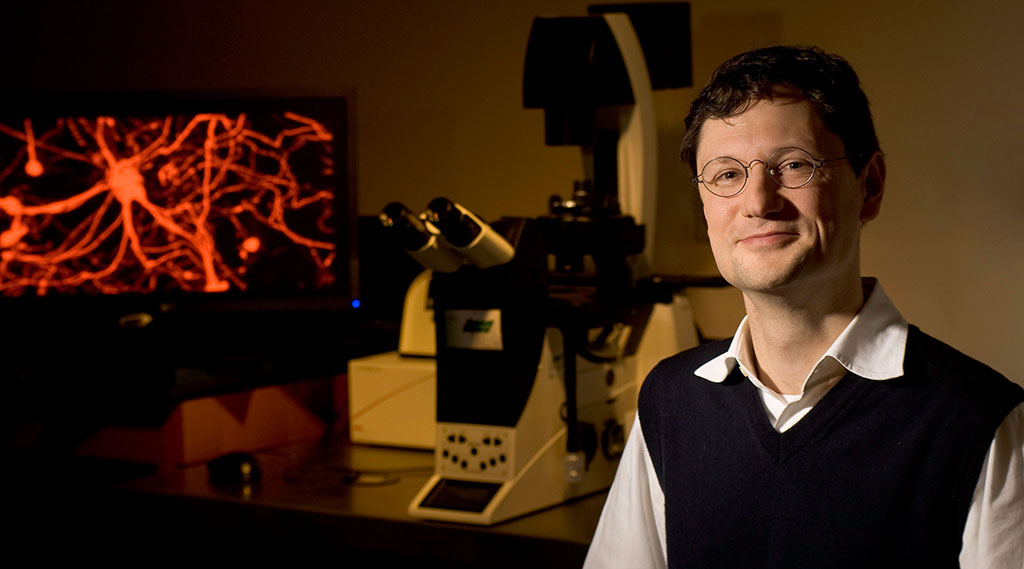
Human immune cells in blood can be converted directly into functional neurons in the laboratory in about three weeks with the addition of just four proteins, researchers at the Stanford University School of Medicine have found. The conversion occurs with relatively high efficiency — generating as many as 50,000 neurons from 1 milliliter of blood — and it can be achieved with fresh or previously frozen and stored blood samples, which vastly enhances opportunities for the study of neurological disorders such as schizophrenia and autism. A paper describing the findings was published online June 4 in the Proceedings of the National Academy of Sciences.

Wernig is the senior author. Former postdoctoral scholar Koji Tanabe, PhD, and graduate student Cheen Ang are the lead authors.

Source: stanford.edu

Share :
comments powered by Disqus

Related Posts

How an AI Startup Could Defeat Now Unbeatable Bugs

How an AI Startup Could Defeat Now Unbeatable Bugs

The need for new medications is higher than ever, but so is the cost and time to bring them to market. Developing a new drug can cost billions and take as long as 14 years, according to the U.S. Food and Drug Administration. Yet with all that effort, only 8 percent of drugs make it to market, the FDA said.

Read More
Mice with 3D-Printed Ovaries Successfully Give Birth

Mice with 3D-Printed Ovaries Successfully Give Birth

AsKatherine Kornei at Science reports,the researchers used a 3D printer to build the scaffolding of the organs, weaving layers of gelatin to createtiny (15 x 15 millimeter) ovaries on glass slides. They then tested the scaffolds by embedding a follicle—the tiny sacs composed of hormone-secreting cells that containthe maturing eggs. This test suggested that the tightest weave supported the highest survival rates, reports Kornei.

Read More
How gut microbes are joining the fight against cancer

How gut microbes are joining the fight against cancer

Cancer has been a late bloomer in the microbiome revolution that has surged through biomedicine. Over the past few decades, scientists have linked the gut’s composition of microbes to dozens of seemingly unrelated conditions — from depression to obesity. Cancer has some provocative connections as well: inflammation is a contributing factor to some tumours and a few types of cancer have infectious origins.

Read More