First ever color X-ray on a human

First ever color X-ray on a human

  • July 13, 2018
Table of Contents

First ever color X-ray on a human

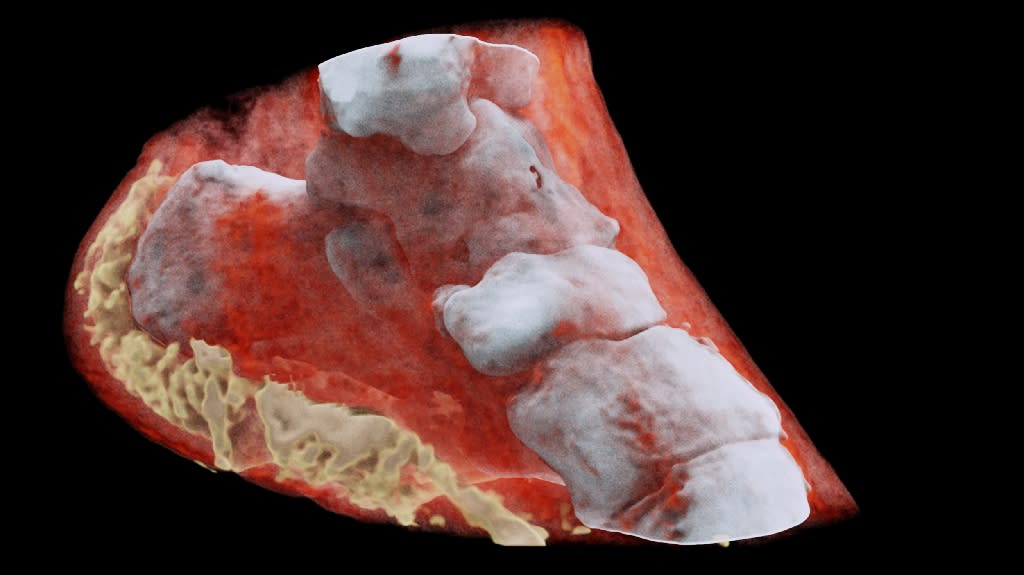
New Zealand scientists have performed the first-ever 3-D, colour X-ray on a human, using a technique that promises to improve the field of medical diagnostics, said Europe’s CERN physics lab which contributed imaging technology. The new device, based on the traditional black-and-white X-ray, incorporates The CERN technology, dubbed Medipix, works like a camera detecting and counting individual sub-atomic particles as they collide with pixels while its shutter is open.

This allows for high-resolution, high-contrast pictures. The machine’s ‘small pixels and accurate energy resolution meant that this new imaging tool is able to get images that no other imaging tool can achieve,’ said developer Phil Butler of the University of Canterbury. According to the CERN, the images very clearly show the difference between bone, muscle and cartilage, but also the position and size of cancerous tumours, for example.

The technology is being commercialised by New Zealand company MARS Bioimaging, linked to the universities of Otago and Canterbury which helped develop it.

Source: yahoo.com

Share :
comments powered by Disqus

Related Posts

Cancer cells engineered with CRISPR slay their own kin

Cancer cells engineered with CRISPR slay their own kin

Using gene editing, scientists have hoodwinked tumor cells into turning against their own kind. Cancer cells circulating in the bloodstream have something of a homing instinct, able to find and return to the tumor where they originated. To capitalize on that ability, researchers engineered these roving tumor cells to secrete a protein that triggers a death switch in resident tumor cells they encounter.

Read More
Leading UK scientist reveals likely cause of childhood leukaemia

Leading UK scientist reveals likely cause of childhood leukaemia

Professor Mel Greaves from The Institute of Cancer Research, London, assessed the most comprehensive body of evidence ever collected on acute lymphoblastic leukaemia (ALL) – the most common type of childhood cancer. His research concludes that the disease is caused through a two-step process of genetic mutation and exposure to infection that means it may be preventable with treatments to stimulate or ‘prime’ the immune system in infancy. The first step involves a genetic mutation that occurs before birth in the foetus and predisposes children to leukaemia – but only 1 per cent of children born with this genetic change go on to develop the disease.

Read More
Ingestible “bacteria on a chip” could help diagnose disease

Ingestible “bacteria on a chip” could help diagnose disease

This “bacteria-on-a-chip” approach combines sensors made from living cells with ultra-low-power electronics that convert the bacterial response into a wireless signal that can be read by a smartphone. In the new study, appearing in the May 24 online edition of Science, the researchers created sensors that respond to heme, a component of blood, and showed that they work in pigs. They also designed sensors that can respond to a molecule that is a marker of inflammation.

Read More