GraphQL: A success story for PayPal Checkout

GraphQL: A success story for PayPal Checkout

  • November 9, 2018
Table of Contents

GraphQL: A success story for PayPal Checkout

At PayPal, we recently introduced GraphQL to our technology stack. At PayPal, GraphQL has been a complete game changer to the way we think about data, fetch data and build applications. This blog post takes a close look at PayPal Checkout and explains our journey from REST to Batch REST to GraphQL and lessons learned along the way.

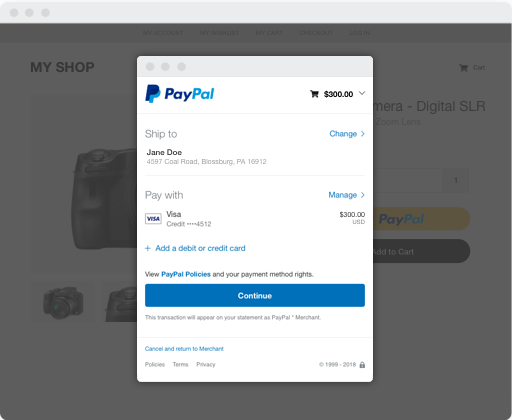
PayPal’s Checkout products spread across many web and mobile apps, supporting millions of users across ~200 countries and has hundreds of experiments running at any time. These apps leverage the same suite of REST APIs to fetch data needed for building UI. About 4 years ago, we went all in on REST.

Our APIs were pretty clean, small and atomic. Things were great in the beginning. REST has strict design principles that are widely understood.

REST is a great way to design and implement APIs for your domain. However, REST’s principles don’t consider the needs of Web and Mobile apps and their users. This is especially true in an optimized transaction like Checkout.

Users want to complete their checkout as fast as possible. If your applications are consuming atomic REST APIs, you’re often making many round trips from the client to the server to fetch data. With Checkout, we’ve found that every round trip costs at least 700ms in network time (at the 99th percentile), not counting the time processing the request on the server.

Every round trip results in slower rendering time, more user frustration and lower Checkout conversion. Needless to say, round trips are evil!

Source: medium.com

Share :
comments powered by Disqus

Related Posts

Tensorflow 2.0: models migration and new design

Tensorflow 2.0: models migration and new design

Tensorflow 2.0 will be a major milestone for the most popular machine learning framework: lots of changes are coming, and all with the aim of making ML accessible to everyone. These changes, however, requires for the old users to completely re-learn how to use the framework: this article describes all the (known) differences between the 1.x and 2.x version, focusing on the change of mindset required and highlighting the pros and cons of the new and implementations. This article can be a good starting point also for the novice: start thinking in the Tensorflow 2.0 way right now, so you don’t have to re-learn a new framework (unless until Tensorflow 3.0 will be released).

Read More
October 21 GitHub post-incident analysis

October 21 GitHub post-incident analysis

Last week, GitHub experienced an incident that resulted in degraded service for 24 hours and 11 minutes. While portions of our platform were not affected by this incident, multiple internal systems were affected which resulted in our displaying of information that was out of date and inconsistent. Ultimately, no user data was lost; however manual reconciliation for a few seconds of database writes is still in progress.

Read More
Cross shard transactions at 10 million requests per second

Cross shard transactions at 10 million requests per second

Dropbox stores petabytes of metadata to support user-facing features and to power our production infrastructure. The primary system we use to store this metadata is named Edgestore and is described in a previous blog post, (Re)Introducing Edgestore. In simple terms, Edgestore is a service and abstraction over thousands of MySQL nodes that provides users with strongly consistent, transactional reads and writes at low latency.

Read More