Demystifying Containers – Part I: Kernel Space
This series of blog posts and corresponding talks aims to provide you with a pragmatic view on containers from a historic perspective. Together we will discover modern cloud architectures layer by layer, which means we will start at the Linux Kernel level and end up at writing our own secure cloud native applications. Simple examples paired with the historic background will guide you from the beginning with a minimal Linux environment up to crafting secure containers, which fit perfectly into todays’ and futures’ orchestration world.
Read More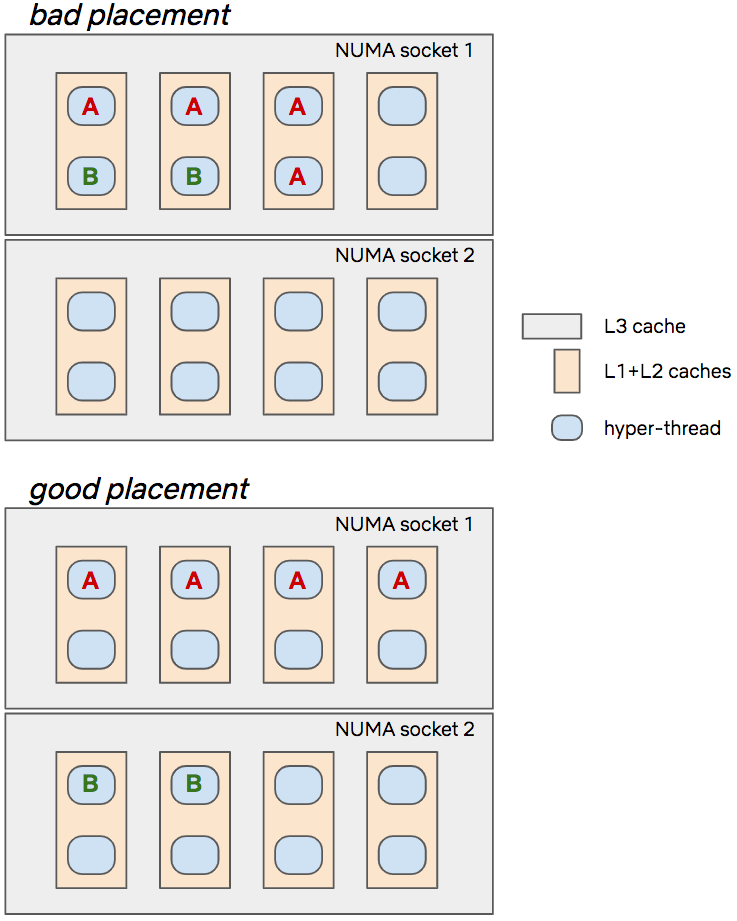
Predictive CPU isolation of containers at Netflix
Because microprocessors are so fast, computer architecture design has evolved towards adding various levels of caching between compute units and the main memory, in order to hide the latency of bringing the bits to the brains. However, the key insight here is that these caches are partially shared among the CPUs, which means that perfect performance isolation of co-hosted containers is not possible. If the container running on the core next to your container suddenly decides to fetch a lot of data from the RAM, it will inevitably result in more cache misses for you (and hence a potential performance degradation).
Read More
Anatomy of CVE-2019-5736: A runc container escape!
On Monday, February 11, CVE-2019-5736 was disclosed. This vulnerability is a flaw in runc, which can be exploited to escape Linux containers launched with Docker, containerd, CRI-O, or any other user of runc. But how does it work?
Read More
Dockter: A Docker image builder for researchers
Dependency hell is ubiquitous in the world of software for research, and this affects research transparency and reproducibility. Containerization is one solution to this problem, but it creates new challenges for researchers. Docker is gaining popularity in the research community—but using it efficiently requires solid Dockerfile writing skills.
Read More
8 emerging trends in container orchestration
Containerization is now officially mainstream. A quarter of Datadog’s total customer base has adopted Docker and other container technologies, and half of the companies with more than 1,000 hosts have done so. As containers take a more prominent place in the infrastructure landscape, we see our customers adding automation and orchestration to help manage their fleets of ephemeral containers.
Read More
8 emerging trends in container orchestration
Containerization is now officially mainstream. A quarter of Datadog’s total customer base has adopted Docker and other container technologies, and half of the companies with more than 1,000 hosts have done so. As containers take a more prominent place in the infrastructure landscape, we see our customers adding automation and orchestration to help manage their fleets of ephemeral containers.
Read More
Open-sourcing gVisor, a sandboxed container runtime
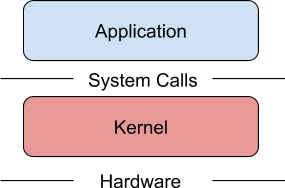
Containers have revolutionized how we develop, package, and deploy applications. However, the system surface exposed to containers is broad enough that many security experts don’t recommend them for running untrusted or potentially malicious applications. A growing desire to run more heterogenous and less trusted workloads has created a new interest in sandboxed containers—containers that help provide a secure isolation boundary between the host OS and the application running inside the container.
Read More
Containers, Security and Echo chambers
There seems to be some confusion around sandboxing containers as of late, mostly because of the recent launch of gvisor. Before I get into the body of this post I would like to make one thing clear. I have no problem with gvisor itself.
Read More