Observability at Scale: Building Uber’s Alerting Ecosystem
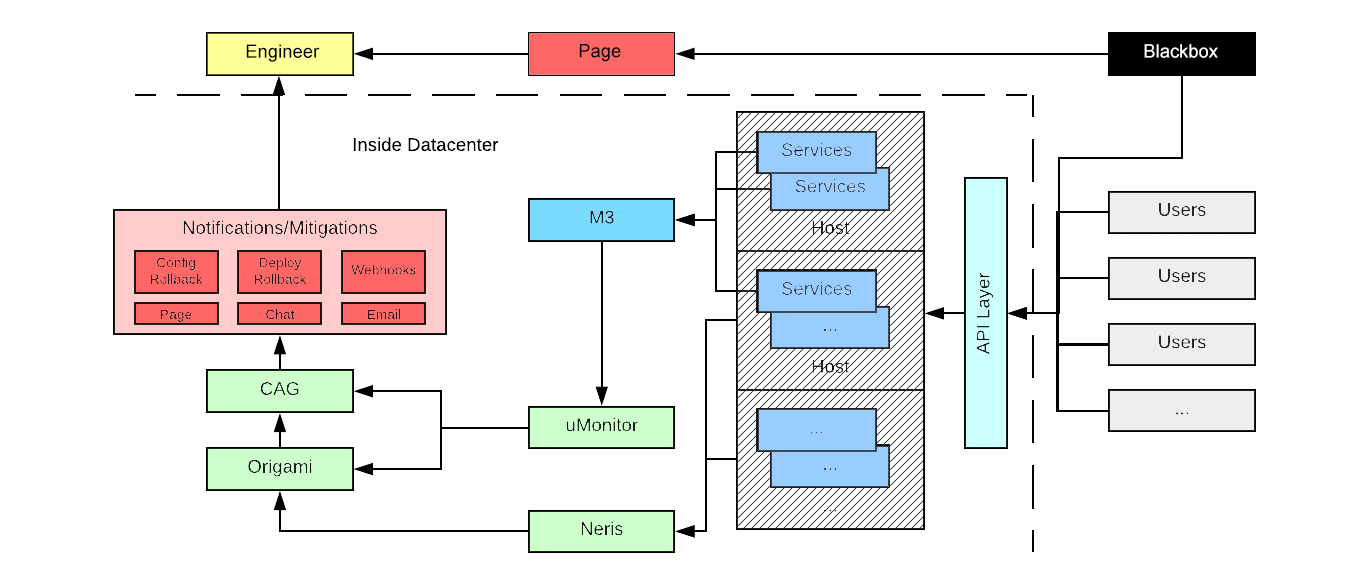
Uber’s software architectures consists of thousands of microservices that empower teams to iterate quickly and support our company’s global growth. These microservices support a variety of solutions, such as mobile applications, internal and infrastructure services, and products along with complex configurations that affect these products at city and sub-city levels. To maintain our growth and architecture, Uber’s Observability team built a robust, scalable metrics and alerting pipeline responsible for detecting, mitigating, and notifying engineers of issues with their services as soon as they occur.
Read More
Istio Multicluster
Istio Multicluster is a feature of Istio–the basis of Red Hat OpenShift Service Mesh–that allows for the extension of the service mesh across multiple Kubernetes or Red Hat OpenShift clusters. The primary goal of this feature is to enable control of services deployed across multiple clusters with a single control plane. The main requirement for Istio multicluster to work is that the pods in the mesh and the Istio control plane can talk to each other.
Read More
Kubernetes Federation V2
With datacenters spread across the globe, users are increasingly looking at ways to spread their applications and services across multiple locales or clusters. This need is driven by multiple use cases: from providing high availability, spreading load across multiple clusters while being resilient to individual cluster failures; to avoiding provider lock-in by using hybrid cloud … With datacenters spread across the globe, users are increasingly looking at ways to spread their applications and services across multiple locales or clusters.
Read More
Cape Technical Deep Dive
In this post, we’ll take a deep dive into the design of the Cape framework. First, we’ll discuss Cape’s architecture. Then we’ll look at the core scheduling component of the system.
Read More