Making Radio Chips for Hell

Making Radio Chips for Hell

  • May 21, 2018
Table of Contents

Making Radio Chips for Hell

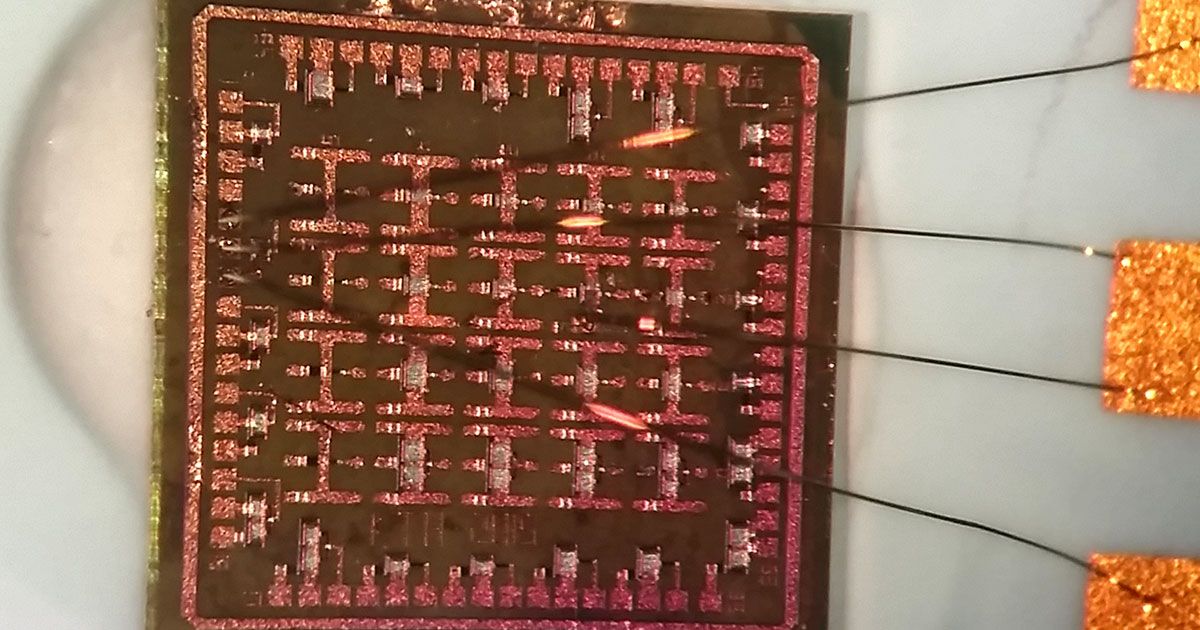
Mixer IC works at 500 degrees Celsius, so it can take the heat on the surface of Venus, inside a natural gas turbine, or in the bowels of a 6-kilometer deep oil well. There are still some places the Internet of Things fears to tread. Researchers at the University of Arkansas and the KTH Royal Institute of Technology, in Sweden, are building a radio for those places.

This month, in IEEE Electron Device Letters,they describe a mixer, a key component of any wireless system, that works just fine from room temperature all the way up to 500ºC. It’s the first mixer IC capable of handling such extremes. IEEE Fellow and Arkansas professor of electrical engineering Alan Mantooth specializes in electronics for extreme environments.

Of several projects “one of the more sexy is trying to put a rover or some sort of instrument on [the surface of the planet]Venus that will last for more than two hours, which is the current record.” An high temperature for average day on Venus reaches 467ºC. But it’s asulfuricheat.

Source: ieee.org

Share :
comments powered by Disqus

Related Posts

The spectacular power of Big Lens

The spectacular power of Big Lens

If you have been wearing glasses for years, like me, it can be surprising to discover that you perceive the world thanks to a few giant companies that you have never heard of. Worrying about the fraying edge of motorway lights at night, or words that slide on the page, and occasionally spending a fortune at the opticians is, for many of us, enough to think about. And spectacles are unusual things.

Read More
Forget carbon fiber—we can now make carbon nanotube fibers

Forget carbon fiber—we can now make carbon nanotube fibers

A carbon nanotube is tough—by some measures, more than 30 times more robust than Kevlar. As they’re only a few atoms thick, however, that toughness isn’t especially useful. Attempts have been made to bundle them together, but nothing has worked out especially well; the individual nanotubes are typically short, and it’s difficult to get them to all line up in the same direction.

Read More