UBC breakthrough opens door to $100 ultrasound machine

UBC breakthrough opens door to $100 ultrasound machine

  • September 12, 2018
Table of Contents

UBC breakthrough opens door to $100 ultrasound machine

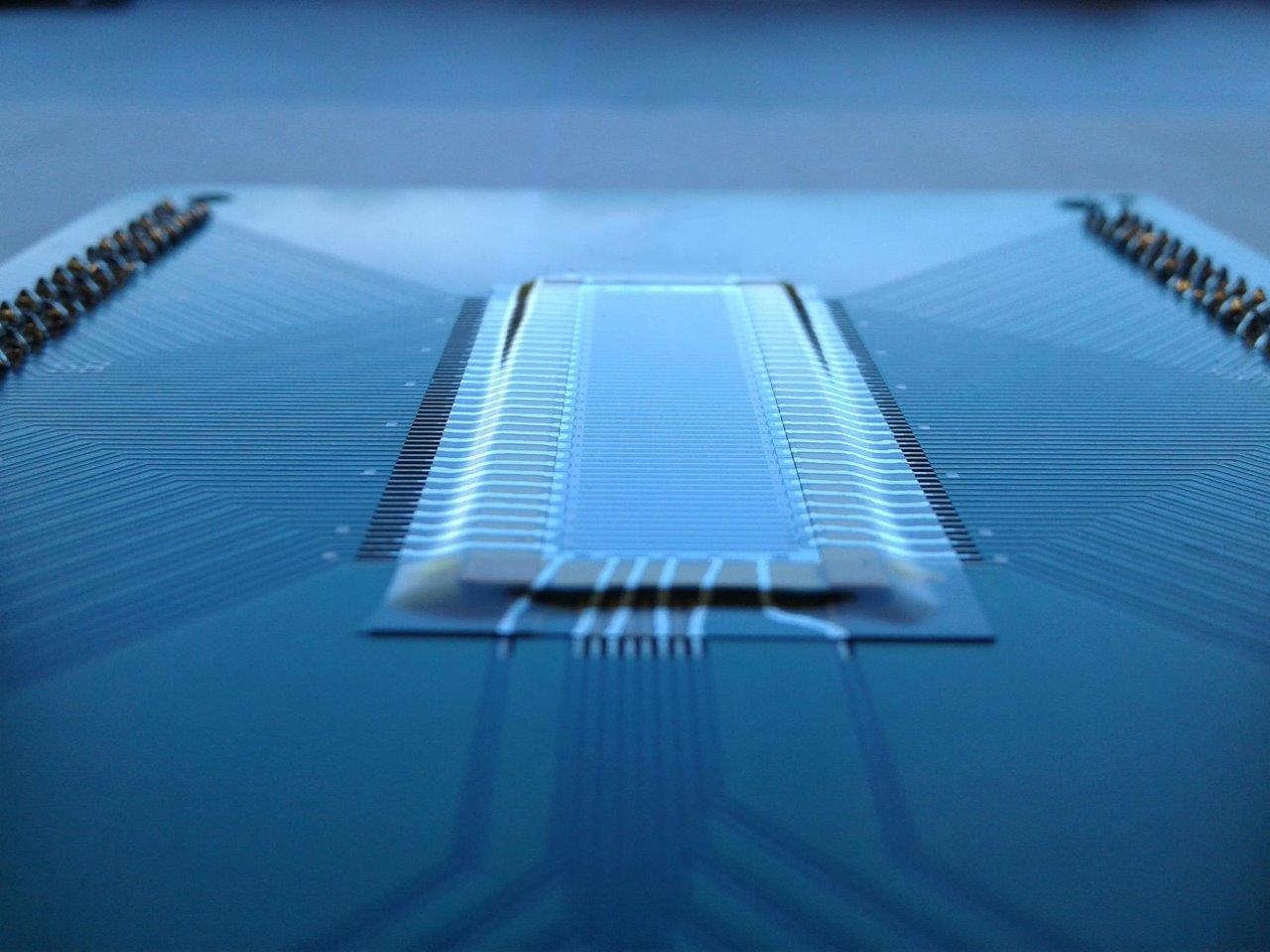
Engineers at the University of British Columbia have developed a new ultrasound transducer, or probe, that could dramatically lower the cost of ultrasound scanners to as little as $100. Their patent-pending innovation—no bigger than a Band-Aid—is portable, wearable and can be powered by a smartphone. Conventional ultrasound scanners use piezoelectric crystals to create images of the inside of the body and send them to a computer to create sonograms.

Researchers replaced the piezoelectric crystals with tiny vibrating drums made of polymer resin, called polyCMUTs (polymer capacitive micro-machined ultrasound transducers), which are cheaper to manufacture. Sonograms produced by the UBC device were as sharp as or even more detailed than traditional sonograms produced by piezoelectric transducers, said co-author Edmond Cretu, professor of electrical and computer engineering. Co-author Robert Rohling, also a professor of electrical and computer engineering, said the next step in the research is to develop a wide range of prototypes and eventually test their device in clinical applications.

Source: ubc.ca

Share :
comments powered by Disqus

Related Posts

First ever color X-ray on a human

First ever color X-ray on a human

New Zealand scientists have performed the first-ever 3-D, colour X-ray on a human, using a technique that promises to improve the field of medical diagnostics, said Europe’s CERN physics lab which contributed imaging technology. The new device, based on the traditional black-and-white X-ray, incorporates The CERN technology, dubbed Medipix, works like a camera detecting and counting individual sub-atomic particles as they collide with pixels while its shutter is open.

Read More
New anti-cancer drugs put cancers to sleep—permanently

New anti-cancer drugs put cancers to sleep—permanently

In a world first, Melbourne scientists have discovered a new type of anti-cancer drug that can put cancer cells into a permanent sleep, without the harmful side-effects caused by conventional cancer therapies. Published today in the journal Nature, the research reveals the first class of anti-cancer drugs that work by putting the cancer cell to sleep – arresting tumour growth and spread without damaging the cells’ DNA. The new class of drugs could provide an exciting alternative for people with cancer, and has already shown great promise in halting cancer progression in models of blood and liver cancers, as well as in delaying cancer relapse.

Read More
AI System Approved For Diabetic Retinopathy Diagnosis

AI System Approved For Diabetic Retinopathy Diagnosis

A system designed by a University of Iowa ophthalmologist that uses artificial intelligence (AI) to detect diabetic retinopathy without a person interpreting the results earned Food and Drug Administration (FDA) authorization in April, following a clinical trial in primary care offices. Results of that study were published Aug. 28 online in Nature Digital Medicine, offering the first look at data that led to FDA clearance for IDx-DR, the first medical device that uses AI for the autonomous detection of diabetic retinopathy. The clinical trial, which also was the first study to prospectively assess the safety of an autonomous AI system in patient care, compared the performance of IDx-DR to the gold standard diagnostic for diabetic retinopathy, which is the leading cause of vision loss in adults and one of the most severe complications for the 30.3 million Americans living with diabetes.

Read More