
Introducing Maesh: A Service Mesh for Kubernetes
On September 4th, 2019, Containous, a cloud infrastructure software provider, released Maesh, an open-source service mesh written in Golang and built on top of the reverse proxy and load balancer Traefik. Maesh promises to provide a lightweight service mesh solution that is easy to get started with and to roll out across a microservice application.
Read More

The Service Mesh: It’s About Traffic
Oliver Gould talks about the Linkerd project, a service mesh hosted by the Cloud Native Computing Foundation, to give operators control over the traffic between their microservices. He shares the lessons they’ve learned helping dozens of organizations get to production with Linkerd and how they’ve applied these lessons to tackle complexity with Linkerd.
Read More
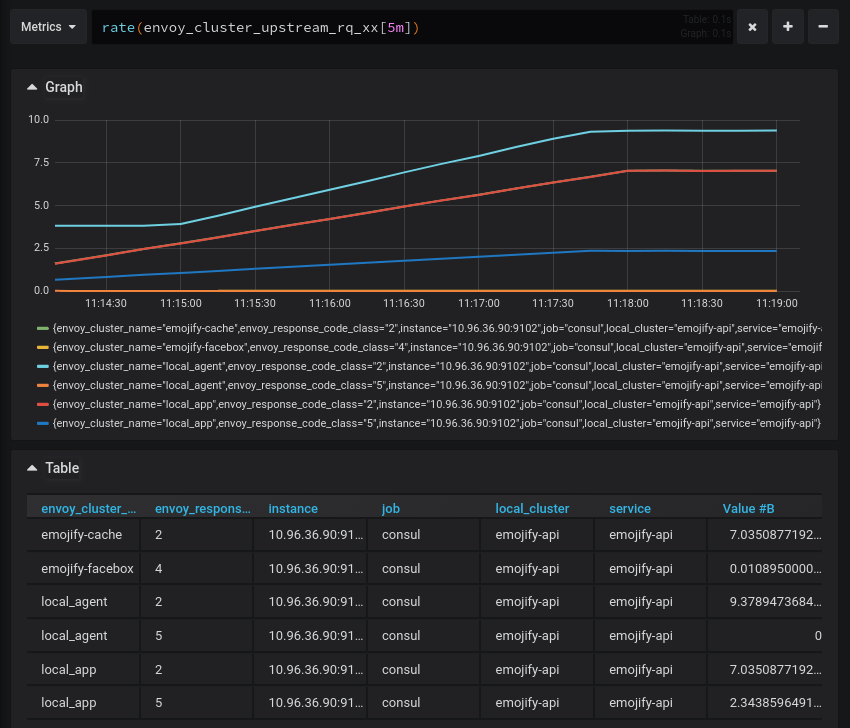
Layer 7 Observability with Consul Service Mesh
Observability comes from the world of engineering and control theory. Control theory states that observability is itself a measure that describes “how well internal states of a system can be inferred from knowledge of external outputs”. In contrast to monitoring which is something you do, observability, is a property of a system.
Read More
Announcing Service Mesh Interface (SMI) Support and Collaboration
Today we announced that Solo.io is a launch partner of the Service Mesh Interface (SMI) specification in collaboration with Microsoft, Bouyant and Hashicorp with support across the cloud-native ecosystem. As part of today’s announcement, the SuperGloo project and The Service Mesh Hub are the first reference implementations of SMI available today. The Service Mesh Interface (SMI) is a specification for service meshes that run on Kubernetes and defines a common standard that can be implemented by a variety of providers.
Read More
HashiCorp Consul supports Microsoft’s new Service Mesh Interface
Today at KubeCon EU in Barcelona, Microsoft introduced a new specification, the Service Mesh Interface (SMI), for implementing service mesh providers into Kubernetes environments. The Service Mesh Interface (SMI) is a specification for service meshes that run on Kubernetes. It defines a common standard that can be implemented by a variety of providers.
Read More
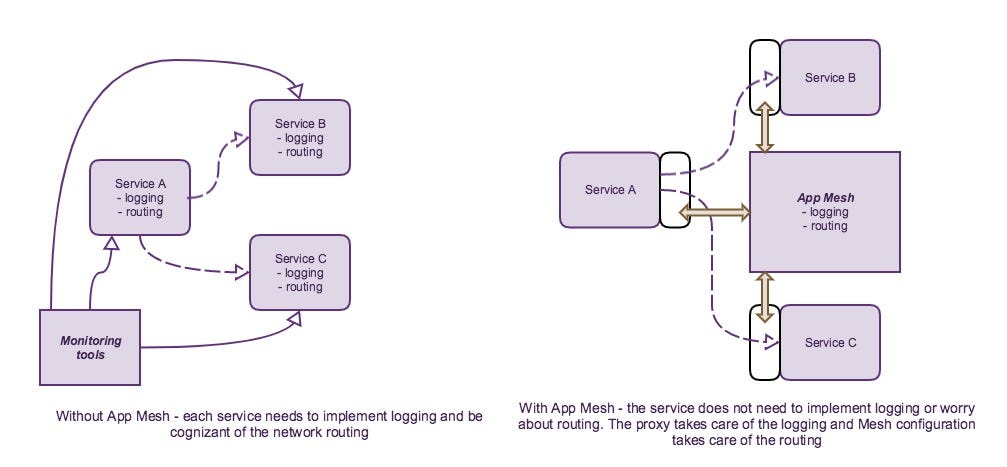
AWS App Mesh
AWS recently released a new service App Mesh during the 2019 summit which has generated a lot of interest from developers world-wide. This service is a great example of how Amazon is highly customer-focused in delivery of products/features to the market. Besides that, there is no additional charge for using the service!:-)
Read More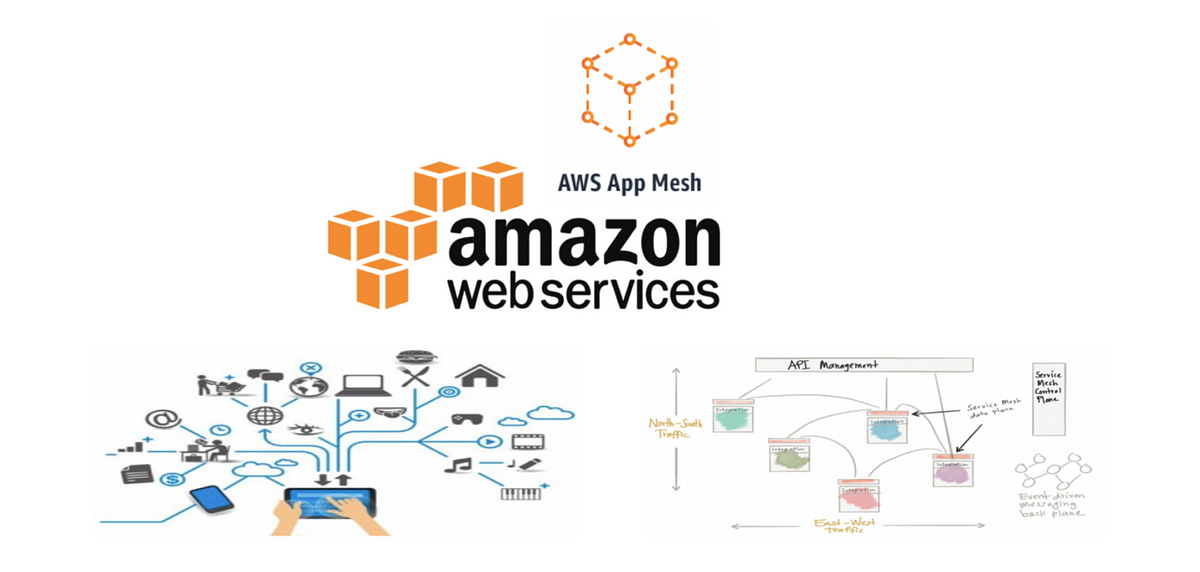
AWS App Mesh—Service Mesh for Microservices Running on AWS
The idea of a “service mesh” has become increasingly popular over the last couple of years and the number of alternatives available has risen. There are multiple service mesh open-source projects: Istio, Linkerd, Envoy and Conduit which can be deployed on any Kubernetes environment. The AWS App Mesh can be used with microservices running on Amazon Elastic Container Service (Amazon ECS), Amazon Elastic Container Service for Kubernetes (Amazon EKS), and Kubernetes running on Amazon EC2.
Read More
AWS App Mesh is now generally available
AWS App Mesh is now generally available and supported for production use. App Mesh is a service mesh that provides application level networking to make it easy for your services to communicate with each other across multiple types of compute infrastructure. App Mesh standardizes how your services communicate, giving you end-to-end visibility and ensuring high-availability for your applications.
Read More
Announcing Istio 1.1
Since we released 1.0 back in July, we’ve done a lot of work to help people get into production. Not surprisingly, we had to do some patch releases (6 so far!), but we’ve also been hard at work adding new features to the product. The theme for 1.1 is Enterprise Ready.
Read More
Architecting Istio 1.1 for Performance
Hyper-scale, microservice-based cloud environments have been exciting to build but challenging to manage. Along came Kubernetes (container orchestration) in 2014, followed by Istio (container service management) in 2017. Both open-source projects enable developers to scale container-based applications without spending too much time on administration tasks.
Read More

Istio Multicluster
Istio Multicluster is a feature of Istio–the basis of Red Hat OpenShift Service Mesh–that allows for the extension of the service mesh across multiple Kubernetes or Red Hat OpenShift clusters. The primary goal of this feature is to enable control of services deployed across multiple clusters with a single control plane. The main requirement for Istio multicluster to work is that the pods in the mesh and the Istio control plane can talk to each other.
Read More