

Optimal Shard Placement in a Petabyte Scale Elasticsearch Cluster
The number of shards on each node, and tries to balance the number of shards per node evenly across the clusterThe high and low disk watermarks. Elasticsearch considers the available disk space on a node before deciding whether to allocate new shards to that node or to actively relocate shards away from that node. A nodes that has reached the low watermark (i.e 80% disk used) is not allowed receive any more shards.
Read More

GraphQL: A success story for PayPal Checkout
At PayPal, we recently introduced GraphQL to our technology stack. At PayPal, GraphQL has been a complete game changer to the way we think about data, fetch data and build applications. This blog post takes a close look at PayPal Checkout and explains our journey from REST to Batch REST to GraphQL and lessons learned along the way.
Read More
Cross shard transactions at 10 million requests per second
Dropbox stores petabytes of metadata to support user-facing features and to power our production infrastructure. The primary system we use to store this metadata is named Edgestore and is described in a previous blog post, (Re)Introducing Edgestore. In simple terms, Edgestore is a service and abstraction over thousands of MySQL nodes that provides users with strongly consistent, transactional reads and writes at low latency.
Read More
Learning Concepts with Energy Functions
We’ve developed an energy-based model that can quickly learn to identify and generate instances of concepts, such as near, above, between, closest, and furthest, expressed as sets of 2d points. Our model learns these concepts after only five demonstrations.
Read More
20 Best YouTube channels for AI and machine learning
What are the most interesting and informative YouTube channels about artificial intelligence (AI) and machine learning? Subscribe to these 20 high-quality channels today to stay up to date with the latest AI and machine learning breakthroughs. Siraj Raval:
Read More
A Netflix Web Performance Case Study
Netflix is one of the most popular video streaming services. Since launching globally in 2016, the company has found that many new users are not only signing up on mobile devices but are also using less-than-ideal connections to do so. By refining the JavaScript used for Netflix.com’s sign-up process and using prefetching techniques, the developer team was able to provide a better user experience for both mobile and desktop users and offer several improvements.
Read More
Modernizing your build pipelines
Doing Continuous Integration is a lot easier if you have the right tools. In our project at a german car manufacturer, we were tasked with developing new services and bringing them to the cloud. We had a centralized Jenkins instance, shared by all the teams in the department.
Read More
Tensorflow 2.0: models migration and new design
Tensorflow 2.0 will be a major milestone for the most popular machine learning framework: lots of changes are coming, and all with the aim of making ML accessible to everyone. These changes, however, requires for the old users to completely re-learn how to use the framework: this article describes all the (known) differences between the 1.x and 2.x version, focusing on the change of mindset required and highlighting the pros and cons of the new and implementations. This article can be a good starting point also for the novice: start thinking in the Tensorflow 2.0 way right now, so you don’t have to re-learn a new framework (unless until Tensorflow 3.0 will be released).
Read More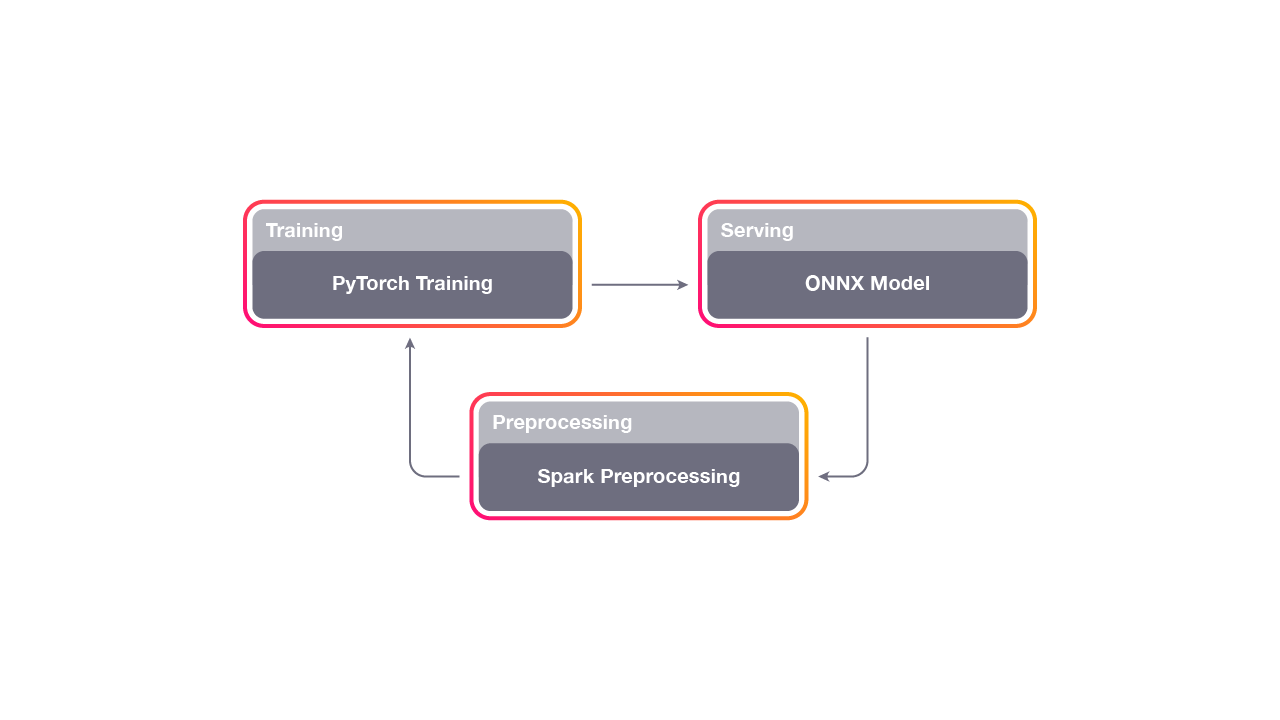
Horizon: An open-source reinforcement learning platform
Horizon is the first open source end-to-end platform that uses applied reinforcement learning (RL) to optimize systems in large-scale production environments. The workflows and algorithms included in this release were built on open frameworks — PyTorch 1.0, Caffe2, and Spark — making Horizon accessible to anyone using RL at scale. We’ve put Horizon to work internally over the past year in a wide range of applications, including helping to personalize M suggestions, delivering more meaningful notifications, and optimizing streaming video quality.
Read More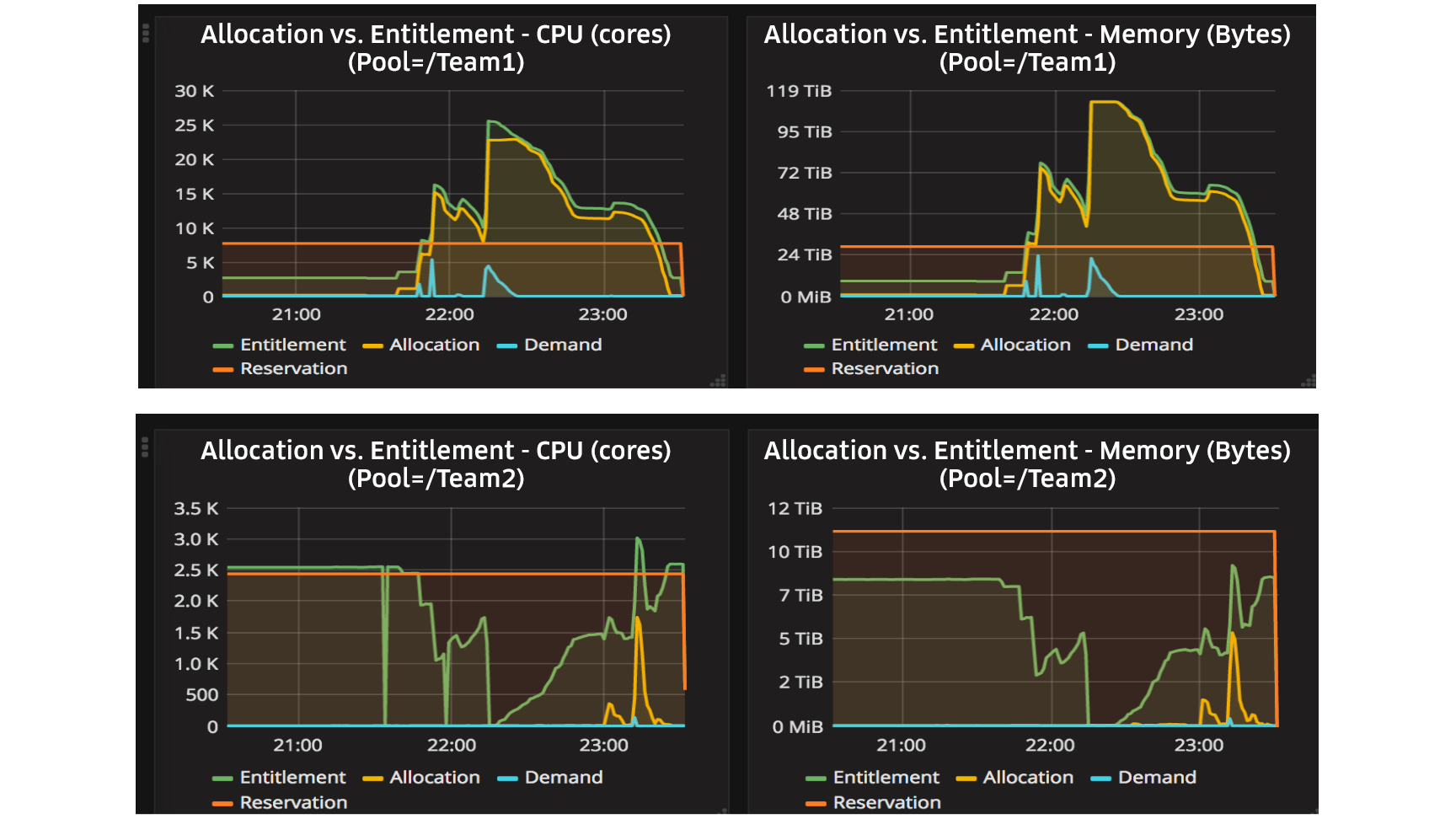
Peloton: Uber’s Unified Resource Scheduler for Diverse Cluster Workloads
Cluster management, a common software infrastructure among technology companies, aggregates compute resources from a collection of physical hosts into a shared resource pool, amplifying compute power and allowing for the flexible use of data center hardware. At Uber, cluster management provides an abstraction layer for various workloads. With the increasing scale of our business, the efficient use of cluster resources becomes very important.
Read More
October 21 GitHub post-incident analysis
Last week, GitHub experienced an incident that resulted in degraded service for 24 hours and 11 minutes. While portions of our platform were not affected by this incident, multiple internal systems were affected which resulted in our displaying of information that was out of date and inconsistent. Ultimately, no user data was lost; however manual reconciliation for a few seconds of database writes is still in progress.
Read More
New Theory of Intelligence May Disrupt AI and Neuroscience
Recent advancement in artificial intelligence, namely in deep learning, has borrowed concepts from the human brain. The architecture of most deep learning models is based on layers of processing– an artificial neural network that is inspired by the neurons of the biological brain. Yet neuroscientists do not agree on exactly what intelligence is, and how it is formed in the human brain — it’s a phenomena that remains unexplained.
Read More
Why React’s new Hooks API is a game changer
I have been developing with React since it’s early days and during that time there have been many attempts by both influencers, as well as the core team to improve the API and patterns developers are using to creating software. One of the biggest challenges we have had was how to share behaviour neatly between components to enable reuse or even just separation of concerns. Every single solution proposed up until this point had some problems associated with it.
Read More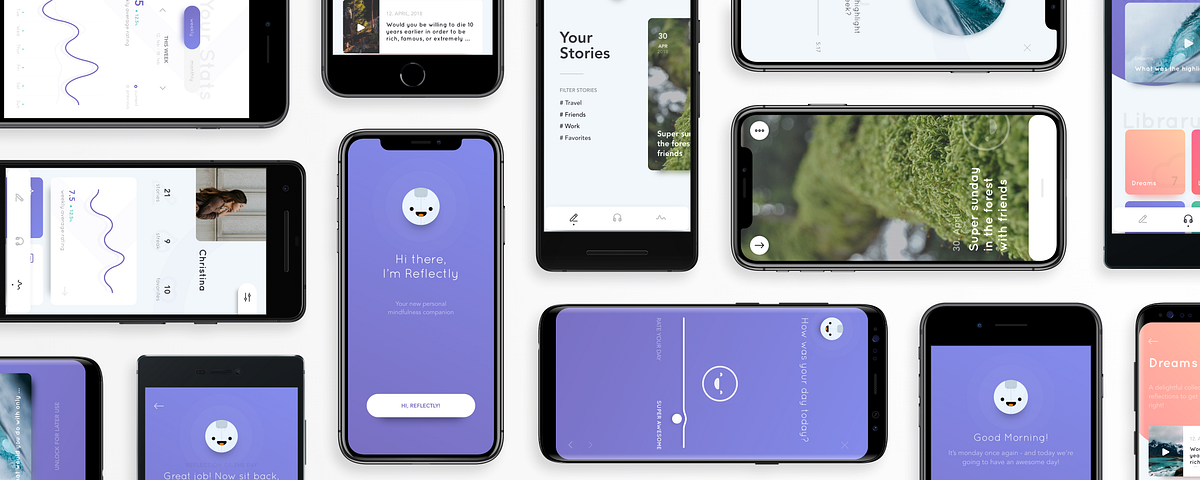
From React Native to Flutter
Reflectly—From React Native toFlutterWhy we moved 500.000+ users toFlutterThe EarlyDaysReflectly was built using React Native in the summer of 2017. At the time React Native was a relatively new and exciting technology. It promised high productivity and cross-platform mobile development with familiar web technologies.
Read More

What’s the Best Deep Learning Framework?
Deep learning models are large and complex, so instead of writing out every function from the ground up, programmers rely on frameworks and software libraries to build neural networks efficiently. The top deep learning frameworks provide highly optimized, GPU-enabled code that are specific to deep neural network computations.
Read More
Curiosity and Procrastination in Reinforcement Learning
Episodic Curiosity through Reachability: Observations are added to memory, reward is computed based on how far the current observation is from the most similar observation in memory. The agent receives more reward for seeing observations which are not yet represented in memory.
Read More

List Of High Profile Cryptocurrency Hacks So Far
sendai’s take: I wonder if we should have a virtual prison where we can lock up cyber criminals. They would have to break rocks in Minecraft all day. There’s been quite a few large, high profile cryptocurrency hacks over the past few years.
Read More