

Scaling Cash Payments in Uber Eats
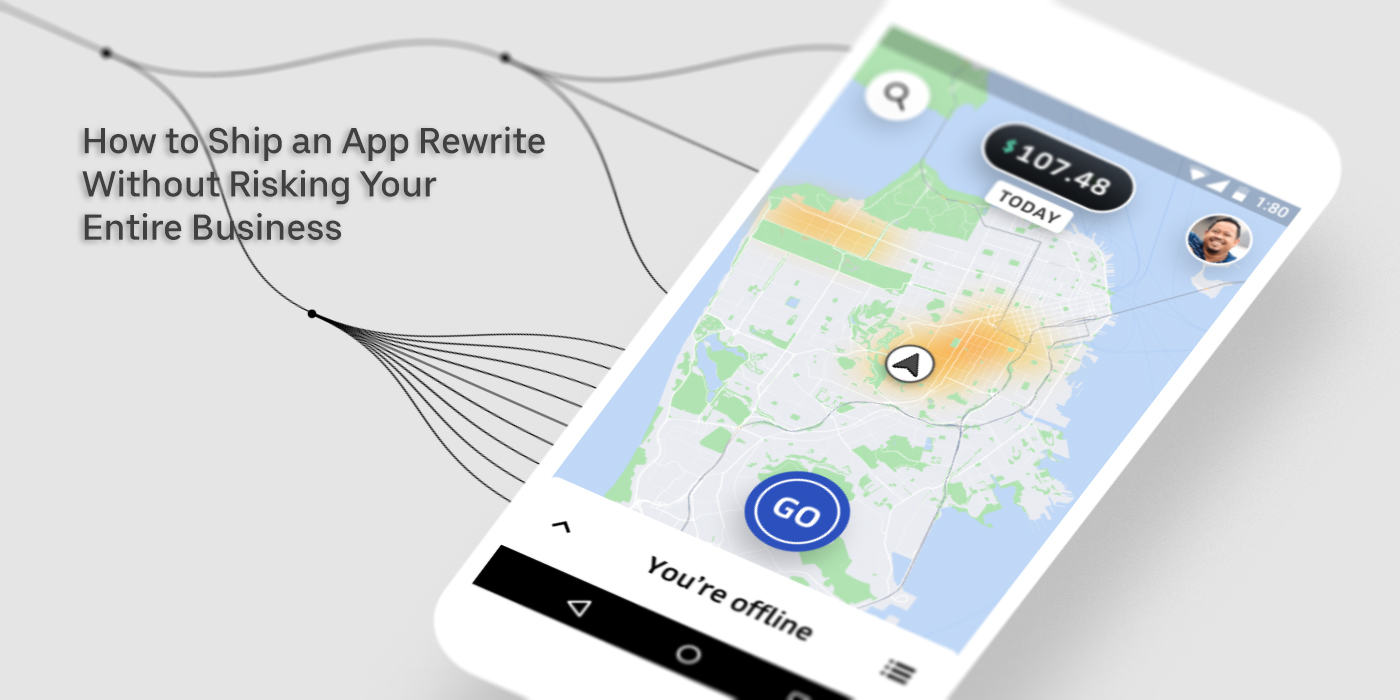
This article is the fourth in a series covering how Uber’s mobile engineering team developed the newest version of our driver app, codenamed Carbon, a core component of our ridesharing business. Among other new features, the app lets our population of over three million driver-partners find fares, get directions, and track their earnings. We began designing the new app in conjunction with feedback from our driver-partners in 2017 and began rolling it out for production in September 2018.
Read More
Flutter 1.0: Google’s Portable UI Toolkit
Today, at Flutter Live, we’re announcing Flutter 1.0, the first stable release of Google’s UI toolkit for creating beautiful, native experiences for iOS and Android from a single codebase. Cross-platform mobile development today is full of compromise. Developers are forced to choose between either building the same app multiple times for multiple operating systems, or to accept a lowest common denominator solution that trades native speed and accuracy for portability.
Read More
The inconvenient truth about cancer and mobile phones
On 28 March this year, the scientific peer review of a landmark United States government study concluded that there is “clear evidence” that radiation from mobile phones causes cancer, specifically, a heart tissue cancer in rats that is too rare to be explained as random occurrence. Eleven independent scientists spent three days at Research Triangle Park, North Carolina, discussing the study, which was done by the National Toxicology Program of the US Department of Health and Human Services and ranks among the largest conducted of the health effects of mobile phone radiation. NTP scientists had exposed thousands of rats and mice (whose biological similarities to humans make them useful indicators of human health risks) to doses of radiation equivalent to an average mobile user’s lifetime exposure.
Read More

Smartphones Are Killing the Planet Faster Than Anyone Expected
A new study from researchers at McMaster University published in the Journal of Cleaner Production analyzed the carbon impact of the whole Information and Communication Industry (ICT) from around 2010-2020, including PCs, laptops, monitors, smartphones, and servers. They found remarkably bad news. Even as the world shifts away from giant tower PCs toward tiny, energy-sipping phones, the overall environmental impact of technology is only getting worse.
Read More
Mobile phone cancer warning as malignant brain tumours double
Last night the group said the increasing rate of tumours in the frontal temporal lobe “raises the suspicion that mobile and cordless phone use may be promoting gliomas”. Professor Denis Henshawsaid: “Our findings illustrate the need to look more carefully at, and to try and explain the mechanisms behind, these cancer trends, instead of brushing the causal factors under the carpet and focusing only on cures.” In 2015 the European Commission Scientific Committee on Emerging and Newly Identified Health Risks concluded that, overall, the epidemiologic studies on cell phone radiofrequency electromagnetic radiation exposure do not show an increased risk of brain tumors or of other cancers of the head and neck region.
Read More