
New advances in natural language processing
Natural language understanding (NLU) and language translation are key to a range of important applications, including identifying and removing harmful content at scale and connecting people across different languages worldwide. Although deep learning–based methods have accelerated progress in language processing in recent years, current systems are still limited when it comes to tasks for which large volumes of labeled training data are not readily available. Recently, Facebook AI has achieved impressive breakthroughs in NLP using semi-supervised and self-supervised learning techniques, which leverage unlabeled data to improve performance beyond purely supervised systems.
Read More
12 open source tools for natural language processing
It would be easy to argue that Natural Language Toolkit (NLTK) is the most full-featured tool of the ones I surveyed. It implements pretty much any component of NLP you would need, like classification, tokenization, stemming, tagging, parsing, and semantic reasoning. And there’s often more than one implementation for each, so you can choose theexact algorithm or methodology you’d like to use.
Read More

AI Blueprints: Implementing content-based recommendations using Python
In this article, we’ll have a look at how you can implement a content-based recommendation system using Python and the scikit-learn library. But before diving straight into this, it’s important to have some prerequisite knowledge of the different ways by which recommendation systems can recommend an item to users. Content-based: A content-based recommendation finds similar items to a given item by examining the item’s properties, such as its title or description, category, or dependencies on other items (for example, electronic toys require batteries).
Read More

Humanizing Customer Complaints using NLP Algorithms
Last Christmas, I went through the most frustrating experience as a consumer. I was doing some last minute holiday shopping and after standing in a long line, I finally reached the blessed register only to find out that my debit card was blocked. I could sense the old lady at the register judging me with her narrowed eyes.
Read More
Intel AI Lab open-sources library for deep learning-driven NLP
The Intel AI Lab has open-sourced a library for natural language processing to help researchers and developers give conversational agents like chatbots and virtual assistants the smarts necessary to function, such as name entity recognition, intent extraction, and semantic parsing to identify the action a person wants to take from their words. The first-ever conference by Intel for AI developers is being held Wednesday and Thursday, May 23 and 24, at the Palace of Fine Arts in San Francisco. The Intel AI Lab now employs about 40 data scientists and researchers and works with divisions of the company developing products like the nGraph framework and hardware like Nervana Neural Network chips, Liu said.
Read More
Machine Learning for Text Classification Using SpaCy in Python
spaCy is a popular and easy-to-use natural language processing library in Python. It provides current state-of-the-art accuracy and speed levels, and has an active open source community. However, since SpaCy is a relative new NLP library, and it’s not as widely adopted as NLTK.
Read More
AlterEgo: Interfacing with devices through silent speech
AlterEgo is a closed-loop, non-invasive, wearable system that allows humans to converse in high-bandwidth natural language with machines, artificial intelligence assistants, services, and other people without any voice—without opening their mouth, and without any discernible movements—simply by vocalizing internally.
Read More

Baidu shows off its instant pocket translator
The Chinese Internet giant has made significant strides improving machine language translation since 2015, using an advanced form of artificial intelligence known as deep learning, said Hua Wu, the company’s chief scientist focused on natural-language processing. On stage, the Internet-connected device was able to almost instantly translate a short conversation between Wu and senior editor Will Knight. It easily rendered Knight’s questions including ’Where can I buy this device?’
Read More
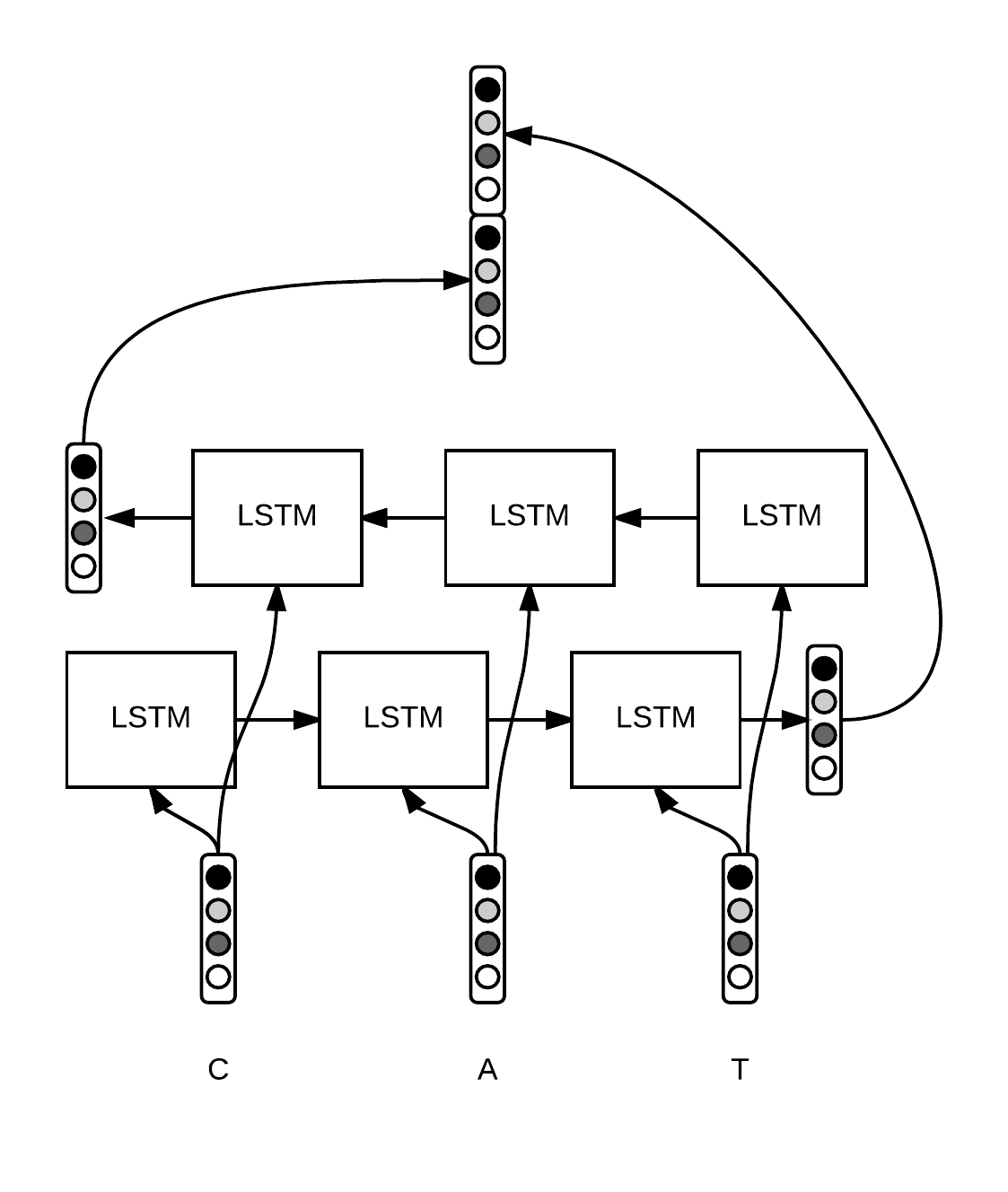
Sequence Tagging with Tensorflow
I remember the first time I heard about the magic of Deep Learning for Natural Language Processing (NLP). I was just starting a project with a young French startup Riminder and it was the first time I heard about word embeddings. There are moments in life when the confrontation with a new theory seems to make everything else irrelevant.
Read More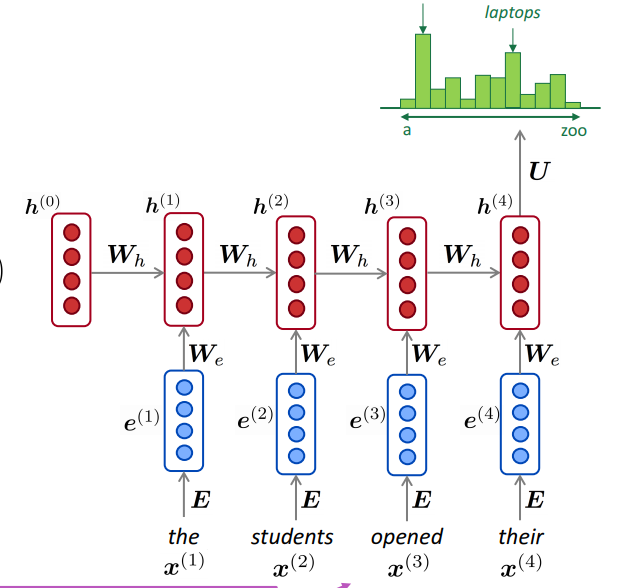
Building a Next Word Predictor in Tensorflow
Next Word Prediction or what is also called Language Modeling is the task of predicting what word comes next. It is one of the fundamental tasks of NLP and has many applications. You might be using it daily when you write texts or emails without realizing it.
Read More
Understanding word vectors in NLP
In this tutorial, I’m going to show you how word vectors work. This tutorial assumes a good amount of Python knowledge, but even if you’re not a Python expert, you should be able to follow along and make small changes to the examples without too much trouble.
Read More