India Pushes Back Against Tech ‘Colonization’ by Internet Giants
With Facebook, Google and Amazon dominating India’s internet, lawmakers have declared their intention to impose tough new rules on the tech industry. India is trying to establish strong data protections for its citizens, as Europe did, while giving the government the right to obtain private information as it sees fit. For some Indian political leaders, it is as if their nation — which was ruled by Britain for a century until 1947 — is being conquered by colonial powers all over again.
Read More
Ancient Rome’s Collapse Is Written into Arctic Ice
On March 15, some time ago, several dozen famous politicians—sturdy men, duly elected senators who claimed to love their republic—attacked their chief executive while he walked into the Senate. They stabbed Gaius Julius Caesar 23 times, as he fell to the floor, defenseless, and bled to death, setting off a chain of wars that formally ended the Roman Republic and initiated the Roman Empire. Some 2,062 years have passed since that day, but we haven’t stopped arguing about it.
Read More
Estonia plans to become a free public transport nation
After a successful experiment with free public transport for all citizens in Tallinn, Estonia wants to become the world’s first free public transport nation. Allan Alaküla explains why this is a good idea. Tallinn, known for its digital government and successful tech startups, is often referred to as Europe’s innovation capital.
Read More

Treadmills Were Meant to Be Atonement Machines
If you are one of the 51.8 million people in the U.S. who use a treadmill for exercise, you know there’s much pain for your muscle-and-fitness gain. On your next 30-minute jog, as you count down the final seconds, ponder whether the hard work made you a better person. Consider whether the workout would feel different if you had powered something, even a fan to cool yourself off.
Read More
What makes a translation great?
To the outside world, literary translators are famously invisible. Being a tight-knit community of solitary home workers, though, we talk a lot amongst ourselves. Recently, one big thing we’ve been talking about is reviews of our work.
Read More

Airbnb Is Screwing Over New York’s Vulnerable Neighborhoods
Here in New York, where the city cracked down on short term rentals more than a hundred years ago, renting out your home for less than 30 days is illegal as of October 2016. But many landlords continue to rent out entire homes to tourists and visitors—today, 12,200 units are available on Airbnb in New York City in total—allowing them to reap in an income that’s higher than what they could make from renting those same units long term. That causes gaps in the housing market.
Read More


China is monitoring employees’ brain waves and emotions
Chinese businesses and the military are monitoring employees’ brain activity and emotions. The ’emotional surveillance technology’ helps employers identify mood shifts so they can change break times, an employee’s task, or even send them home. The technology reportedly increases productivity and profitability, with one company claiming its profits jumped by $315 million.
Read More
Scottish island experiment could make Scotland world automation leader
According to Glasgow Provan MSP Ivan McKee, Scotland could become a leader in automation by mounting a full-scale island experiment to test the technologies of the future. The Scottish Government should make a “moon shot statement”, he told the Sunday Herald, and pledge to transform one of its communities with tech advances like self-driving cars and economic redesigns such as introducing a citizen’s income.
Read More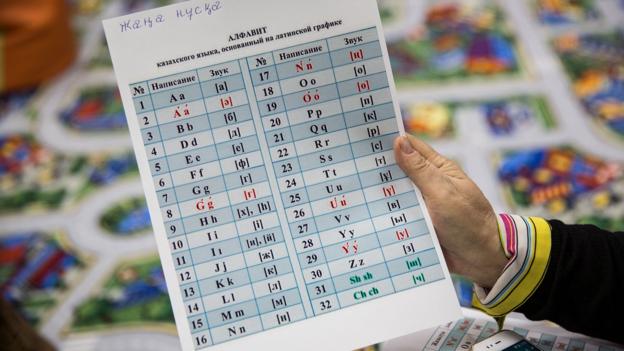
Kazakhstan is changing its alphabet from Cyrillic to Latin-based
That the Kazakh language is currently written in Cyrillic – and the persistent use of Russian in elite circles – is a legacy of the Soviet Union’s rule, one that some of its neighbouring countries sought to shed right after the union’s collapse in 1991. Azerbaijan, for example, started introducing textbooks in Latin script the next year, while Turkmenistan followed suit in 1993. Kazakhstan is making the transition almost three decades on, in a different economic environment that makes the costs hard to predict.
Read More



Is the Chinese Language a Superstition Machine?
English speakers are sanguine about homophony—often blithely, so that they make little attempt to clarify meanings even when the context leaves open the possibility of more than one. In one study led by Victor Ferreira, people were asked to describe objects in visual scenes that showed both a baseball bat and a flying bat—but they ambiguously referred to either of these as simply “the bat,” under some conditions as often as 63 percent of the time.
Read More

China’s Social Credit: Rewards and Punishments
Like private credit scores, a person’s social score can move up and down depending on their behaviour. The exact methodology is a secret — but examples infractions include bad driving, smoking in non-smoking zones, buying too many video games and posting fake news online.
Read More
China’s experiment in ranking and monitoring citizens has started
Depending on their score bracket, residents hold a grade ranging from A+++ to D. Some offenses can hurt the score pretty badly. For drunk driving, for example, one’s score plummets straight to a C. On the other hand, triple As are rewarded with perks such as being able to rent public bikes without paying a deposit (and riding them for free for an hour and a half), receiving a $50 heating discount every winter, and obtaining more advantageous terms on bank loans.
Read More

Who really came up with China’s ‘four new inventions’?
China claims it invented high-speed rail, mobile payments, e-commerce and bike-sharing, but did it?
Read More
A Struggling Town Is Reviving Itself With… Geocaching
Unfamiliar passers-by may think it’s a joke. But to locals, this landmark goes by the name “Fork and Beans.” It has a logbook hidden inside its frame and it’s one of the more than 500 geocaches scattered around Wilberforce—the “Geocaching Capital of Canada,” as the town calls itself, and home of one of the most popular geocaching tours in the world.
Read More
Netflix Banned from Competing at Cannes Film Festival
Netflix has been banned from competing in the Cannes Film Festival, according to a report from The Hollywood Reporter. Theirry Fremaux, the head of Cannes, told THR last week the ban is because Netflix refuses to release its films in theaters, choosing instead to debut them on its streaming service and, in some rare cases, do day-and-date releases so the film can be seen both online and off. In the case of Bong Joon-ho’s Okja and Noah Baumbach’s The Meyerowitz Stories — films that were entered into last year’s Cannes to widespread protest from French filmmakers — Netflix was unable to secure last-minute permits for one-week theatrical releases due to French media regulations.
Read More
ProPublica/Mother Jones Investigation Confirms IBM Layoffs Targeted Older Workers
IBM continued to lay off workers as discreetly as possible in 2017, reporting on them in employment news roundups on occasion. But sadly, for me, it became a little bit old news (not, of course, for those newly affected). IBM repeatedly cuts older workers and U.S. jobs, according to those laid off, and denies it.
Read More
The Workplace Is Killing People and Nobody Cares
It’s true. He takes three points and puts them together. The first point, which is consistent with data reported by the World Economic Forum and other sources, is that an enormous percentage of the health care cost burden in the developed world, and in particular in the U.S., comes from chronic disease — things like diabetes and cardiovascular and circulatory disease.
Read More
Anti-anti-communism
A 2009 poll in eight east European countries asked if the economic situation for ordinary people was ‘better, worse or about the same as it was under communism’. The results stunned observers: 72per cent of Hungarians, and 62per cent of both Ukrainians and Bulgarians believed that most people were worse off after 1989. In no country did more than 47per cent of those surveyed agree that their lives improved after the advent of free markets.
Read More
New study tracks the evolution of stone tools
For at least 2.6 million years, humans and our ancestors have been making stone tools by chipping off flakes of material to produce sharp edges. We think of stone tools as very rudimentary technology, but producing a usable tool without wasting a lot of stone takes skill and knowledge. That’s why archaeologists tend to use the complexity of stone tools as a way to measure the cognitive skills of early humans and the complexity of their cultures and social interactions.
Read More

DNA Sheds Light On Settlement of Pacific
Two genetic studies shed light on the epic journeys that led to the settlement of the vast Pacific region by humans.
Read More
The man who bottled evolution
Thirty years ago, MSU researcher Richard Lenski added his now-famous bacteria to 12 inaugural flasks, a process he and his team of lab technicians and students have been repeating daily ever since.
Read More
Here’s Why Our Postwar “Long Peace” Is Fragile
Have mechanisms like democratization really fostered an enduring trend of peaceful co-existence, or is this just a statistical fluke—a normal interlude of relative calm before another global-scale conflagration?
Read More