80.1 million requests per second on DynamoDB
Amazon Live and IVS on Prime Day Throughout Prime Day 2020, Amazon customers were able to shop from livestreams through Amazon Live. Shoppers were also able to use live chat to interact with influencers and hosts in real time. They were able to ask questions, share their experiences, and get a better feel for products of interest to them.
Read More


Facebook AI, AWS partner to release new PyTorch libraries
Facebook AI and AWS have partnered to release new libraries that target high-performance PyTorch model deployment and large scale model training. As part of the broader PyTorch community, Facebook AI and AWS engineers have partnered to develop new libraries targeted at large-scale elastic and fault-tolerant model training and high-performance PyTorch model deployment. These libraries enable the community to efficiently productionize AI models at scale and push the state of the art on model exploration as model architectures continue to increase in size and complexity.
Read More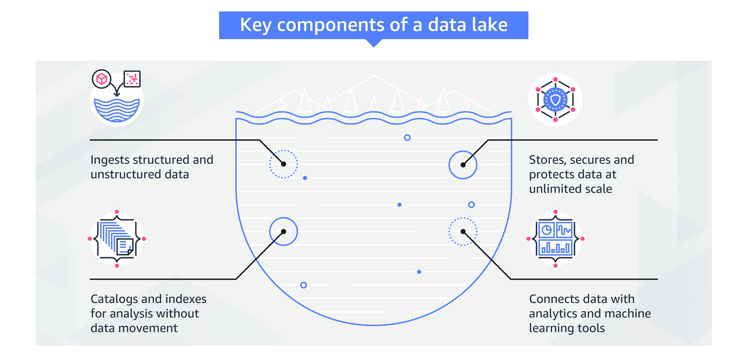
How Amazon is solving big-data challenges with data lakes
Back when Jeff Bezos filled orders in his garage and drove packages to the post office himself, crunching the numbers on costs, tracking inventory, and forecasting future demand was relatively simple. Fast-forward 25 years, Amazon’s retail business has more than 175 fulfillment centers (FC) worldwide with over 250,000 full-time associates shipping millions of items per day. Amazon’s worldwide financial operations team has the incredible task of tracking all of that data (think petabytes).
Read More
Database Migration To Amazon Aurora
In this blog post we’ll show you how we migrated a critical Postgres database with 18Tb of data from Amazon RDS (Relational Database Service) to Amazon Aurora, with minimal downtime. To do so, we’ll discuss our experience at Codacy.
Read More
Cloud-Powered, Next-Generation Banking
Traditional banks make extensive use of labor-intensive, human-centric control structures such as Production Support groups, Security Response teams, and Contingency Planning organizations. These control structures were deemed necessary in order to segment responsibilities and to maintain a security posture that is risk averse. Unfortunately, this traditional model tends to keep the subject matter experts in these organizations at a distance from the development teams, reducing efficiency and getting in the way of innovation.
Read More

AWS power outage with data loss
On August 31st, 2019, an Amazon AWS US-EAST-1 datacenter in North Virginia experienced a power failure at 4:33 AM, which led to the datacenter’s backup generators to kick on. Unfortunately, these generators started failing at approximately 6:00 AM , which led to 7.5% of the EC2 instances and EBS volumes becoming unavailable. ‘1:30 PM PDT At 4:33 AM PDT one of ten data centers in one of the six Availability Zones in the US-EAST-1 Region saw a failure of utility power.
Read More
Toward a bastion-less world
Using a bastion or jump server has been a common way to allow access to secure infrastructure in your virtual private cloud (VPC) and is integrated into several Quick Starts. Amazon Web Services (AWS) has recently released two new features that allow us to connect securely to private infrastructure without the need for a bastion host. This greatly improves your security and audit posture by centralizing access control and reducing inbound access.
Read More
A Technical Analysis of the Capital One Hack
The recent disclosure of yet another cloud security misconfiguration leading to the loss of sensitive personal information made the headlines this past week. This particular incident came with a bit more information from the indictment of the accused party, allowing us to piece together the revealed data and take an educated guess as to what may have transpired leading up to the loss of over 100 million credit card applications and 100 thousand social security numbers. At the root of the hack lies a common refrain: the misconfiguration of cloud infrastructure resources allowed an unauthorized user to elevate her privileges and compromise sensitive documents.
Read More

Key Conjurer: Our Policy of Least Privilege
Hi, my name is Reza Nikoopour and I’m a security engineer on the Security team at Riot. My team is responsible for securing Riot infrastructure wherever we’re deployed – whether that means internal or external data centers or clouds. We provide cloud security guidance to the rest of Riot, and we’re responsible for Key Conjurer, our open source AWS API programmatic access solution.
Read More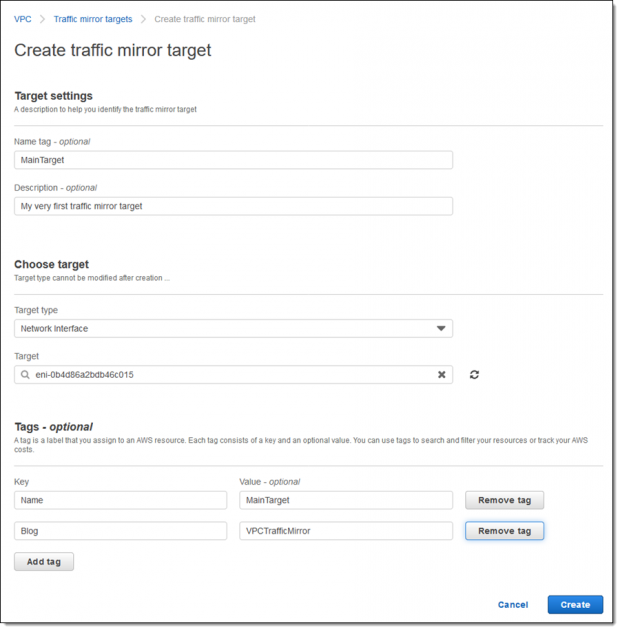
VPC Traffic Mirroring – Capture & Inspect Network Traffic
Running a complex network is not an easy job. In addition to simply keeping it up and running, you need to keep an ever-watchful eye out for unusual traffic patterns or content that could signify a network intrusion, a compromised instance, or some other anomaly. VPC Traffic Mirroring Today we are launching VPC Traffic Mirroring.
Read More
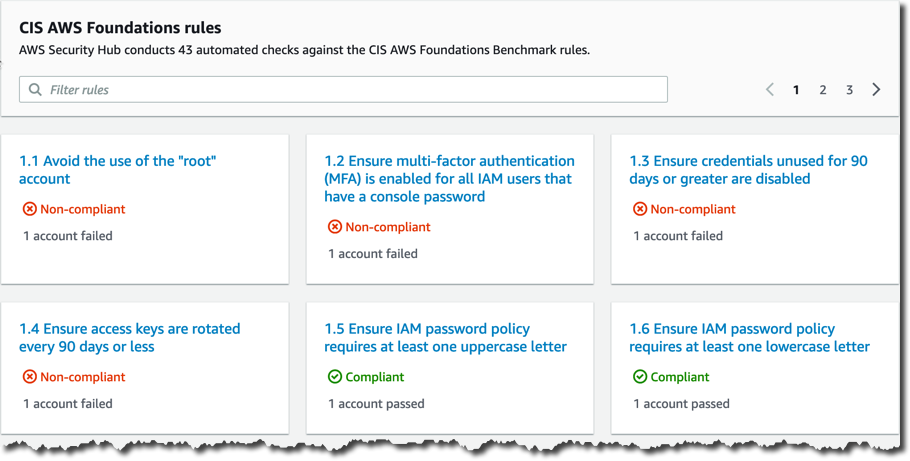
AWS Security Hub Now Generally Available
I’m a developer, or at least that’s what I tell myself while coming to terms with being a manager. I’m definitely not an infosec expert. I’ve been paged more than once in my career because something I wrote or configured caused a security concern.
Read More
Architecting for PCI DSS Segmentation and Scoping on AWS
AWS has published a whitepaper, Architecting for PCI DSS Scoping and Segmentation on AWS, to provide guidance on how to properly define the scope of your Payment Card Industry (PCI) Data Security Standard (DSS) workloads running on the AWS Cloud. The whitepaper looks at how to define segmentation boundaries between your in-scope and out-of-scope resources using cloud native AWS services. The whitepaper is intended for engineers and solution builders, but it also serves as a guide for Qualified Security Assessors (QSAs) and internal security assessors (ISAs) to better understand the different segmentation controls available within AWS products and services, along with associated scoping considerations.
Read More

AWS and the CLOUD Act
While news of Brexit dominates headlines in the United Kingdom, another important event took place recently in London. U.S. Deputy Assistant Attorney General Richard W. Downing addressed the myths and realities of the Clarifying Lawful Overseas Use of Data Act (“CLOUD Act”), in a speech at the Academy of European Law Conference. Following the speech, the U.S. Department of Justice (DOJ) published a whitepaper and FAQ clarifying the purpose and scope of the CLOUD Act and addressing many of the misunderstandings of this law.
Read More
A Detailed Overview of AWS API Gateway
Look inside the black box of AWS API Gateway to understand authorization, method requests and responses, integration requests and responses, VTL templates, and more. AWS API Gateway is an awesome service to use as an HTTP frontend. You can use it for building serverless applications, for integrating with legacy applications, or for proxying HTTP requests directly to other AWS services.
Read More
Disaster Tolerance Patterns Using AWS Serverless Services
In my previous post (Disaster Recovery for Cloud Solutions is Obsolete) I asserted that you should design your cloud architectures for Disaster Tolerance from the start (even if it is counter intuitive to do so by lean principles). I also argued that you should do this because it’s easy if you do it now, and it will help your business even if there is never a disaster.
Read More
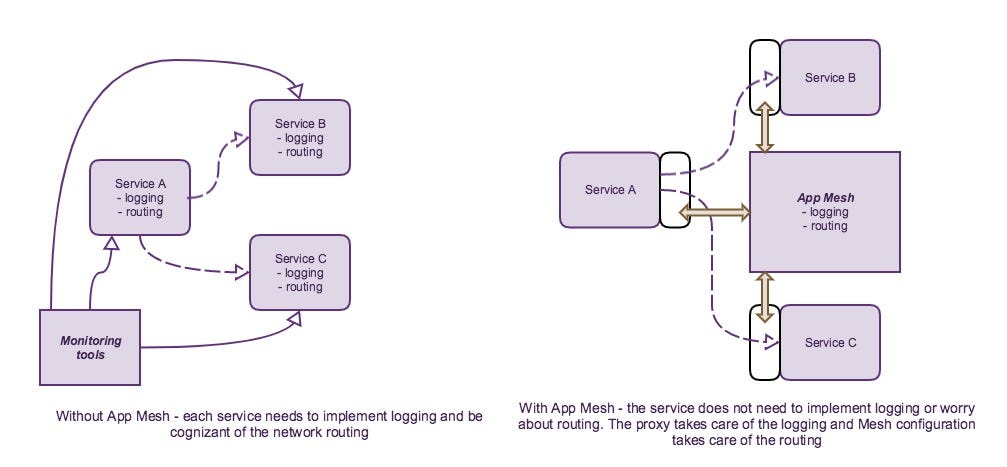
AWS App Mesh
AWS recently released a new service App Mesh during the 2019 summit which has generated a lot of interest from developers world-wide. This service is a great example of how Amazon is highly customer-focused in delivery of products/features to the market. Besides that, there is no additional charge for using the service!:-)
Read More
AWS App Mesh—Service Mesh for Microservices Running on AWS
The idea of a “service mesh” has become increasingly popular over the last couple of years and the number of alternatives available has risen. There are multiple service mesh open-source projects: Istio, Linkerd, Envoy and Conduit which can be deployed on any Kubernetes environment. The AWS App Mesh can be used with microservices running on Amazon Elastic Container Service (Amazon ECS), Amazon Elastic Container Service for Kubernetes (Amazon EKS), and Kubernetes running on Amazon EC2.
Read More
AWS App Mesh is now generally available
AWS App Mesh is now generally available and supported for production use. App Mesh is a service mesh that provides application level networking to make it easy for your services to communicate with each other across multiple types of compute infrastructure. App Mesh standardizes how your services communicate, giving you end-to-end visibility and ensuring high-availability for your applications.
Read More
Amazon S3 Path Deprecation Plan
Last week we made a fairly quiet (too quiet, in fact) announcement of our plan to slowly and carefully deprecate the path-based access model that is used to specify the address of an object in an S3 bucket. I spent some time talking to the S3 team in order to get a better understanding of the plan. We launched S3 in early 2006.
Read More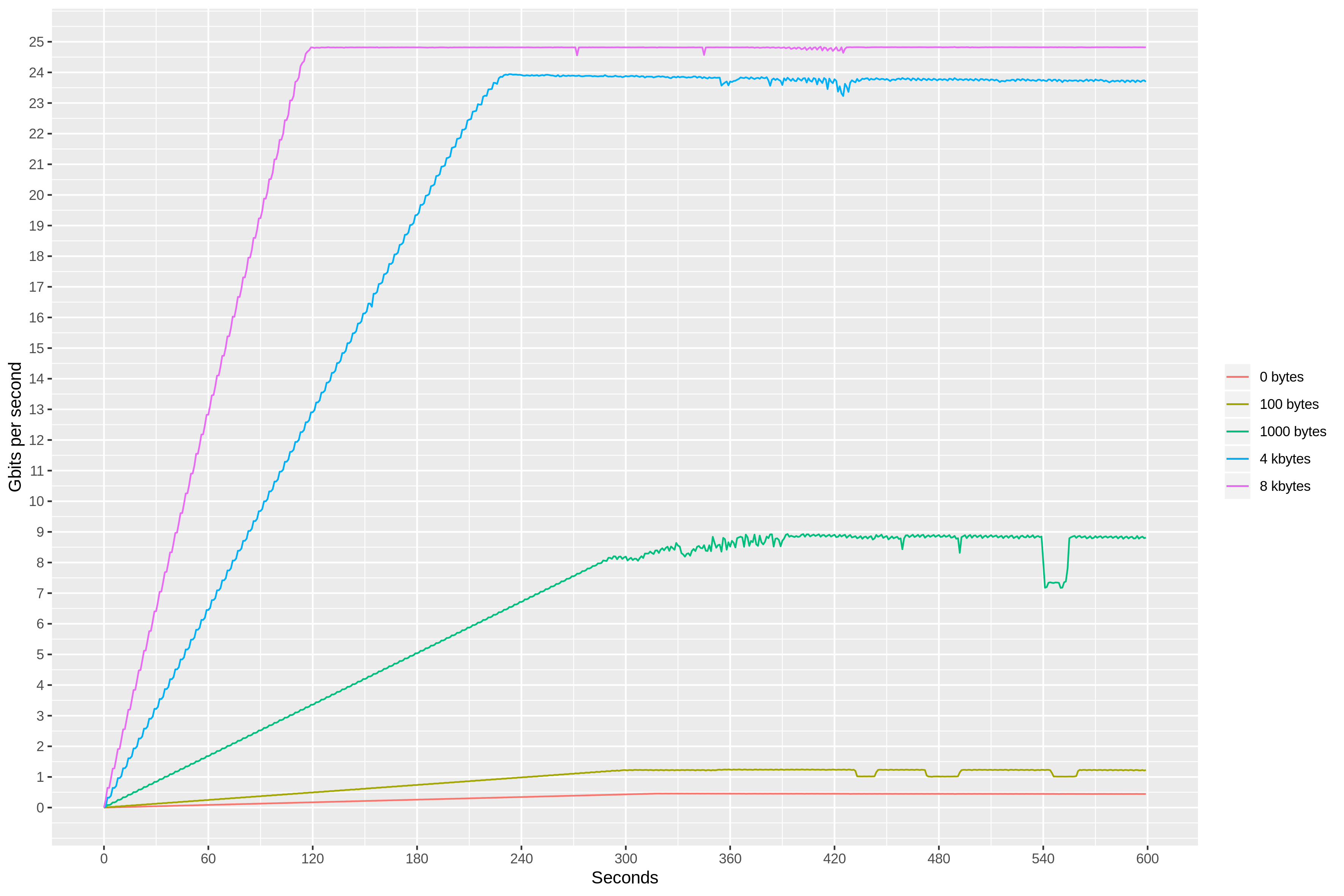
Packets-per-second limits in EC2
While evaluating the performance of a server application, we eventually (and hopefully) run up against the most fundamental constraining factor: the network. Cloud providers tend to offer somewhat handwavy guidance on networking constraints, especially when compared to the exhaustive literature explaining the quotas for RAM, CPU, and I/O. While working on an unrelated stress test in EC2, we were surprised by some results that led us down the path of investigating EC2 network capacity claims, resulting in this writeup. EC2 documentation describes network performance in terms of maximum available bandwidth.
Read More
When AWS Autoscale Doesn’t
The premise behind autoscaling in AWS is simple: you can maximize your ability to handle load spikes and minimize costs if you automatically scale your application out based on metrics like CPU or memory utilization. If you need 100 Docker containers to support your load during the day but only 10 when load is lower at night, running 100 containers at all times means that you’re using 900% more capacity than you need every night. With a constant container count, you’re either spending more money than you need to most of the time or your service will likely fall over during a load spike.
Read More


AWS Outperforms GCP in the 2018 Cloud Report
Customers rely on us to help navigate the complexities of the increasingly competitive cloud wars. This inspired the 2018 Cloud Computing Report, where we benchmark performance, latency, CPU, network, I/O, and cost of AWS and GCP. Note: As of December 20, 2018, we have updated two sections in this report: Network Throughput and I/O Experiment.
Read More
Moving from Kube2Iam to Kiam
At Ibotta, we chose kube2iam to assign AWS IAM Roles to containers running in our Kubernetes cluster. Lately, we’ve run into some issues with it—specifically when running a job that scores all of our service repos. This spins up a number of pods in parallel and has often failed to correctly access roles.
Read More
Crossplane lowers the barrier to a multi-cloud future
Cloud computing has become the dominant IT paradigm and multi-cloud looks poised to be the primary approach, with 81 percent of enterprises already adopting a multi-cloud strategy. A multi-cloud strategy prevents vendor lock-in, which is increasingly important as three major providers (AWS, GCP, and Azure) dominate the market. Despite the many benefits of a multi-cloud strategy, deploying across multiple clouds is still incredibly complex.
Read More
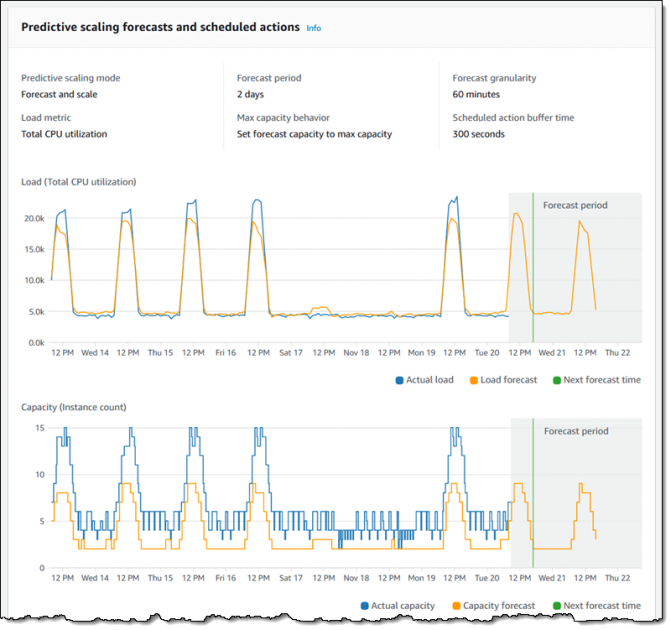
Predictive Scaling for EC2, Powered by Machine Learning
When I look back on the history of AWS and think about the launches that truly signify the fundamentally dynamic, on-demand nature of the cloud, two stand out in my memory: the launch of Amazon EC2 in 2006 and the concurrent launch of CloudWatch Metrics, Auto Scaling, and Elastic Load Balancing in 2009. The first launch provided access to compute power; the second made it possible to use that access to rapidly respond to changes in demand. We have added a multitude of features to all of these services since then, but as far as I am concerned they are still central and fundamental!
Read More